
Quick answer
What does this cartoon OC maker do?
Headcanon Cartoon OC Maker turns your visual direction into an original Western cartoon-style character draft. You choose the role, shape cues, outfit, expression, pose, and setting; the AI generates image options; and you review whether the result stays readable, distinctive, and separate from existing franchise characters.
Exclusive character examples
6 original cartoon OC ideas
Each example was created specifically for this page to show a distinct role, silhouette, palette, and setting. Open the prompt to study the direction, or apply it as an editable starting point.
Neighborhood inventor
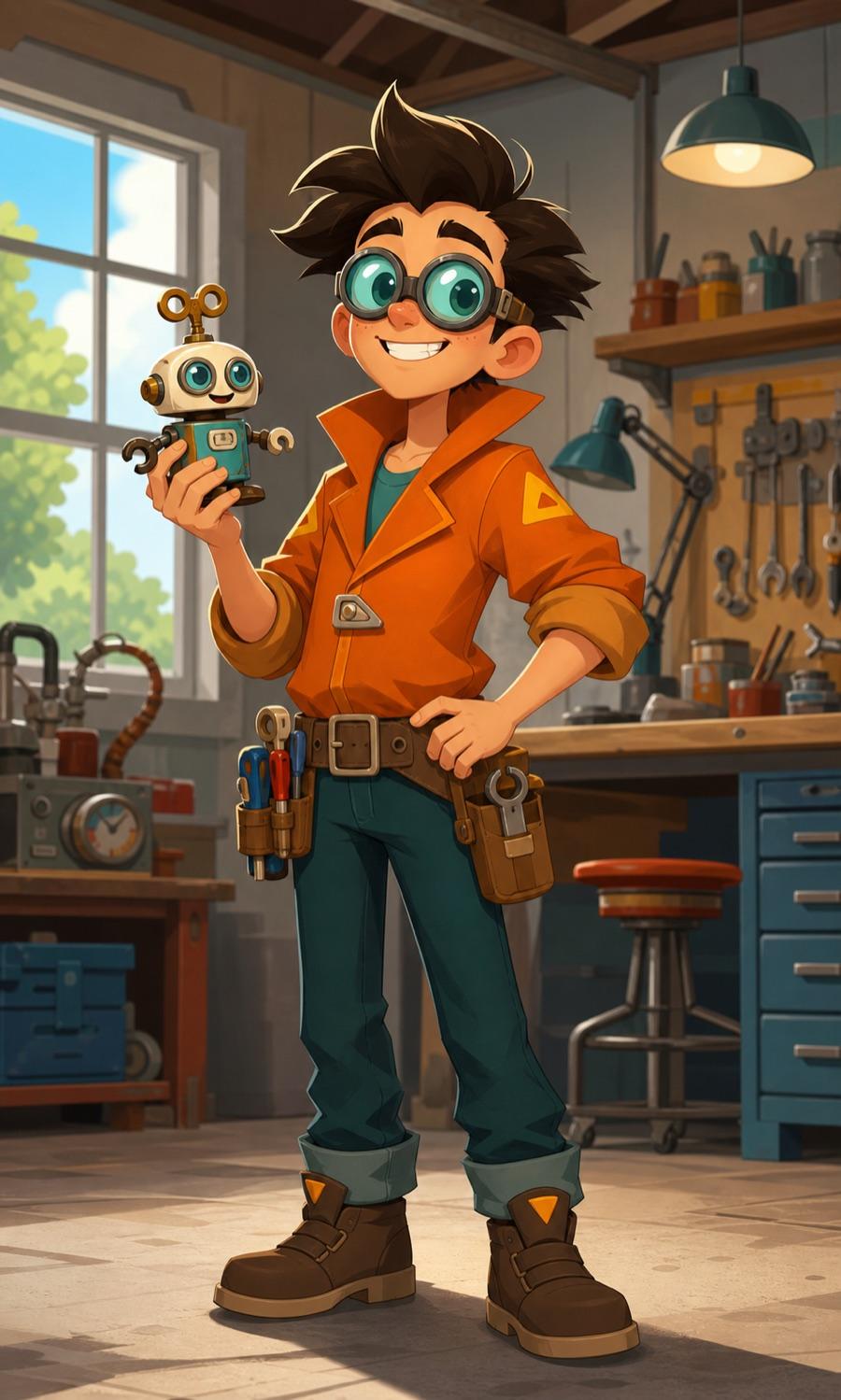
The contrasting triangle and circle shapes, limited palette, and one readable prop communicate the inventive role immediately.
View Prompt
An original cartoon neighborhood inventor with a triangular orange work jacket, round teal goggles, a compact tool belt, and an eager grin, holding a harmless wind-up helper in a bright garage workshop.
Retro space courier
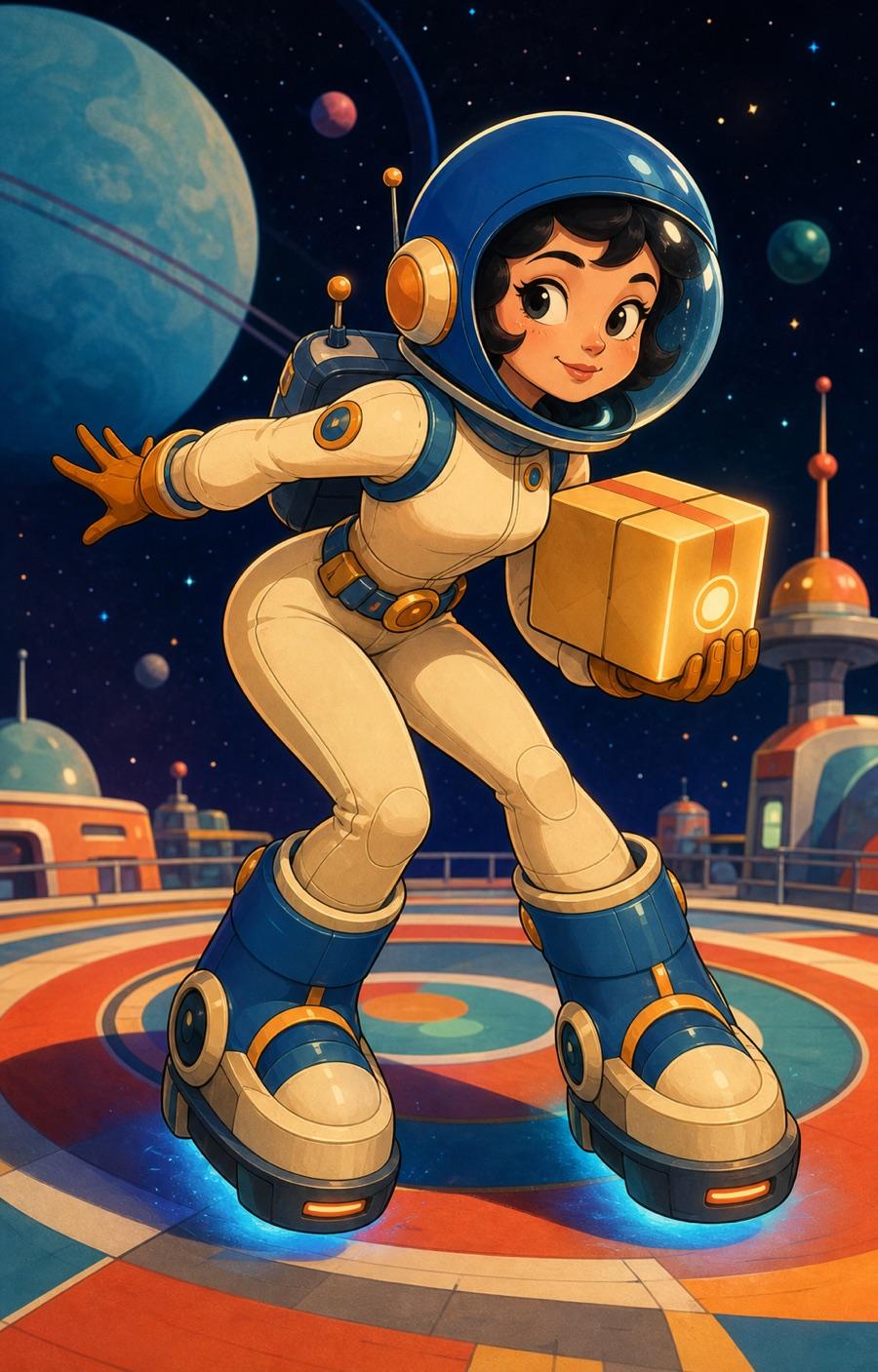
The forward pose, heavy boots, and single parcel create a clear delivery story without relying on a familiar franchise uniform.
View Prompt
An original cartoon space courier with a rounded cobalt helmet, a cream delivery suit, oversized magnetic boots, and one glowing parcel, leaning forward on a colorful orbital platform.
Storm-chasing reporter
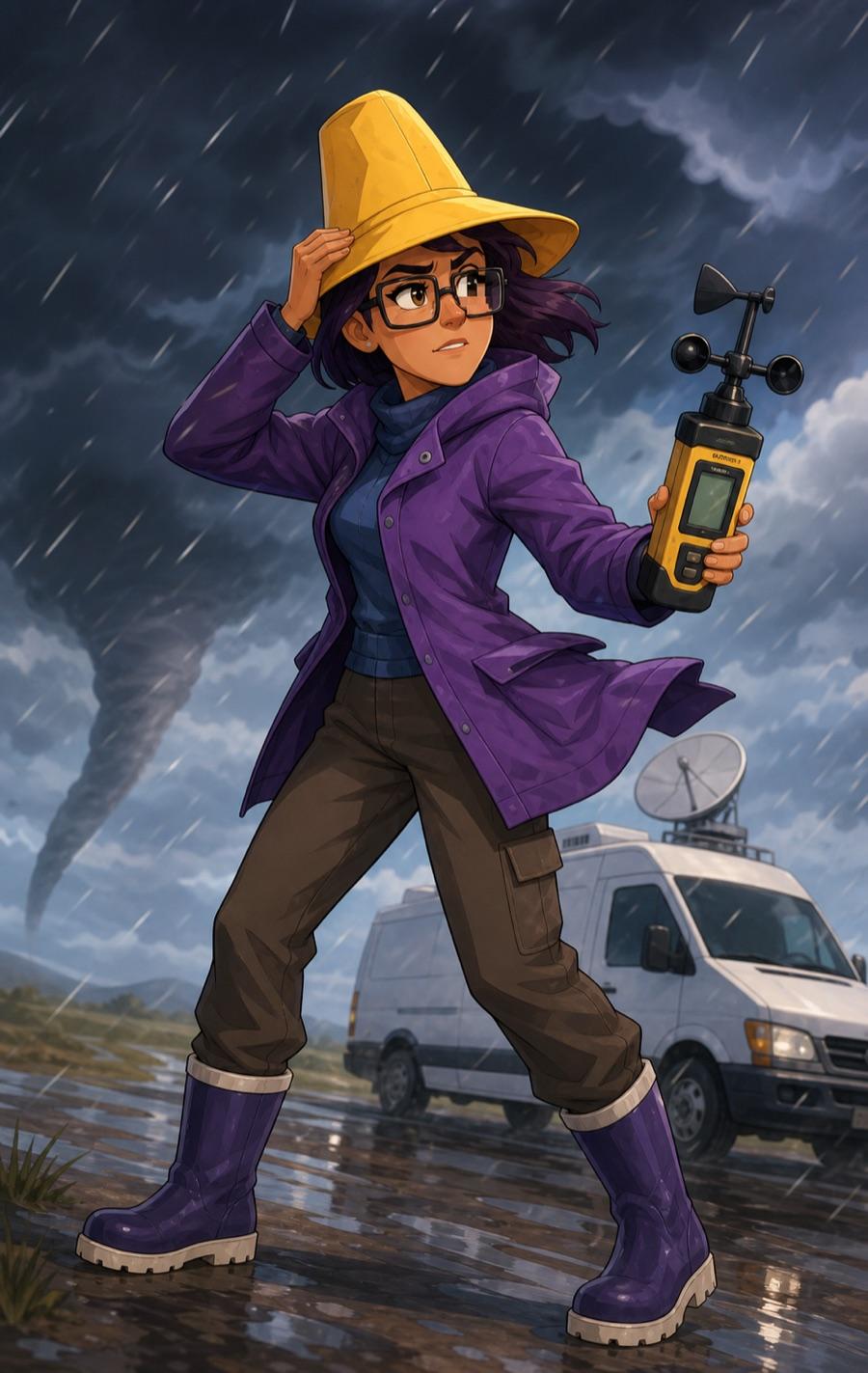
A strong vertical hat, square glasses, and diagonal action lines give the reporter a recognizable silhouette and urgent task.
View Prompt
An original cartoon storm reporter with a tall yellow rain hat, a short purple coat, square glasses, and a chunky handheld weather meter, bracing against stylized wind beside a news van.
Gentle monster librarian
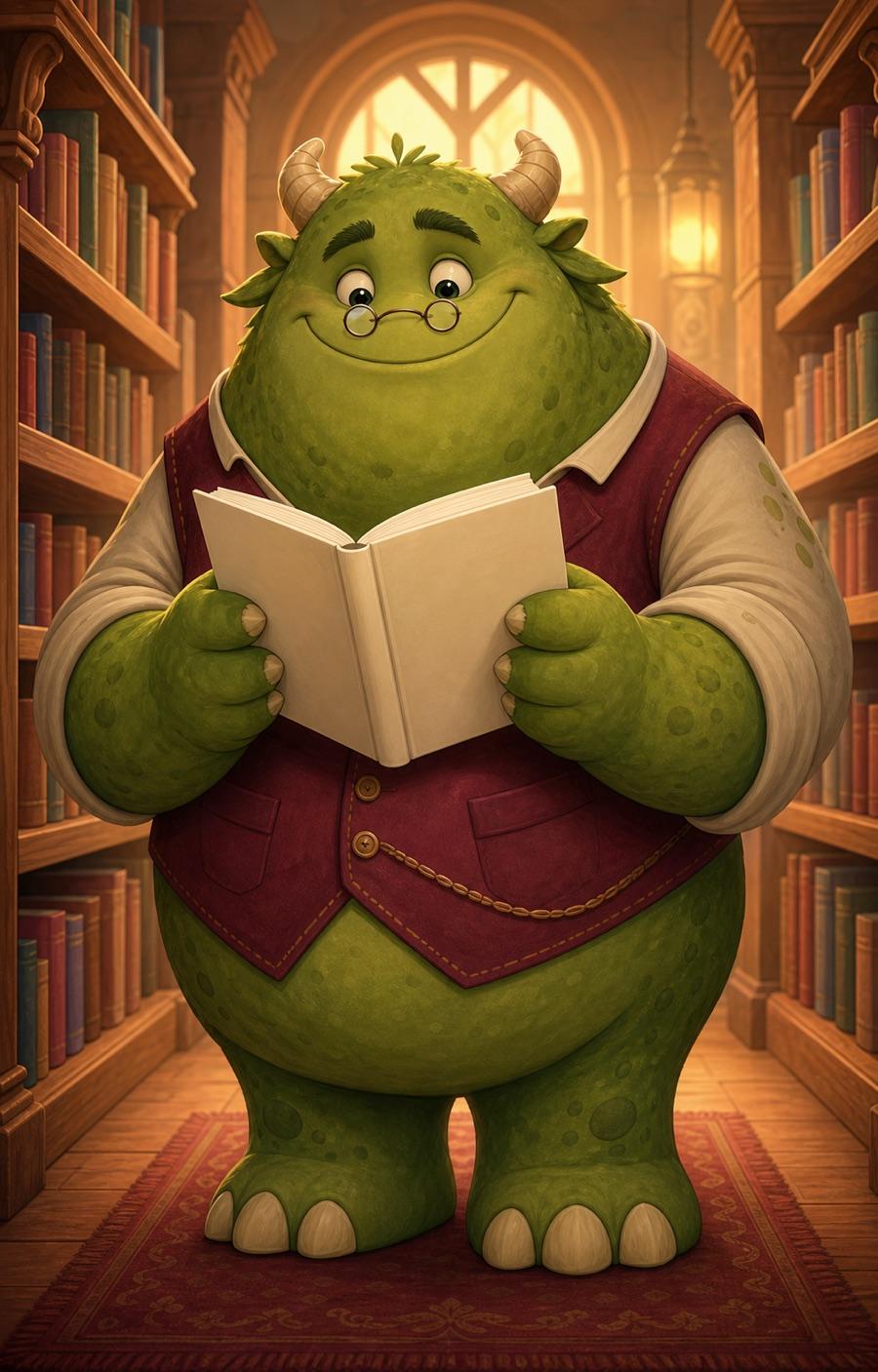
The size contrast between the broad character and delicate glasses supports a gentle personality while keeping the design original.
View Prompt
An original friendly cartoon monster librarian with a broad moss-green body, two small horns, a burgundy vest, tiny reading glasses, and one carefully held picture book in a cozy library aisle.
Seaside food-cart owner
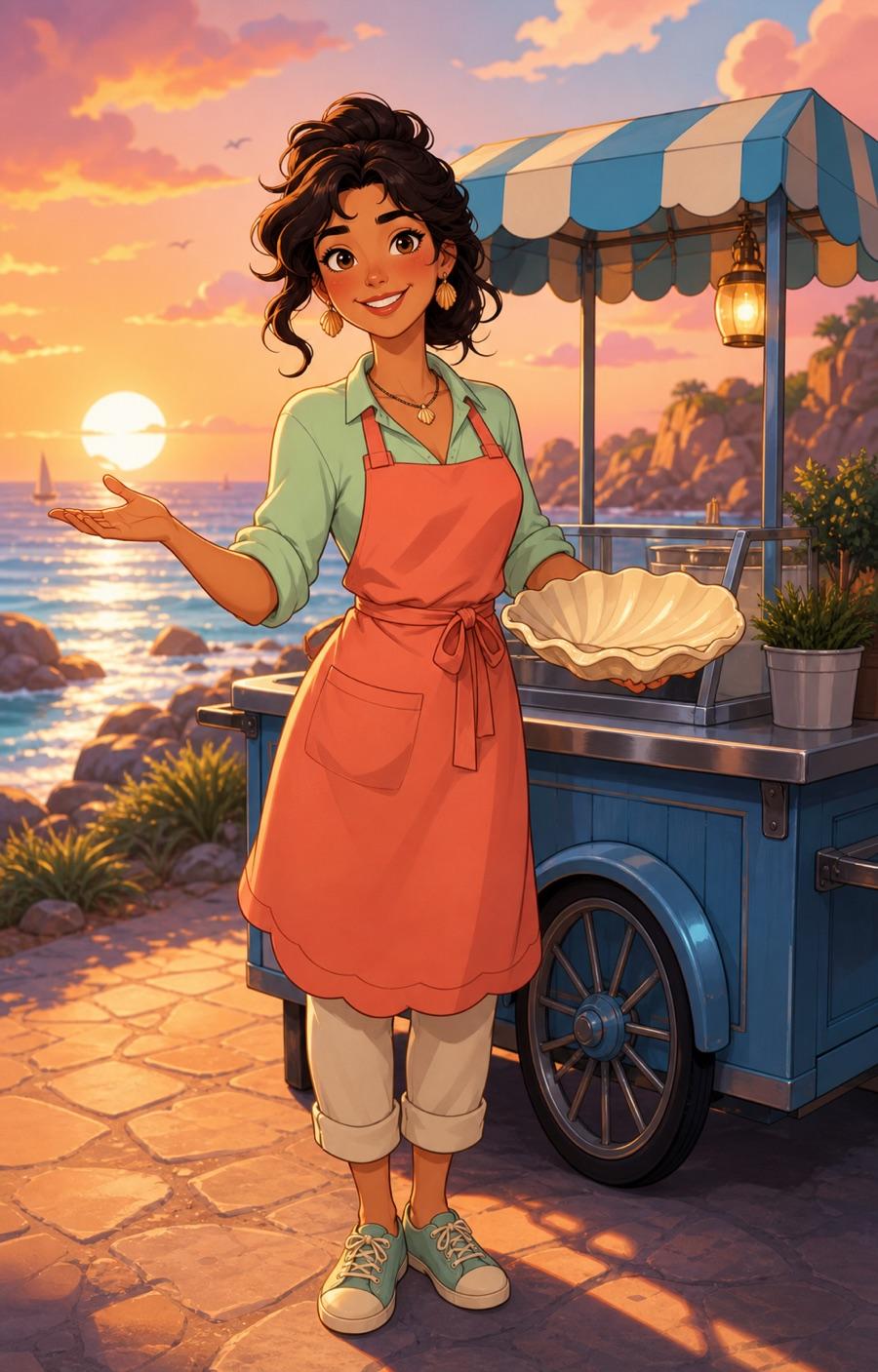
The wave and shell motifs connect the outfit, prop, and environment without overcrowding the character.
View Prompt
An original cartoon seaside food-cart owner with wavy dark hair, a coral apron, rolled mint sleeves, and a shell-shaped serving tray, greeting customers beside a compact blue cart at sunset.
Woodland animal detective
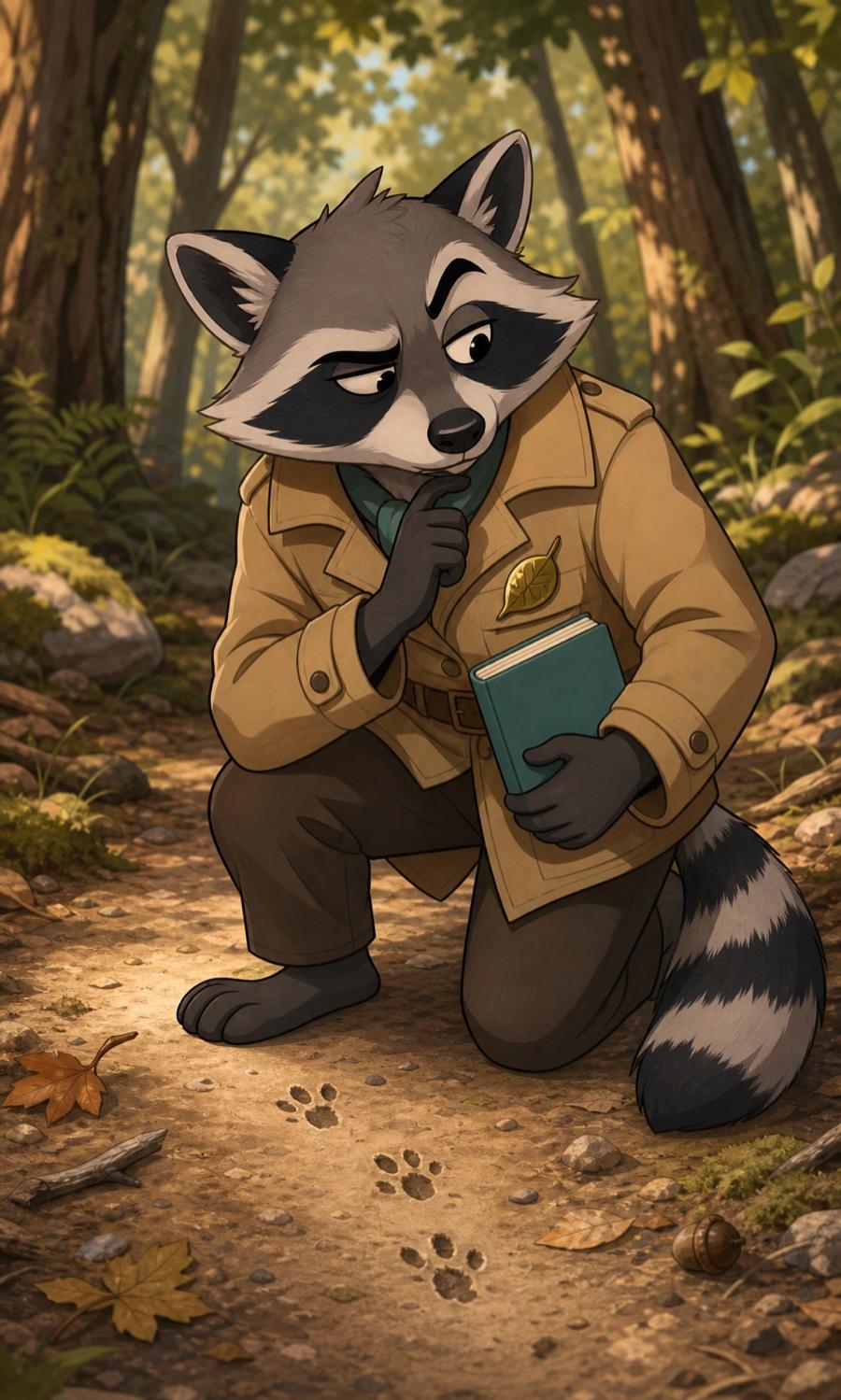
One action and three bold props create a complete detective read while preserving a clean animal-character silhouette.
View Prompt
An original cartoon raccoon detective with a boxy tan field coat, a teal notebook, a bent leaf badge, and a suspicious raised eyebrow, examining tiny tracks on a simple woodland path.
Who it helps
Useful starting points for real character work
Writers planning an animated cast with distinct silhouettes and personalities.
Comic and web-series creators testing simplified costume and color directions.
Roleplayers who want a lively, graphic portrait rather than realistic rendering.
Artists exploring shape language before developing a final character sheet.
Design guidance
Design a cartoon OC from shape language first
Cartoon characters communicate quickly because large shapes carry personality before small details are visible. Rounded forms can feel open or gentle, sharp forms can suggest speed or intensity, and sturdy rectangular forms can imply reliability. These are starting signals, not fixed personality rules, so combine them with role, posture, and expression.
Exaggeration works best when it has a purpose. Enlarge the goggles because the character observes, widen the coat because they hide tools, or simplify the shoes because the pose needs a clean base. A successful prompt explains what matters instead of requesting a generic funny cartoon person.
Choose one dominant shape
Build the hair, jacket, hat, or body silhouette around a clear round, angular, or blocky direction.
Exaggerate with a reason
Make a feature larger because it supports the role or emotion, not simply because cartoons allow distortion.
Repeat one visual motif
A curve, stripe, bolt, leaf, or wave repeated two or three times can unify clothing and props.
Keep the palette functional
Use two main colors and one accent so the face and gesture remain stronger than decorative detail.
Prompt framework
Give every visual detail a job
Use this order as a checklist, not a rigid command:
role + dominant shape language + expressive face + simplified outfit + signature prop + clear action + graphic setting
Neighborhood inventor
“An original cartoon neighborhood inventor with a triangular orange work jacket, round teal goggles, a compact tool belt, and an eager grin, holding a harmless wind-up helper in a bright garage workshop.”
Why it works: The contrasting triangle and circle shapes, limited palette, and one readable prop communicate the inventive role immediately.
Retro space courier
“An original cartoon space courier with a rounded cobalt helmet, a cream delivery suit, oversized magnetic boots, and one glowing parcel, leaning forward on a colorful orbital platform.”
Why it works: The forward pose, heavy boots, and single parcel create a clear delivery story without relying on a familiar franchise uniform.
Storm-chasing reporter
“An original cartoon storm reporter with a tall yellow rain hat, a short purple coat, square glasses, and a chunky handheld weather meter, bracing against stylized wind beside a news van.”
Why it works: A strong vertical hat, square glasses, and diagonal action lines give the reporter a recognizable silhouette and urgent task.
Gentle monster librarian
“An original friendly cartoon monster librarian with a broad moss-green body, two small horns, a burgundy vest, tiny reading glasses, and one carefully held picture book in a cozy library aisle.”
Why it works: The size contrast between the broad character and delicate glasses supports a gentle personality while keeping the design original.
Seaside food-cart owner
“An original cartoon seaside food-cart owner with wavy dark hair, a coral apron, rolled mint sleeves, and a shell-shaped serving tray, greeting customers beside a compact blue cart at sunset.”
Why it works: The wave and shell motifs connect the outfit, prop, and environment without overcrowding the character.
Woodland animal detective
“An original cartoon raccoon detective with a boxy tan field coat, a teal notebook, a bent leaf badge, and a suspicious raised eyebrow, examining tiny tracks on a simple woodland path.”
Why it works: One action and three bold props create a complete detective read while preserving a clean animal-character silhouette.
Review before you save
- Does the silhouette remain recognizable when viewed as a small thumbnail?
- Do the dominant shapes support the intended personality without becoming a stereotype?
- Are the face, hands, feet, and prop easy to read in the chosen pose?
- Does the palette guide attention toward the character rather than the background?
- Is the design clearly original instead of resembling an existing animated character?
Know the limits
- Simplified cartoon anatomy can still produce inconsistent hands, joints, props, and facial features that need review.
- A single image does not provide turnarounds, expression sheets, animation-ready layers, or rigged assets.
- Separate generations may reinterpret the same silhouette, proportions, and costume details.
- The tool should not be used to reproduce a protected cartoon character or a living artist’s exact style.
Cartoon Original Character Creator questions
What kind of cartoon style does this maker use?
The preset uses a Western cartoon direction with graphic shapes, simplified anatomy, expressive posing, and clear colors. You can switch to any other available art style before generating.
Can I create a human, animal, or monster cartoon OC?
Yes. Detailed Builder includes human, animal character, monster, robot, and custom character types. Keep the defining shapes and one signature feature explicit in your direction.
How do I keep my cartoon OC from looking generic?
Connect one dominant shape, one repeated motif, and one prop to a specific role. Avoid lists of unrelated accessories and review whether the silhouette remains recognizable without them.
Can I create an animation-ready character sheet?
No. The generator creates raster concept images, not model sheets, separated layers, vector rigs, or frame-by-frame animation assets.
Do I need an account to generate?
You can inspect the page and controls without an account. Image generation requires sign-in and credits, and the current cost appears before submission.
Explore related directions
More OC Maker guides
Anime OC Maker — Create an Anime Character | Headcanon
Create original anime character art from a written idea. Choose appearance, outfit, expression, pose, and framing, then review and save your OC privately.
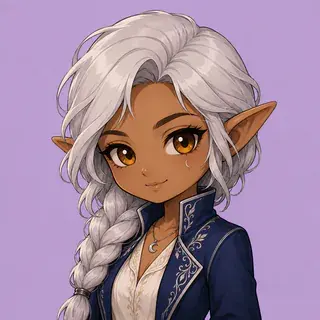
Chibi OC Maker — Create a Cute Chibi Character | Headcanon
Create a readable chibi OC with simplified proportions, a strong silhouette, expressive features, and a focused palette. Generate, review, and save privately.
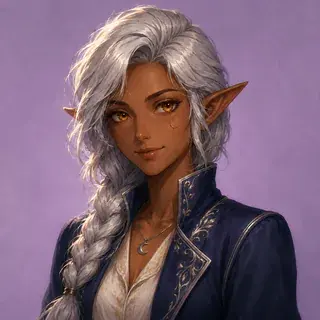
Fantasy OC Maker — Create an Original Fantasy Character
Design an original fantasy character with role-led prompts, outfit and species controls, expressive poses, and atmospheric settings. Review and save privately.