
Quick answer
What does this fantasy OC maker do?
Headcanon Fantasy OC Maker helps you draft the visible identity of an original fantasy character: species or character type, role, clothing, equipment, expression, pose, framing, and environment. The generator creates image options from your direction, while you remain responsible for choosing, revising, and developing the character.
Exclusive character examples
6 original fantasy OC ideas
Each example was created specifically for this page to show a distinct role, silhouette, palette, and setting. Open the prompt to study the direction, or apply it as an editable starting point.
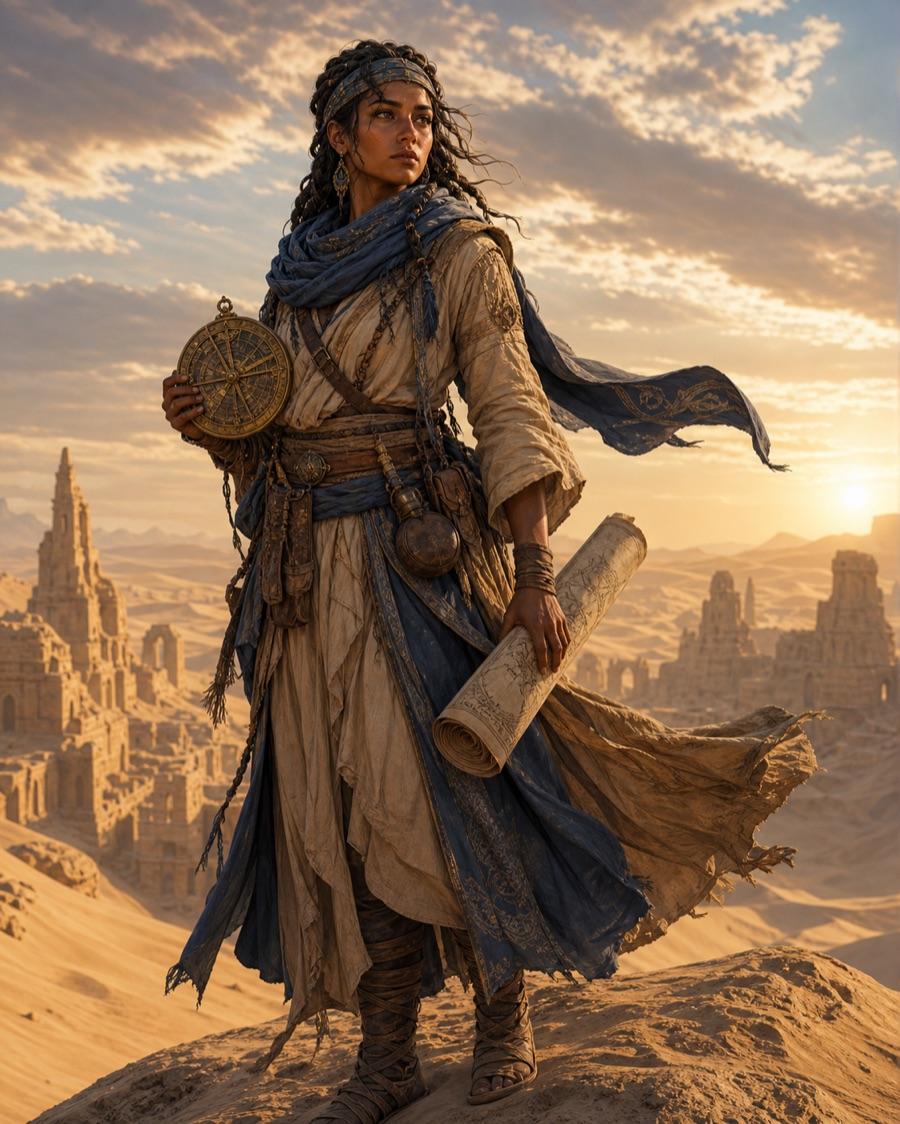
Desert mapmaker
Every visual choice supports travel, observation, heat, and long use in the same environment.
View Prompt
An original desert mapmaker with dark braids, sun-browned skin, layered indigo robes, brass measuring tools, and a wind-worn satchel, studying a faintly glowing canyon at dusk.
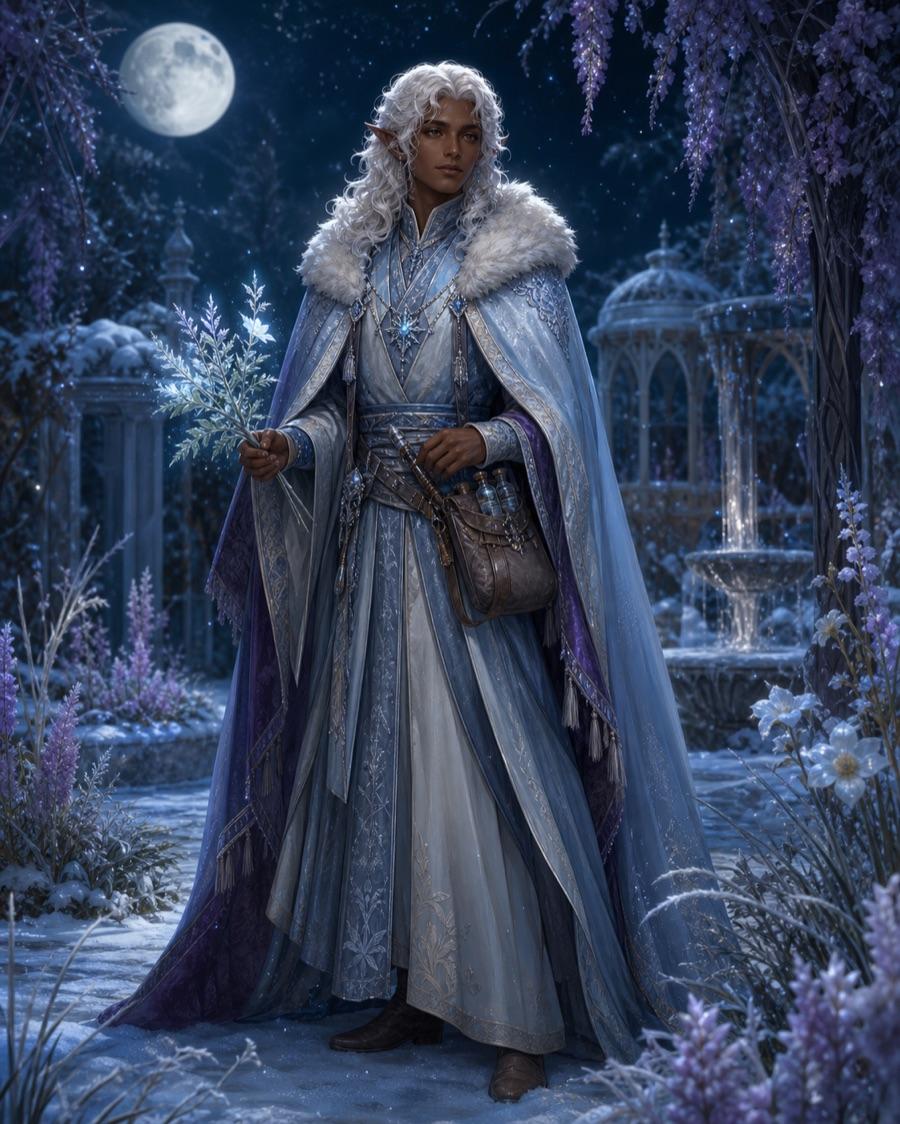
Winter court healer
Age, profession, climate, status, and fatigue all create useful visual evidence instead of decorative lore.
View Prompt
An original older fantasy healer from a winter court, with silver curls, a deep green wool coat, embroidered medical gloves, a wooden case of glass vials, and a calm but exhausted expression in a snowy palace passage.
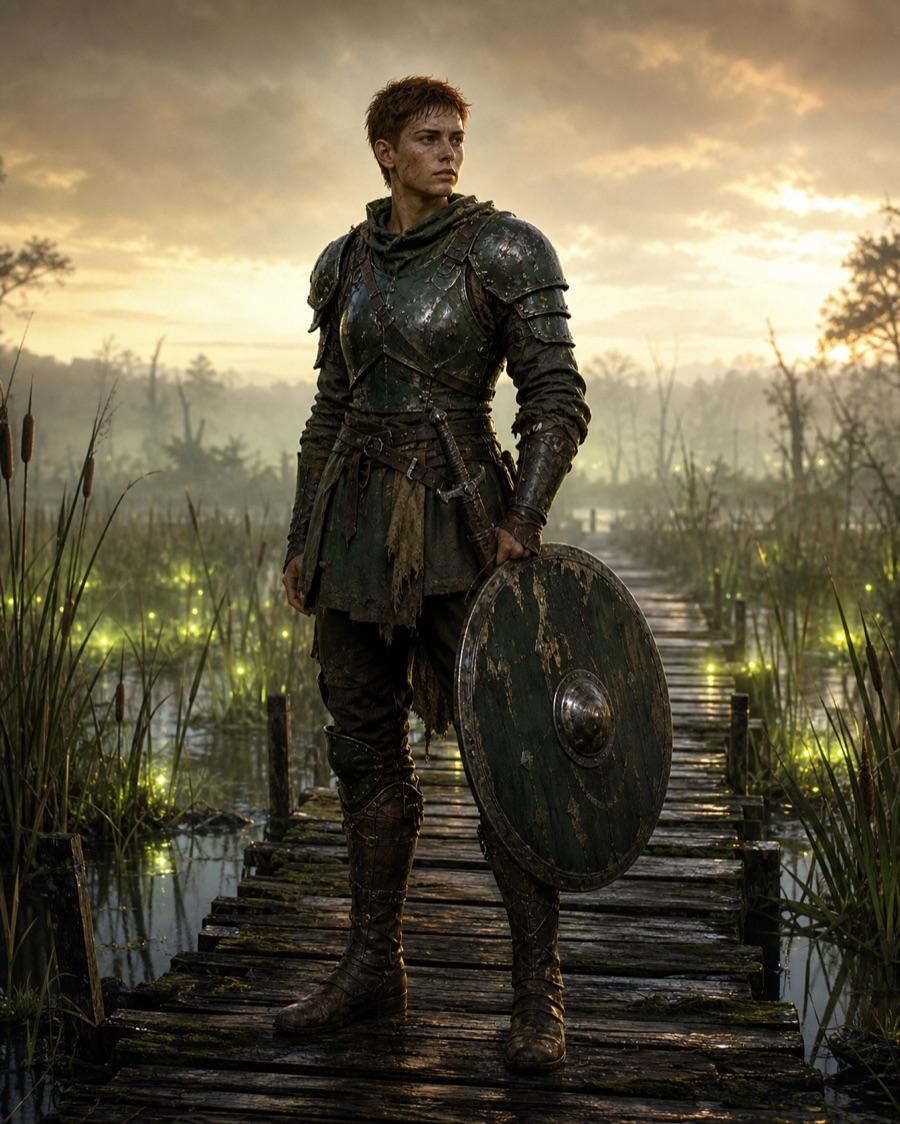
Runaway marsh knight
The damaged crest creates a narrative question while the materials and pose belong to the marsh setting.
View Prompt
An original nonbinary marsh knight with cropped black hair, dented bronze armor over waterproof gray cloth, a broken house crest, and a reed-wrapped spear, listening for pursuit in morning fog.
Celestial archive mage
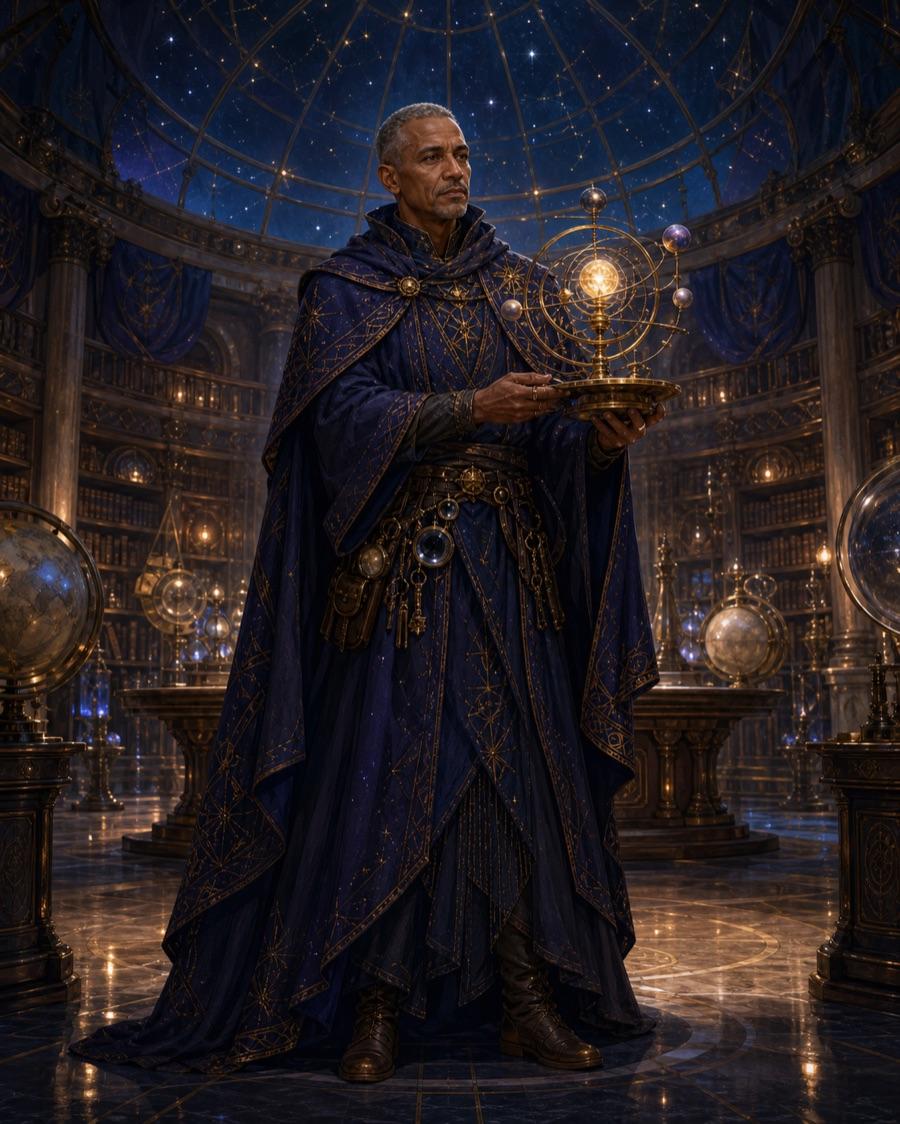
The unusual archive profession controls the magic effect, prop, clothing, and setting.
View Prompt
An original fantasy archive mage with deep brown skin, shaved silver hair, layered midnight robes, a floating ring of catalog keys, and a focused expression inside a moonlit observatory library.
Forest beastfolk ranger
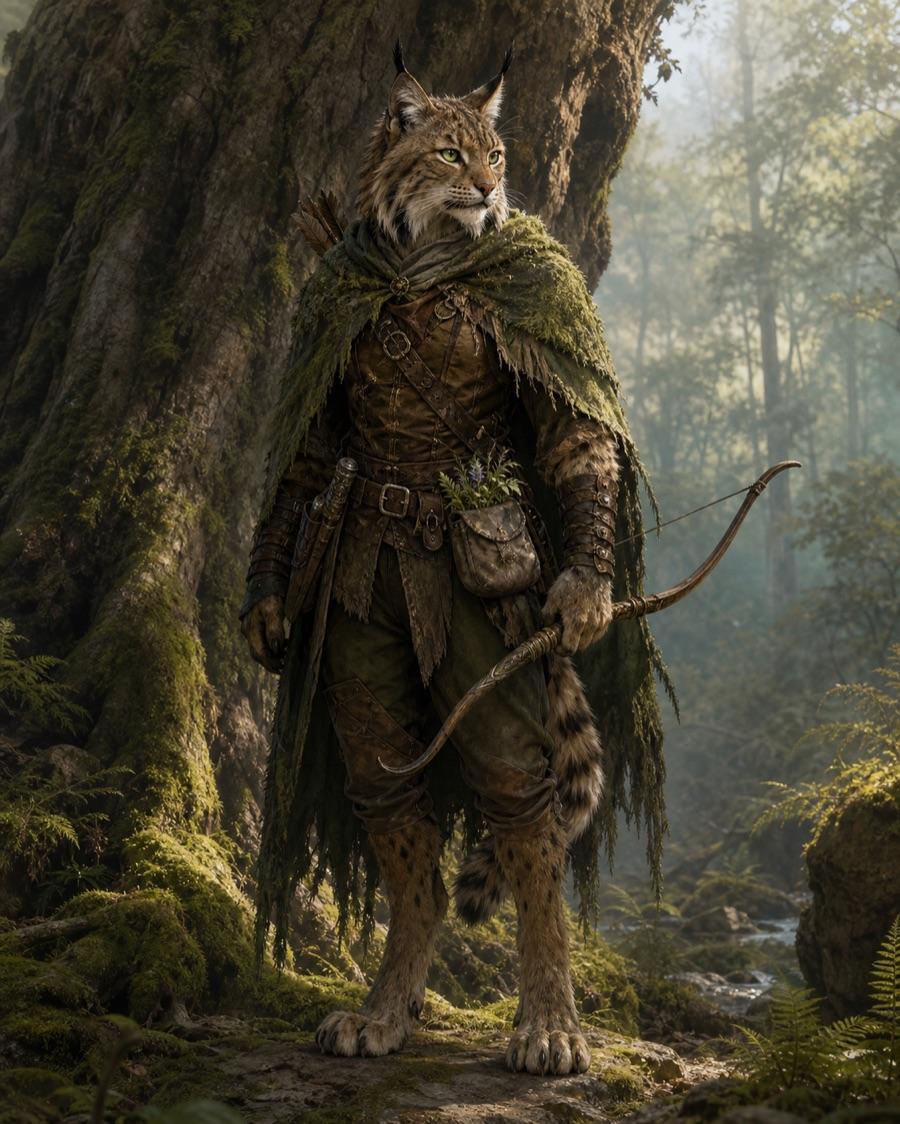
Species, practical gear, weather damage, and pose all respond to the forest environment.
View Prompt
An original fox-like beastfolk ranger with russet fur, a patched green cloak, a compact yew bow, seed-pod charms, and an alert crouching pose beside a flooded woodland trail.
Royal vampire scholar
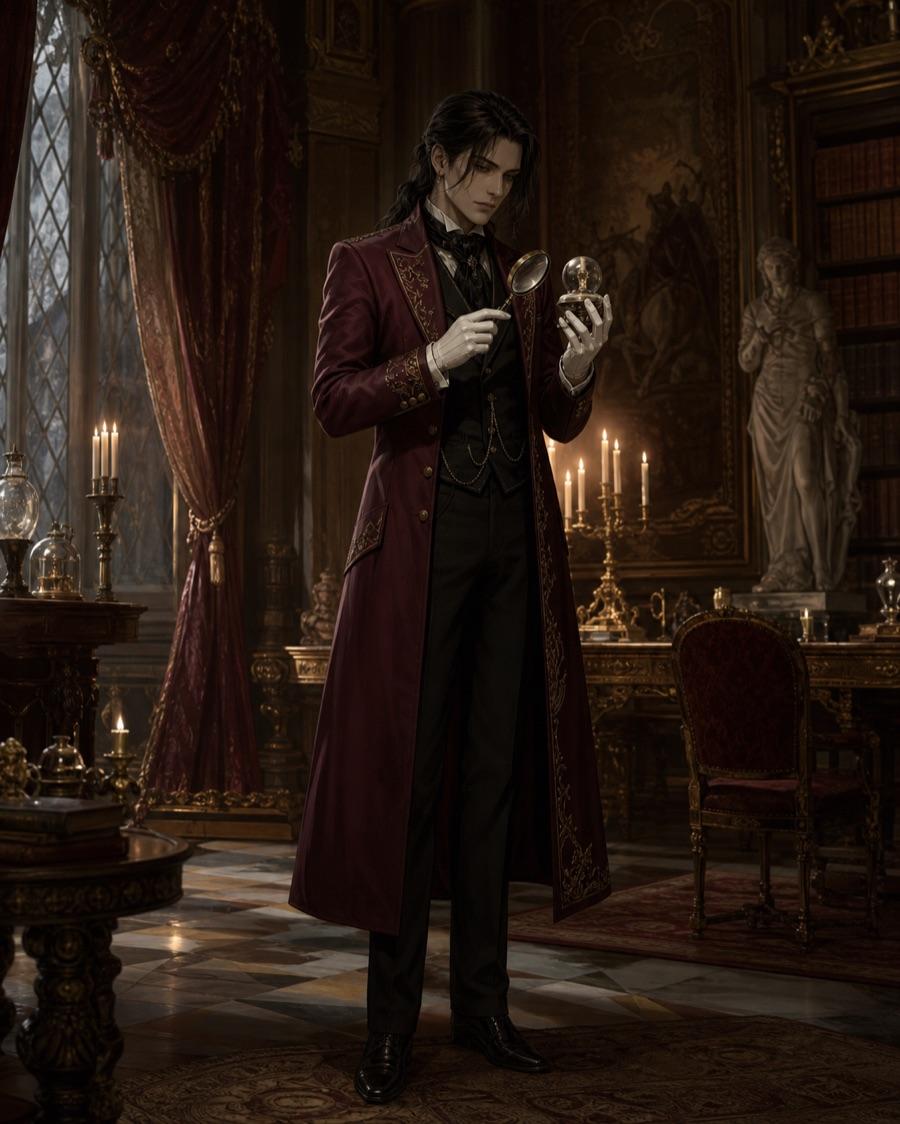
A scholarly role and warm palette move the vampire concept beyond generic black clothing and aggression.
View Prompt
An original vampire scholar with warm brown skin, short black curls, a high-collared plum coat, gold reading lenses, and an annotated stone tablet, standing in a candlelit underground court.
Who it helps
Useful starting points for real character work
Novelists and worldbuilders creating a visual anchor for a new cast member.
Tabletop players exploring a portrait before a campaign begins.
Game creators comparing costume and role silhouettes during early concept work.
Artists collecting a focused reference direction for later original illustration.
Design guidance
Build fantasy design from the world outward
A convincing fantasy character looks shaped by a world. Climate affects fabric and protection. Social status affects material, maintenance, and ornament. Work affects posture, tools, scars, and wear. Magic is more believable when it has a visible cost, ritual, source, or practical use.
Start with the pressure surrounding the character rather than a list of fantasy nouns. “Mountain medic who travels during avalanche season” produces a more coherent direction than “cool elf mage warrior.” The first idea implies layers, supplies, careful movement, and an environment; the second asks several archetypes to compete.
Connect clothing to climate
Heavy layered wool, sun wraps, waterproof leather, or ceremonial silk should make sense for the place and daily routine.
Give equipment a job
A staff, blade, ledger, lantern, medical bag, or ritual object is strongest when the character visibly depends on it.
Show status through condition
Polished, inherited, repaired, improvised, stolen, and battle-worn materials each tell a different story.
Limit the magic signal
One controlled glow, transformed limb, enchanted object, or environmental reaction is often clearer than effects covering the entire image.
Prompt framework
Give every visual detail a job
Use this order as a checklist, not a rigid command:
world role + character type + climate or culture + practical outfit + essential tool + physical history + present action
Desert mapmaker
“An original desert mapmaker with dark braids, sun-browned skin, layered indigo robes, brass measuring tools, and a wind-worn satchel, studying a faintly glowing canyon at dusk.”
Why it works: Every visual choice supports travel, observation, heat, and long use in the same environment.
Winter court healer
“An original older fantasy healer from a winter court, with silver curls, a deep green wool coat, embroidered medical gloves, a wooden case of glass vials, and a calm but exhausted expression in a snowy palace passage.”
Why it works: Age, profession, climate, status, and fatigue all create useful visual evidence instead of decorative lore.
Runaway marsh knight
“An original nonbinary marsh knight with cropped black hair, dented bronze armor over waterproof gray cloth, a broken house crest, and a reed-wrapped spear, listening for pursuit in morning fog.”
Why it works: The damaged crest creates a narrative question while the materials and pose belong to the marsh setting.
Celestial archive mage
“An original fantasy archive mage with deep brown skin, shaved silver hair, layered midnight robes, a floating ring of catalog keys, and a focused expression inside a moonlit observatory library.”
Why it works: The unusual archive profession controls the magic effect, prop, clothing, and setting.
Forest beastfolk ranger
“An original fox-like beastfolk ranger with russet fur, a patched green cloak, a compact yew bow, seed-pod charms, and an alert crouching pose beside a flooded woodland trail.”
Why it works: Species, practical gear, weather damage, and pose all respond to the forest environment.
Royal vampire scholar
“An original vampire scholar with warm brown skin, short black curls, a high-collared plum coat, gold reading lenses, and an annotated stone tablet, standing in a candlelit underground court.”
Why it works: A scholarly role and warm palette move the vampire concept beyond generic black clothing and aggression.
Review before you save
- Could the outfit and equipment function in the stated climate and role?
- Is the species or supernatural feature integrated rather than added as decoration?
- Do armor, straps, tools, hands, and joints connect plausibly?
- Does the environment support the character instead of hiding the silhouette?
- Which one visual detail implies a larger backstory worth developing?
Know the limits
- A polished fantasy image does not replace worldbuilding or explain how the character fits a culture, faction, economy, or magic system.
- Weapons, armor, jewelry, hands, and dense costume layers may contain structural errors that need review.
- Separate generations may reinterpret facial identity, materials, symbols, and signature gear.
- The tool does not determine usage rights for every downstream project; review your publishing context and applicable terms.
Fantasy Original Character Creator questions
What fantasy character types can I create?
The Detailed Builder includes human, elf, vampire, demon, angel, fairy, witch or mage, beastfolk, undead, monster, and custom choices, among others. A custom type lets you describe a character that does not fit the preset list.
Can I create armor and weapons?
Yes, but keep the equipment specific and functional. Complex armor, hands, straps, and weapons deserve close review and may need later editing.
Does the fantasy OC maker write a backstory?
This page focuses on visual character art. After saving a design, use Character Kit for personality and backstory or OC Studio for worlds, relationships, and story arcs.
Can I create an elf or vampire here?
Yes. Elf and Vampire are available character types in Detailed Builder. You can also open the dedicated Elf OC Maker or Vampire OC Maker guides for focused presets, examples, and design advice.
Do I need an account?
You can inspect the controls without an account. Generating images requires sign-in and credits, with the current cost shown before you submit.
Explore related directions
More OC Maker guides
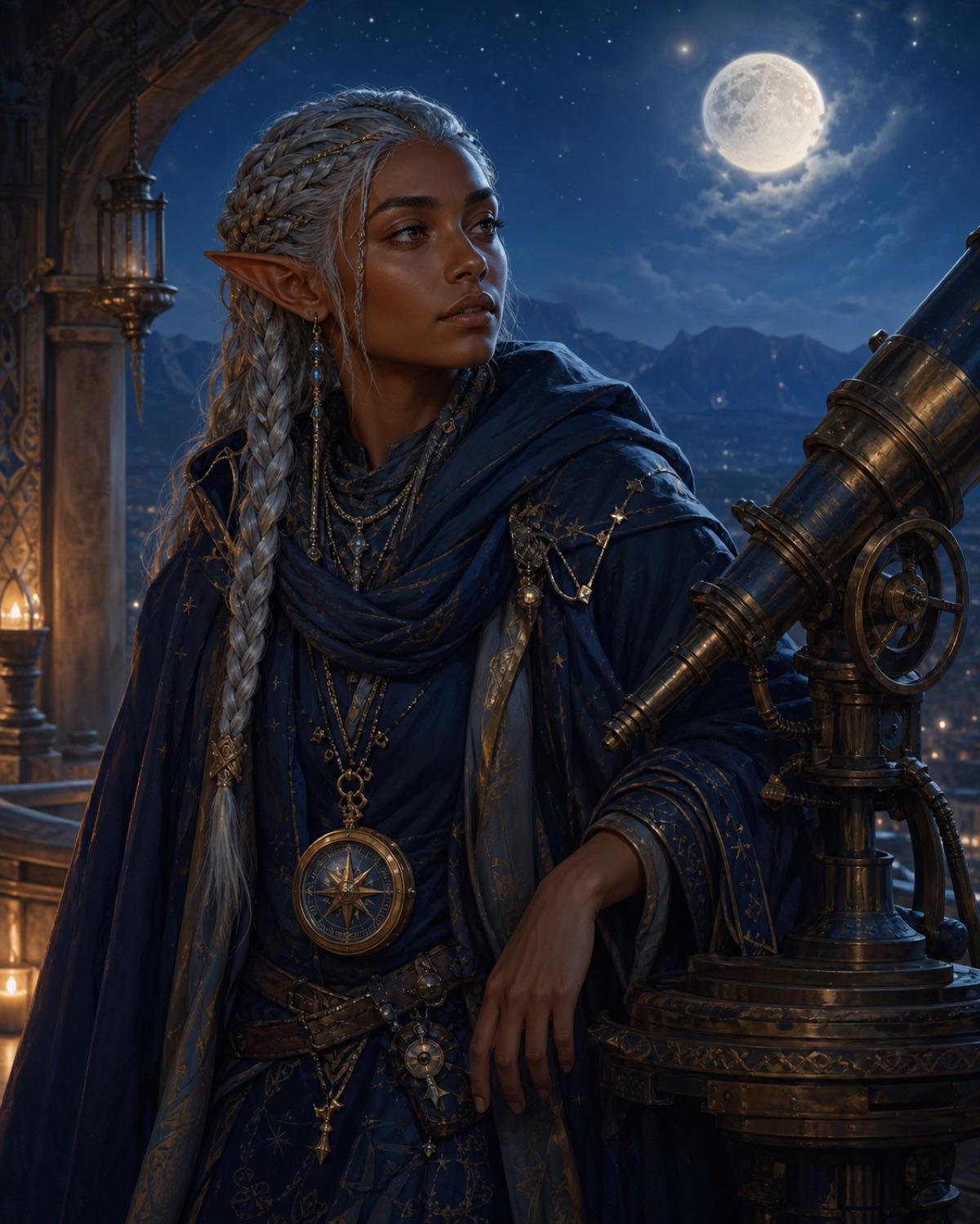
Elf OC Maker — Create Your Own Elf Character | Headcanon
Create an original elf character with custom features, clothing, accessories, expressions, poses, and fantasy environments. Generate, review, and save privately.
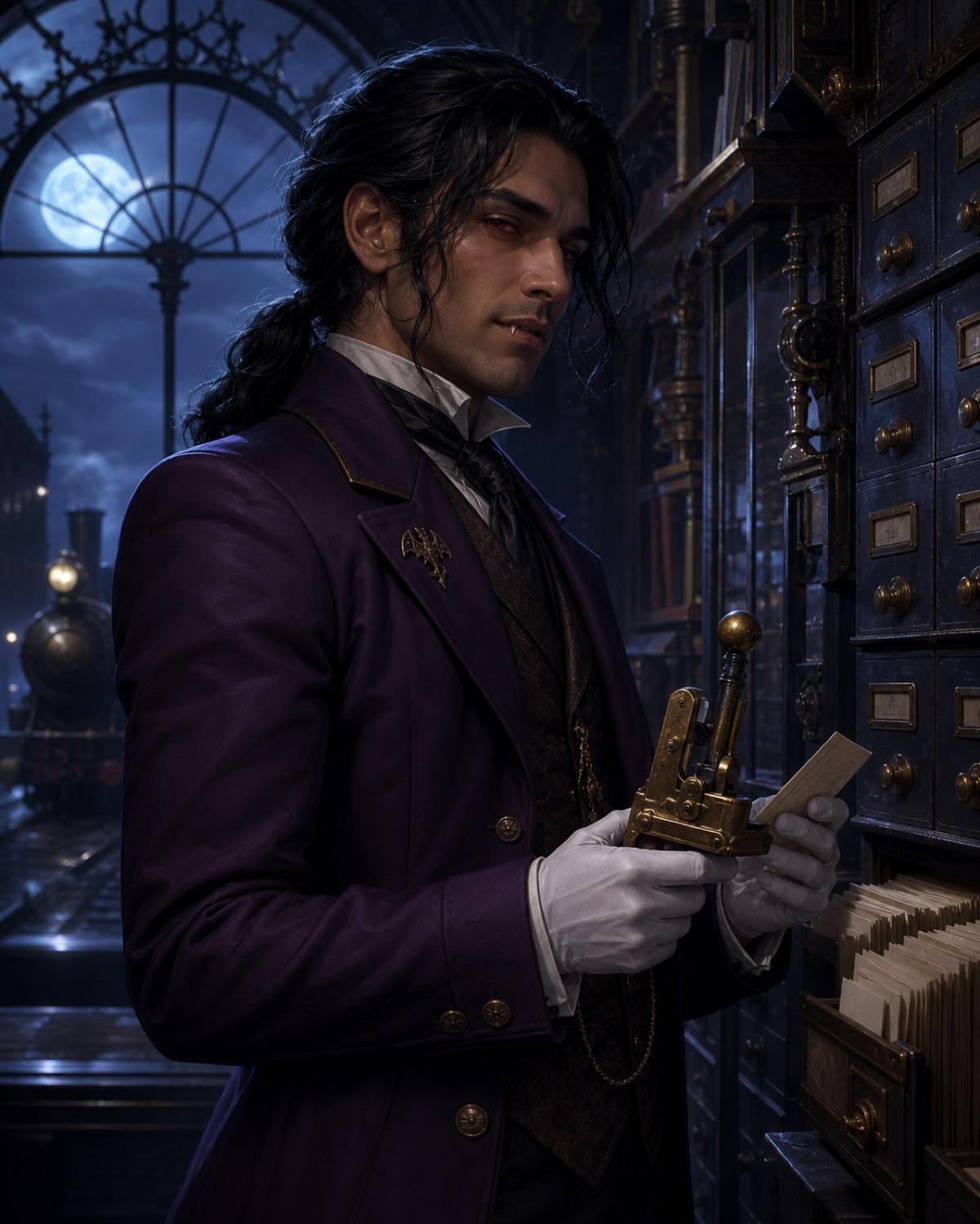
Vampire OC Maker — Create a Vampire Character | Headcanon
Create an original vampire character with a distinct era, occupation, clothing, expression, pose, and nocturnal setting. Generate, review, and save privately.
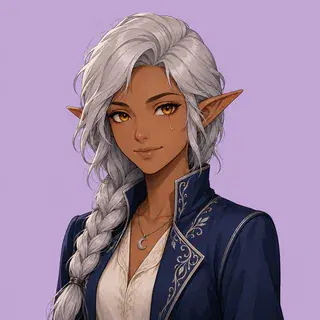
Anime OC Maker — Create an Anime Character | Headcanon
Create original anime character art from a written idea. Choose appearance, outfit, expression, pose, and framing, then review and save your OC privately.
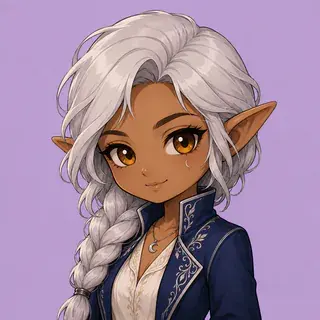
Chibi OC Maker — Create a Cute Chibi Character | Headcanon
Create a readable chibi OC with simplified proportions, a strong silhouette, expressive features, and a focused palette. Generate, review, and save privately.