
Quick answer
What does this elf OC maker do?
Headcanon Elf OC Maker is a focused fantasy character tool for drafting an original elf’s visible identity. You choose the culture, profession, physical features, clothing, equipment, expression, pose, and setting; the AI generates image options; and you decide which details feel coherent enough to keep developing.
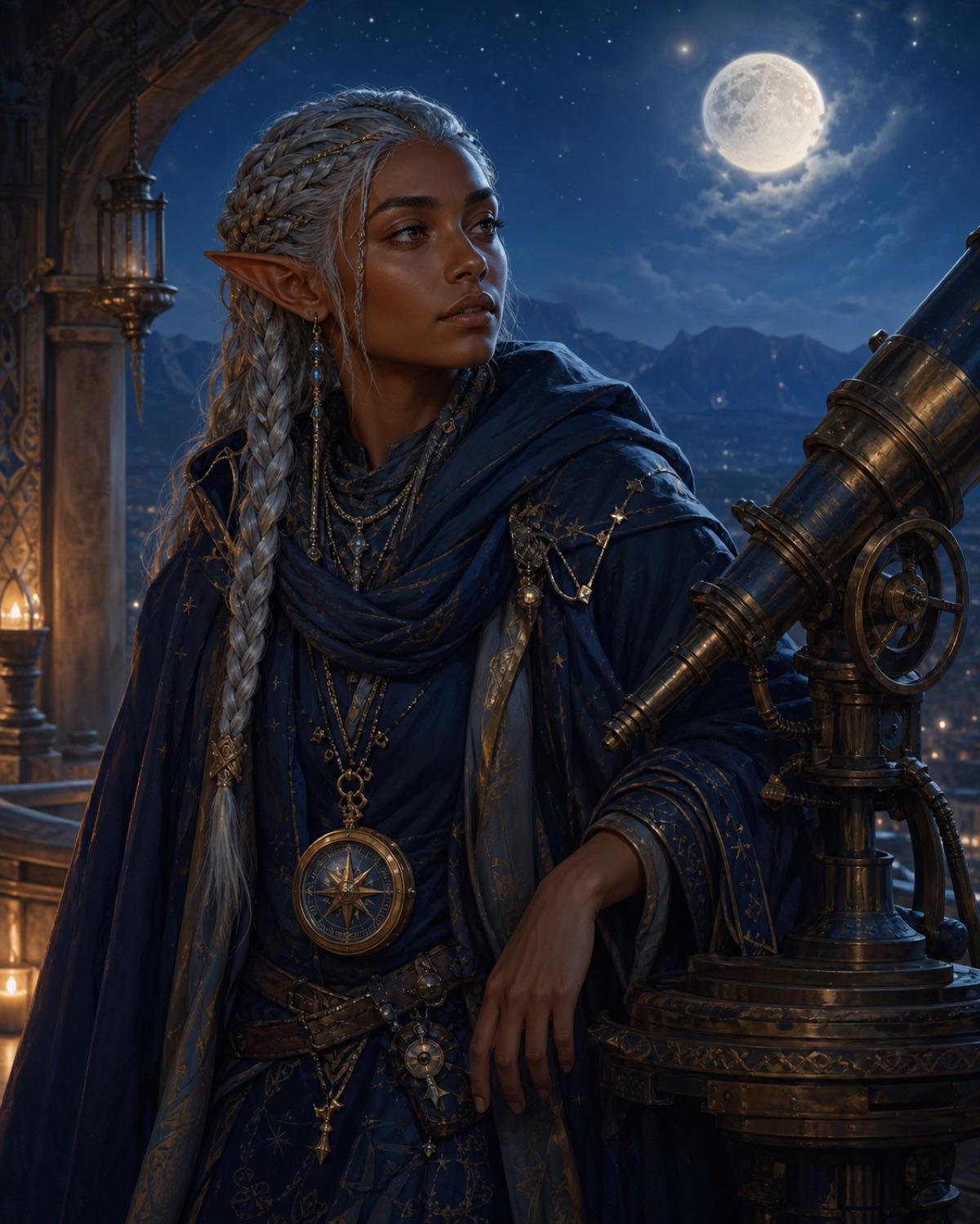
Exclusive character examples
6 original elf OC ideas
Each example was created specifically for this page to show a distinct role, silhouette, palette, and setting. Open the prompt to study the direction, or apply it as an editable starting point.
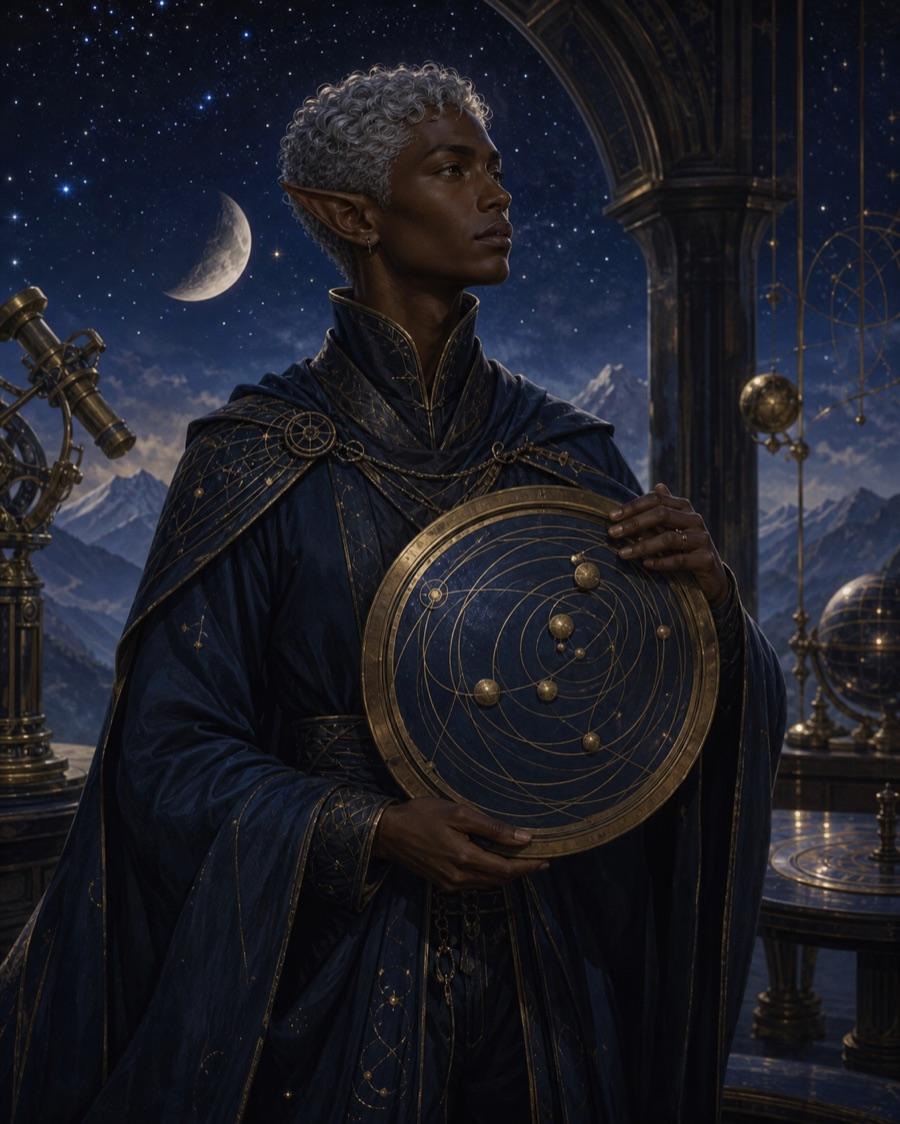
Moon observatory cartographer
Profession, instrument, clothing, and environment all support a precise celestial culture rather than a generic magic-user design.
View Prompt
An original elf moon cartographer with deep brown skin, cropped silver curls, long pointed ears, layered midnight robes, and a brass orbit map, recording constellations inside an open-air observatory.
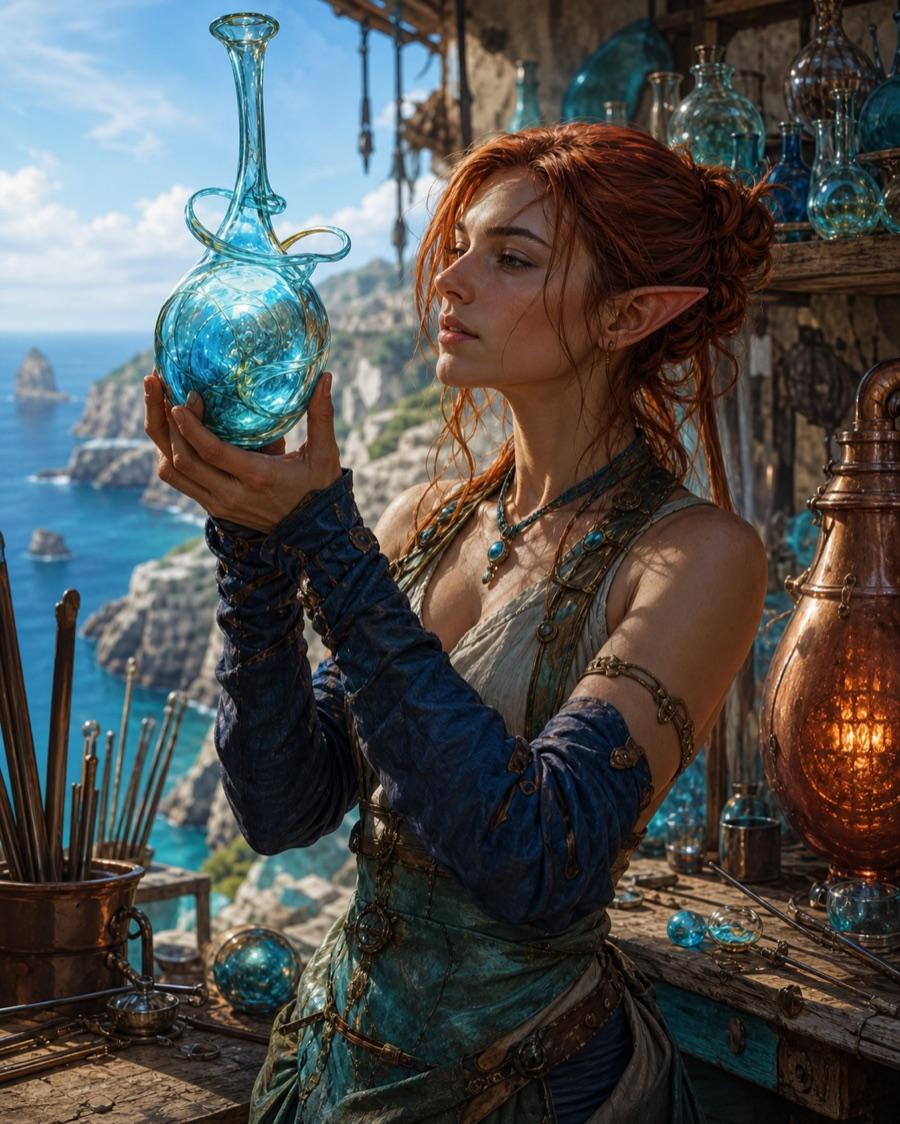
Tidepool glassblower
The coastal materials and protective work clothing make the craft visible without defaulting to weapons or robes.
View Prompt
An original coastal elf glassblower with sea-green eyes, copper hair tied back, protective indigo sleeves, shell-shaped ear jewelry, and one translucent blue vessel in a sunlit cliff workshop.
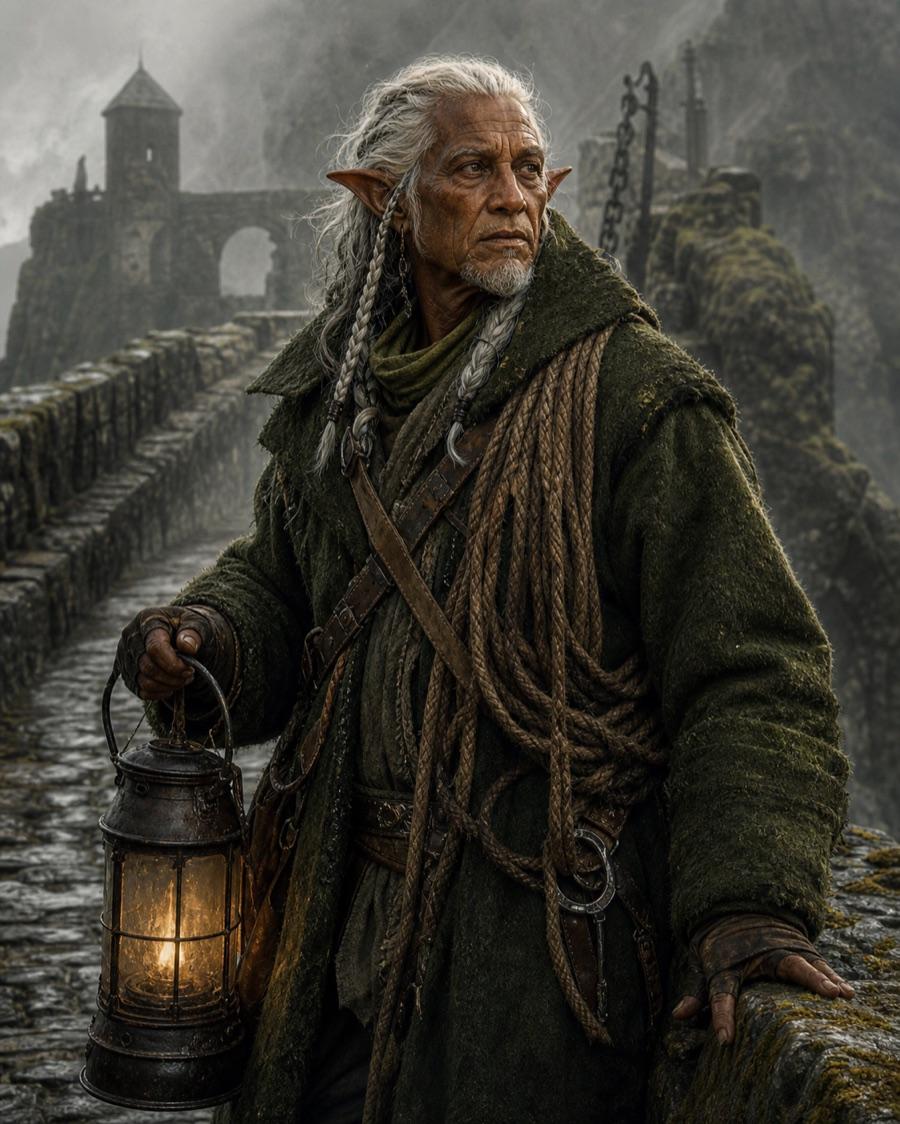
Highland bridge keeper
Age, climate, maintenance gear, and worn materials create a grounded life beyond the usual ageless royal elf.
View Prompt
An original older highland elf bridge keeper with weathered bronze skin, white braided hair, a heavy moss wool coat, climbing ropes, and an iron inspection lantern on a misty stone span.
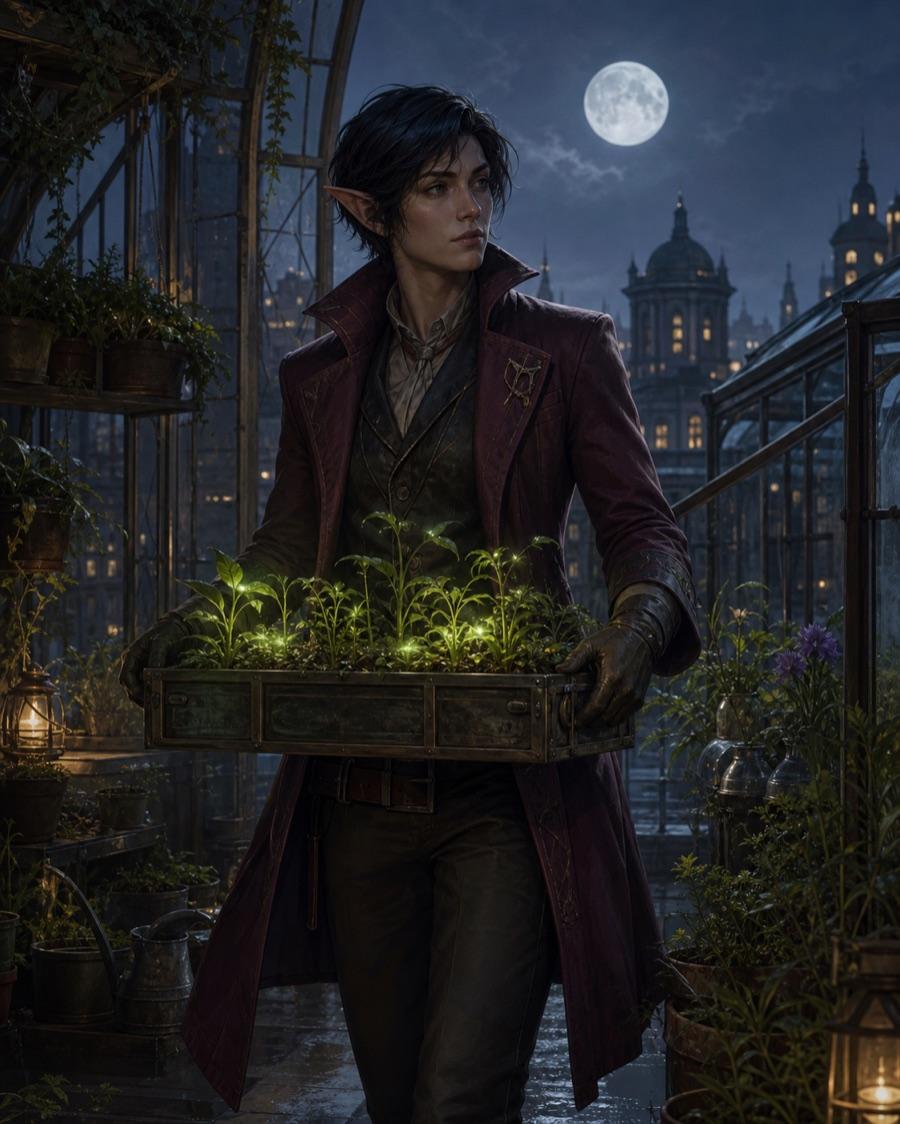
Urban night botanist
Modern clothing and a scientific role preserve elven features while creating a distinct contemporary fantasy context.
View Prompt
An original urban elf night botanist with short black hair, subtle pointed ears, a plum street coat, practical gloves, and a case of faintly glowing seedlings on a rooftop greenhouse walkway.
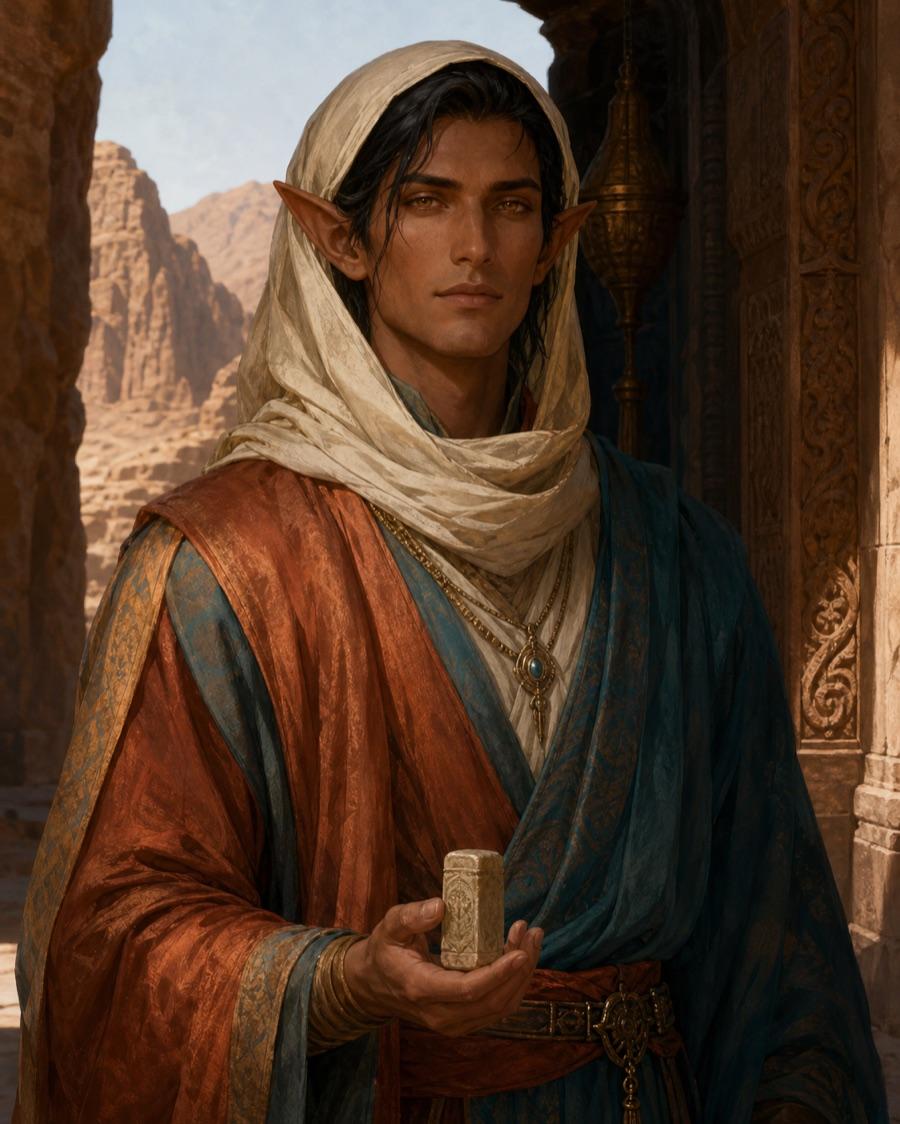
Desert treaty envoy
Climate protection, diplomatic status, and one official object establish culture without borrowing a familiar high-elf court aesthetic.
View Prompt
An original desert elf treaty envoy with amber eyes, dark hair wrapped in a cream headscarf, layered rust and teal robes, a carved stone seal, and a composed expression at a shaded canyon gate.
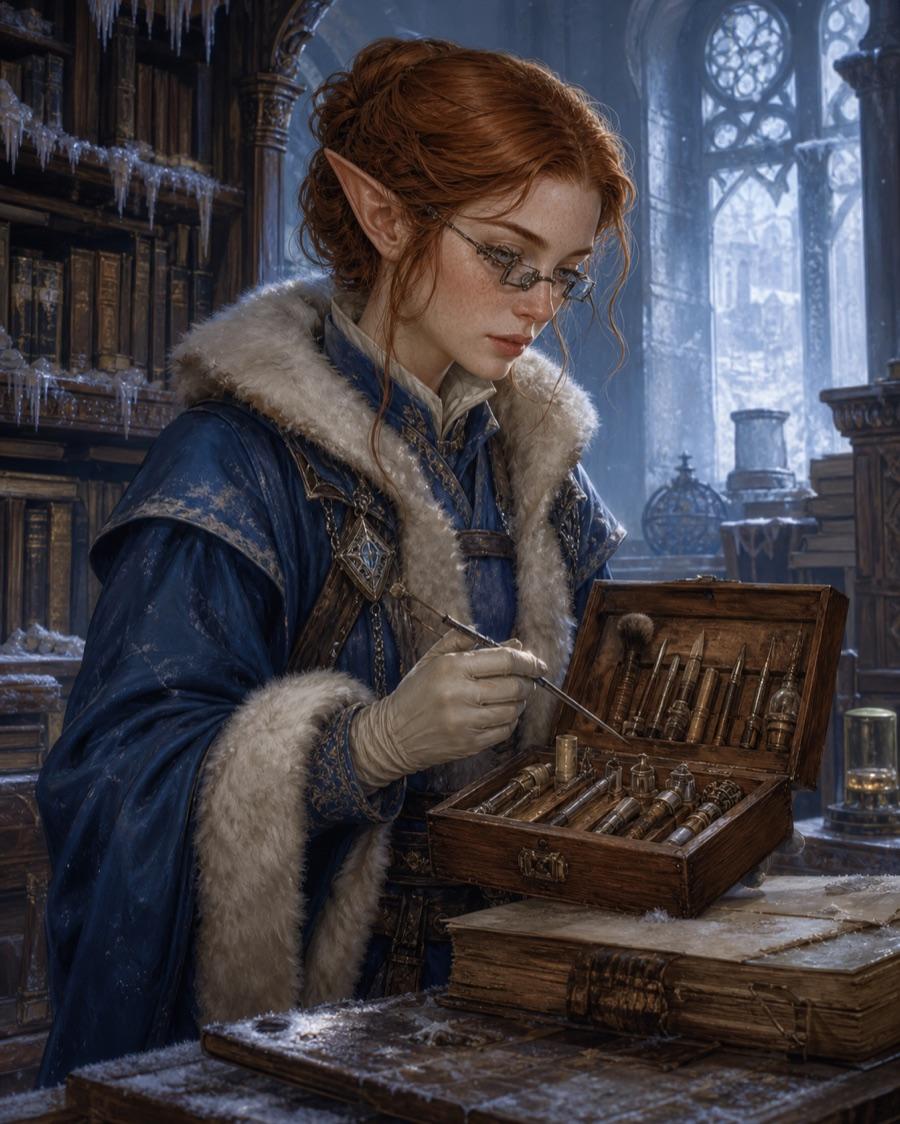
Winter archive restorer
The specialized tools, careful posture, and climate-aware clothing make scholarship physically believable.
View Prompt
An original winter elf archive restorer with pale freckles, long auburn hair, fur-lined blue work robes, delicate repair lenses, and a wooden case of conservation tools in a frost-lit library.
Who it helps
Useful starting points for real character work
Fantasy writers giving an elf character a culture-specific visual reference.
RPG players exploring a portrait or full-body concept before a campaign.
Worldbuilders comparing how climate, profession, and status shape elven design.
Artists testing alternatives to familiar ranger, archer, and royal stereotypes.
Design guidance
Make an elf OC feel shaped by a real culture
Pointed ears identify a broad fantasy species, but they do not make a complete character. A distinctive elf design grows from where the character lives, what work they perform, what materials their community values, and how long life changes their habits or possessions. Those visible choices create specificity without requiring pages of lore.
Profession is especially useful for moving beyond generic forest ranger and elegant mage designs. An elf can restore books, maintain bridges, negotiate treaties, blow glass, forecast tides, repair instruments, or run a city garden. The role should affect posture, clothing condition, tools, and environment.
Start with a society
Decide whether the character comes from a forest settlement, highland court, desert caravan, coastal workshop, or modern city community.
Use more than pointed ears
Let posture, materials, hair treatment, jewelry, tools, and clothing construction carry cultural identity.
Choose an unexpected profession
A conservator, glassblower, bridge keeper, botanist, surveyor, or diplomat immediately suggests useful visual evidence.
Give magic a practical role
Connect any glow, marking, or enchanted object to work, ritual, navigation, medicine, or another visible purpose.
Prompt framework
Give every visual detail a job
Use this order as a checklist, not a rigid command:
elf society + profession + distinctive features + climate-aware outfit + cultural material + practical tool + present environment
Moon observatory cartographer
“An original elf moon cartographer with deep brown skin, cropped silver curls, long pointed ears, layered midnight robes, and a brass orbit map, recording constellations inside an open-air observatory.”
Why it works: Profession, instrument, clothing, and environment all support a precise celestial culture rather than a generic magic-user design.
Tidepool glassblower
“An original coastal elf glassblower with sea-green eyes, copper hair tied back, protective indigo sleeves, shell-shaped ear jewelry, and one translucent blue vessel in a sunlit cliff workshop.”
Why it works: The coastal materials and protective work clothing make the craft visible without defaulting to weapons or robes.
Highland bridge keeper
“An original older highland elf bridge keeper with weathered bronze skin, white braided hair, a heavy moss wool coat, climbing ropes, and an iron inspection lantern on a misty stone span.”
Why it works: Age, climate, maintenance gear, and worn materials create a grounded life beyond the usual ageless royal elf.
Urban night botanist
“An original urban elf night botanist with short black hair, subtle pointed ears, a plum street coat, practical gloves, and a case of faintly glowing seedlings on a rooftop greenhouse walkway.”
Why it works: Modern clothing and a scientific role preserve elven features while creating a distinct contemporary fantasy context.
Desert treaty envoy
“An original desert elf treaty envoy with amber eyes, dark hair wrapped in a cream headscarf, layered rust and teal robes, a carved stone seal, and a composed expression at a shaded canyon gate.”
Why it works: Climate protection, diplomatic status, and one official object establish culture without borrowing a familiar high-elf court aesthetic.
Winter archive restorer
“An original winter elf archive restorer with pale freckles, long auburn hair, fur-lined blue work robes, delicate repair lenses, and a wooden case of conservation tools in a frost-lit library.”
Why it works: The specialized tools, careful posture, and climate-aware clothing make scholarship physically believable.
Review before you save
- Would the character still feel culturally specific if the pointed ears were less prominent?
- Do clothing, materials, tools, and environment belong to the same climate and society?
- Are ears, hands, jewelry, hair, and layered clothing structurally plausible?
- Does the profession affect the pose and condition of the character’s equipment?
- Is the design original rather than too close to a recognizable fantasy franchise?
Know the limits
- The generator may exaggerate pointed ears, jewelry, or delicate facial proportions, so review anatomy and attachments closely.
- Dense embroidery, runes, book details, tools, fingers, and layered fantasy clothing may contain visual errors.
- Separate generations may change facial identity, ear shape, markings, and signature cultural materials.
- An image draft cannot establish a complete elf society; continue the culture, history, relationships, and worldbuilding in your own project.
Elf Original Character Creator questions
What features should I include in an elf OC?
Pointed ears can establish the species, but add features tied to culture and work: hair treatment, jewelry material, posture, clothing construction, tools, markings, climate protection, and signs of age or repair.
Can I create dark elves, forest elves, and modern elves?
Yes. Describe the society and environment directly instead of relying only on a subtype label. The examples include coastal, highland, desert, winter, and modern urban directions.
How can I make my elf OC look less generic?
Choose a profession beyond ranger or mage, connect materials to a specific place, and give magical details a practical reason. One coherent cultural system is stronger than many fantasy accessories.
Can I create male, female, and androgynous elf characters?
Yes. Detailed Builder offers several gender-presentation options, including feminine, masculine, androgynous, nonbinary, unspecified, and custom.
Can I use the elf character in an RPG campaign?
You can use the generated draft as a private visual reference for character planning. Review the applicable terms and your game or publishing context before broader commercial use.
Do I need an account?
You can read the guide and inspect the controls without an account. Generating images requires sign-in and credits, with the current cost shown before submission.
Explore related directions
More OC Maker guides
Fantasy OC Maker — Create an Original Fantasy Character
Design an original fantasy character with role-led prompts, outfit and species controls, expressive poses, and atmospheric settings. Review and save privately.
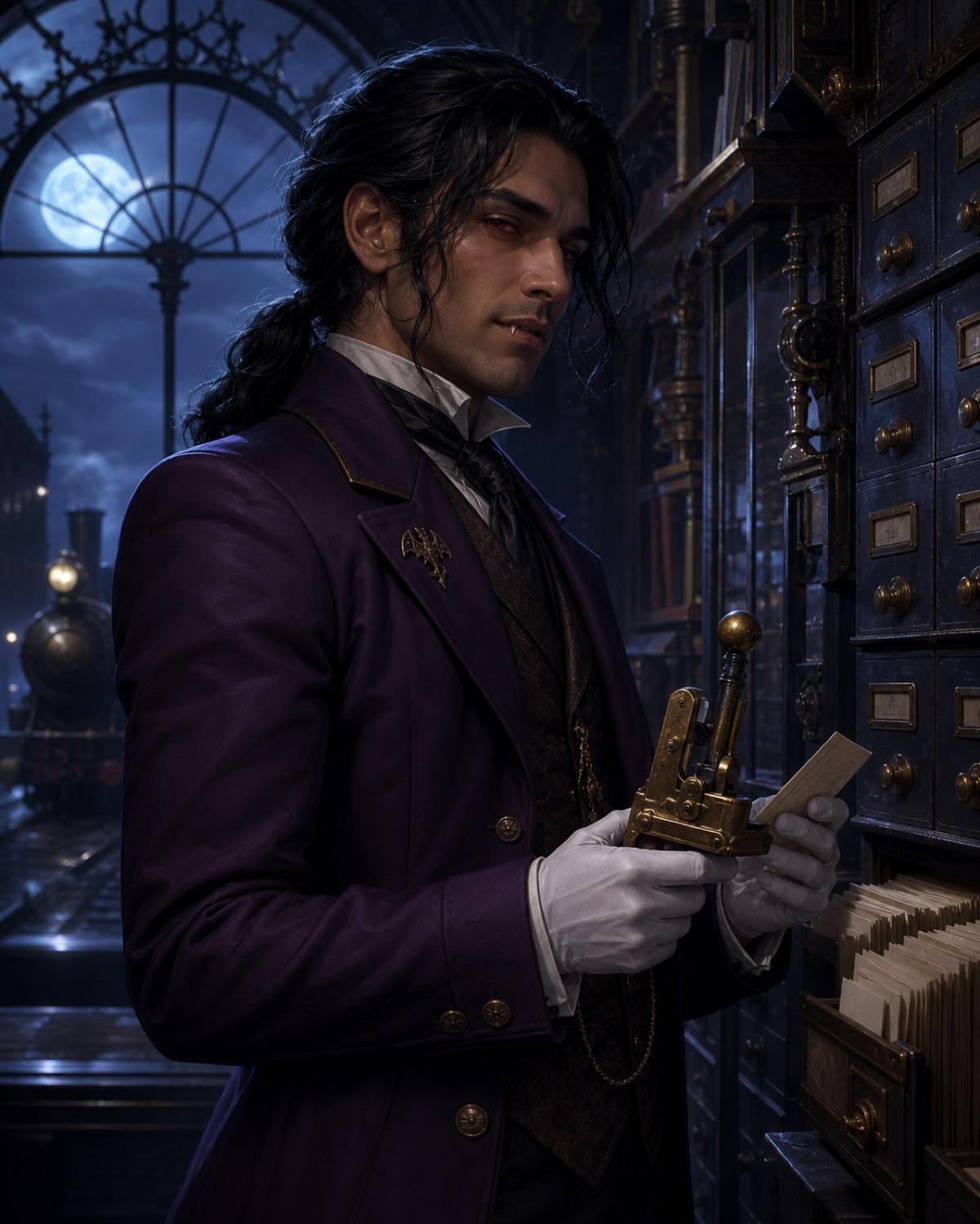
Vampire OC Maker — Create a Vampire Character | Headcanon
Create an original vampire character with a distinct era, occupation, clothing, expression, pose, and nocturnal setting. Generate, review, and save privately.
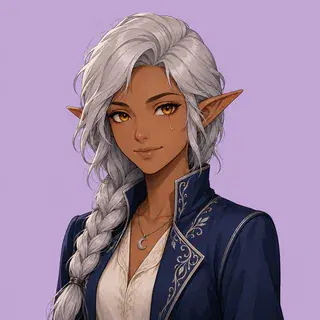
Anime OC Maker — Create an Anime Character | Headcanon
Create original anime character art from a written idea. Choose appearance, outfit, expression, pose, and framing, then review and save your OC privately.
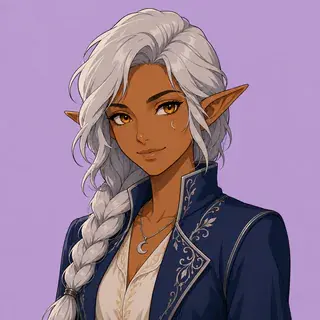
Cartoon OC Maker — Create a Cartoon Character | Headcanon
Create an original cartoon character with readable shapes, expressive poses, focused colors, and role-led details. Generate, review, and save your OC privately.