How to Make an Interactive Story
Learn how to turn a character and a difficult decision into an interactive story, design meaningful choices, preserve continuity, and build a playable opening.
Guides, tutorials, and deep-dives on headcanon writing, character development, and AI-powered fan creativity

Learn how to turn a character and a difficult decision into an interactive story, design meaningful choices, preserve continuity, and build a playable opening.

A focused guide to charlastor headcanon ideas for Charlie Morningstar and Alastor, including relationship dynamics, tension points, AU angles, writing prompts, and ways to keep both characters recognizable.

Learn how to turn an OC idea into character art with Headcanon’s AI OC Maker, including prompt tips, detailed controls, iteration, saving, and creative limits.

OC means “original character” in fandom, art, roleplay, and writing, or “original content” on social media. Learn how to tell which meaning applies.

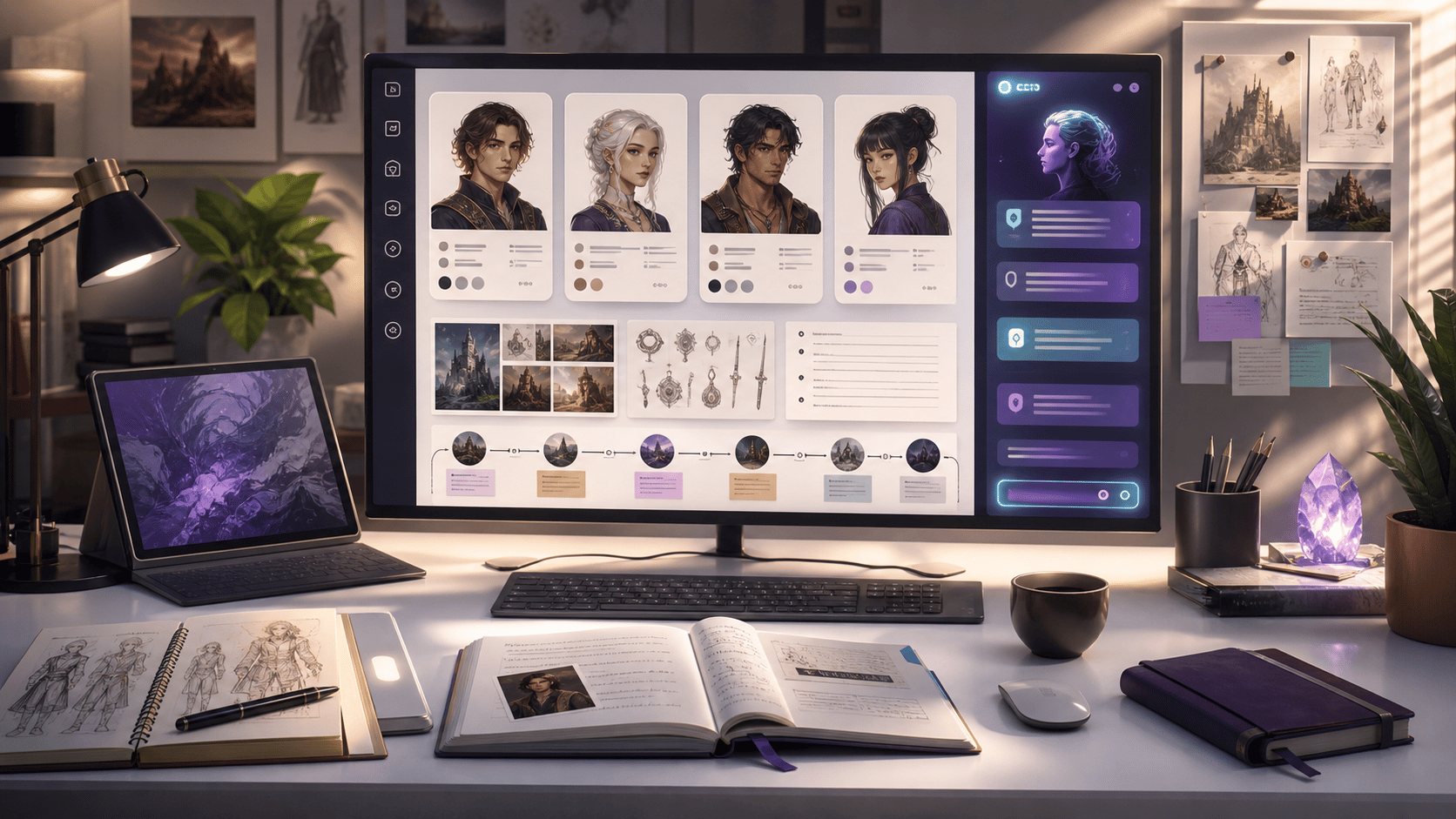
Follow one practical OC Studio workflow from a character core to world pressure, relationship dynamics, and a story arc without losing continuity between separate notes.

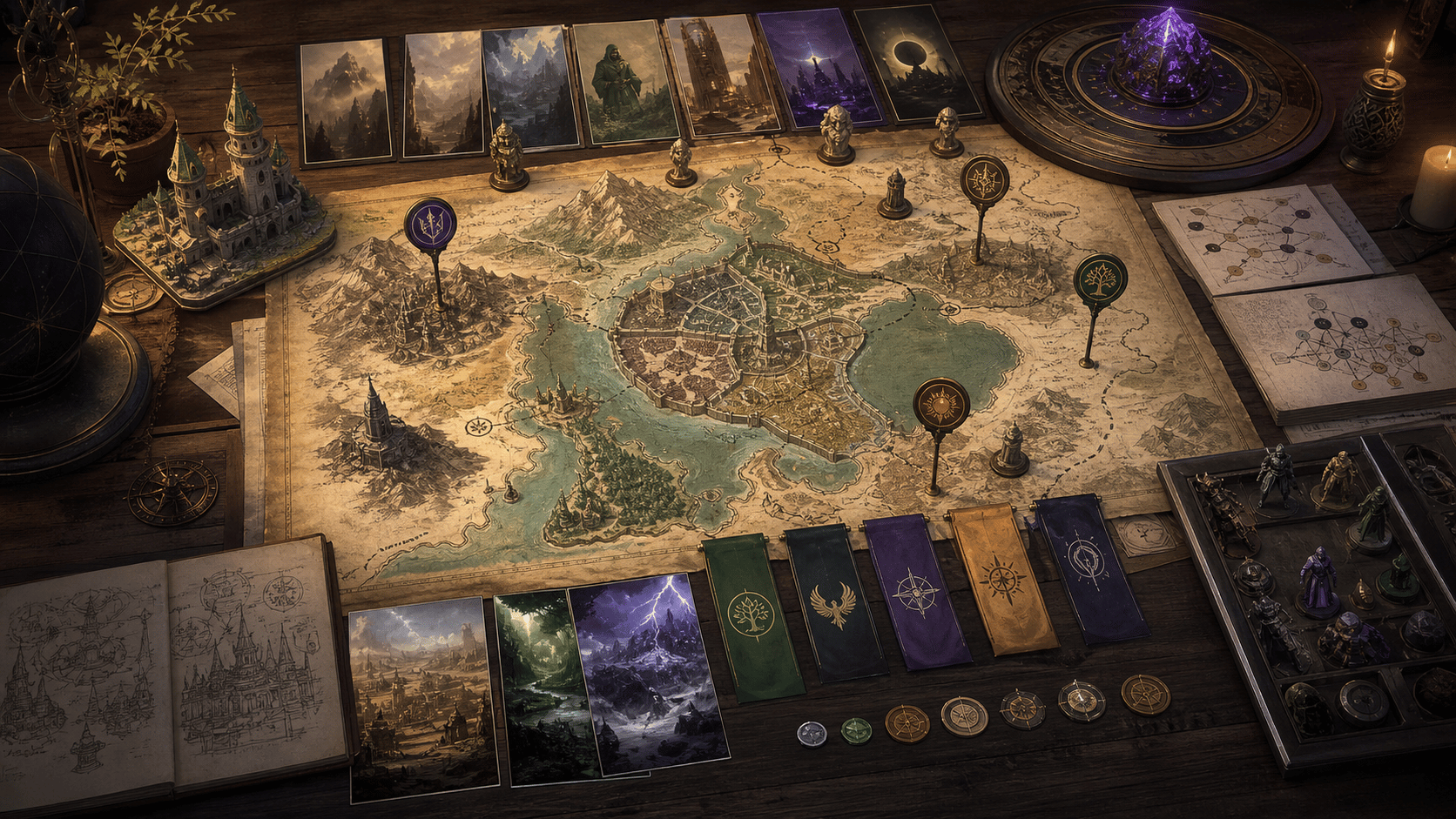
Build an OC setting from story pressure outward: define the rule that creates difficult choices, connect it to daily life, and add sub-world details only when characters need them.

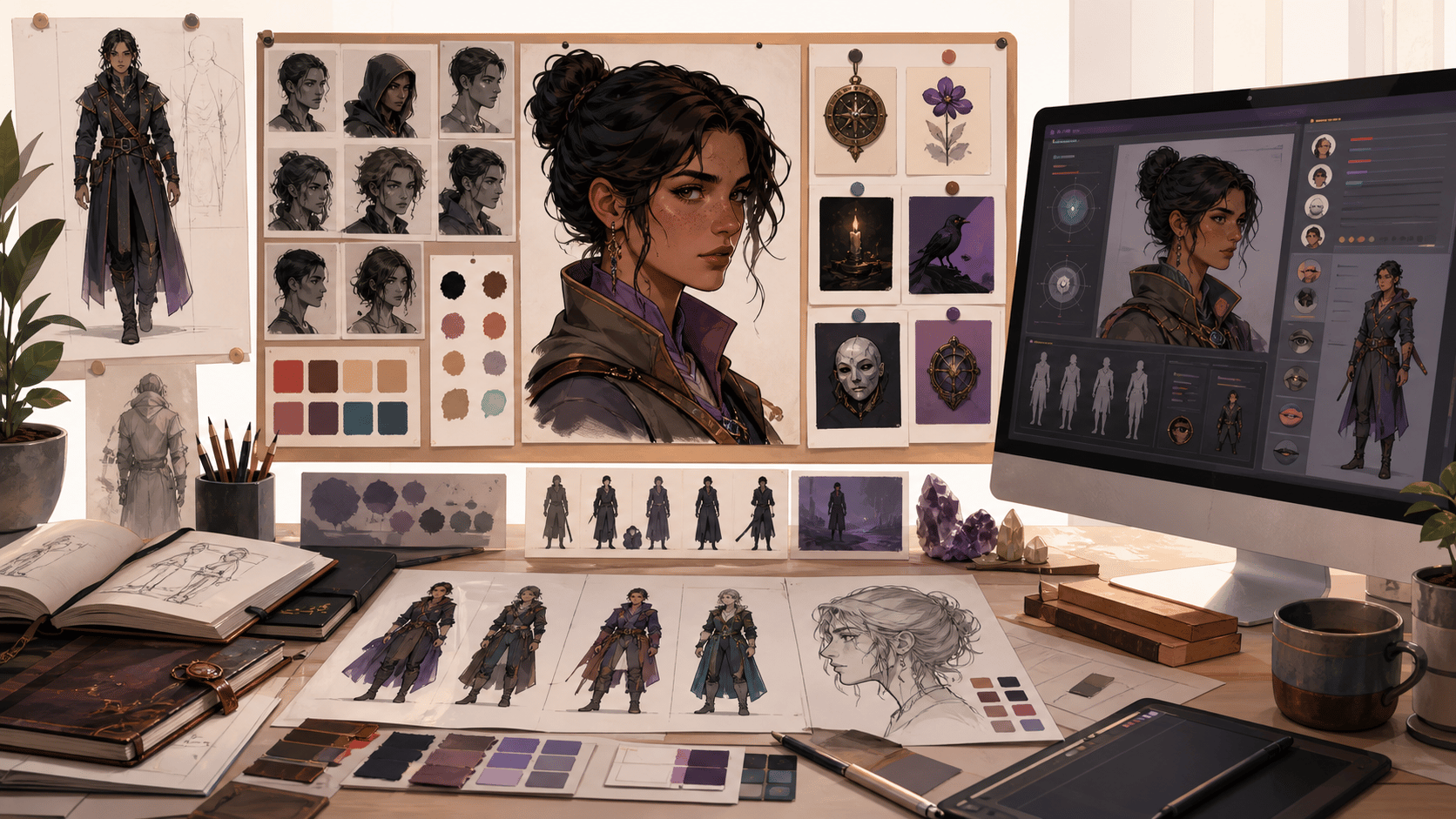
Design an original character around motivation, contradiction, voice, relationships, and continuity, then use visual details as story evidence rather than decoration.

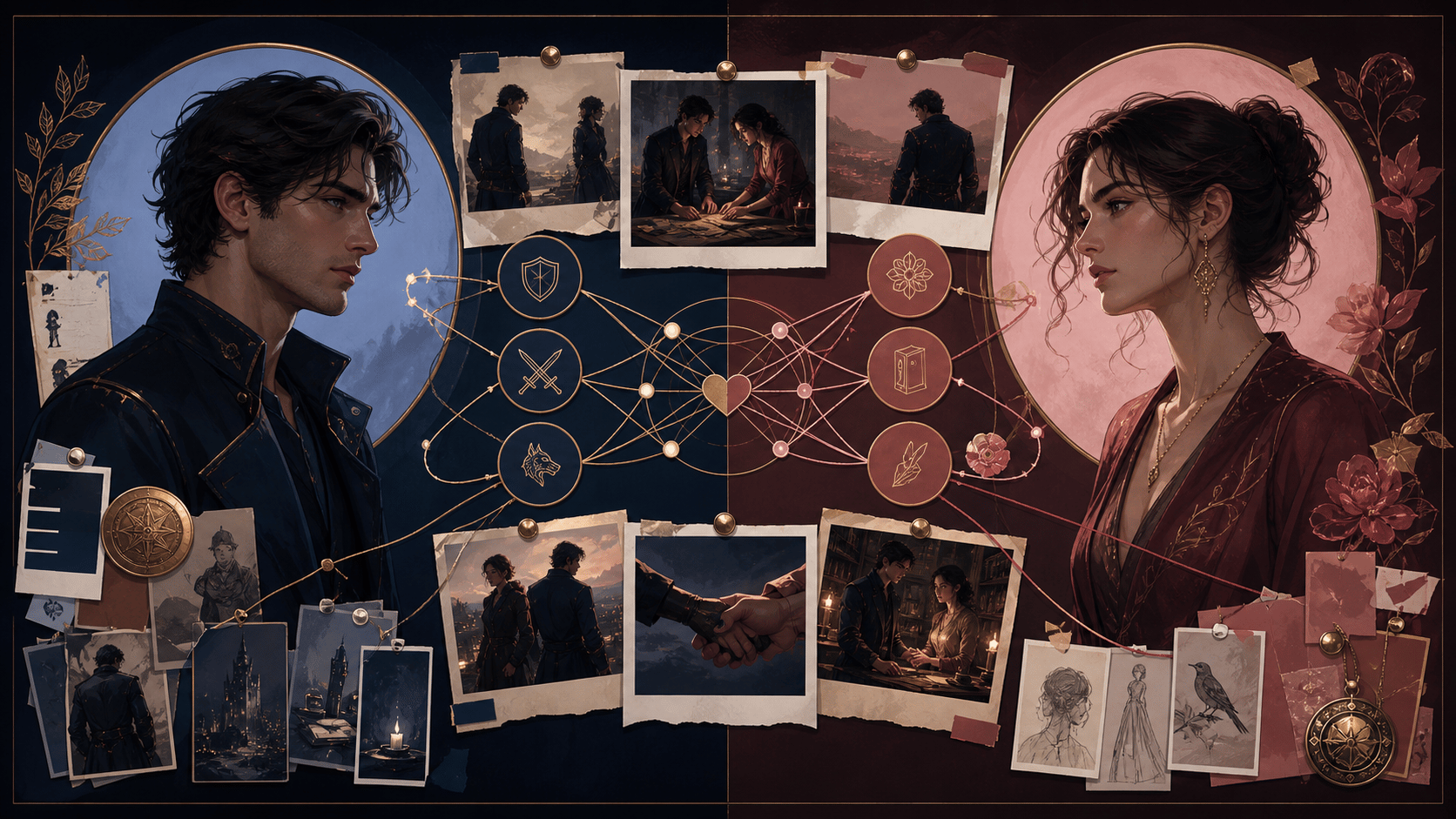
Build a two-character relationship from function, chemistry, conflict, trust, and shared history, then test it through specific scene behavior.

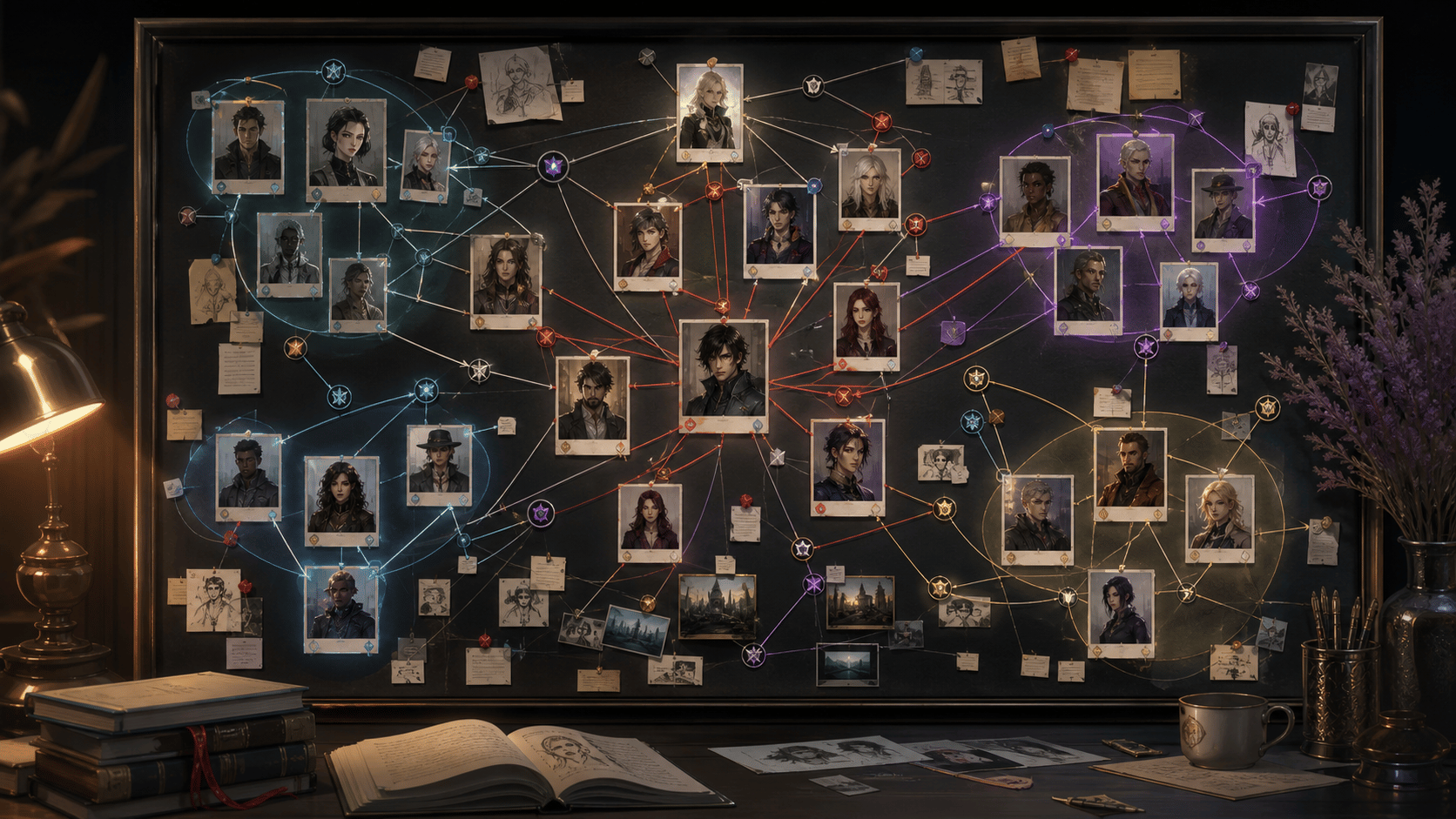
Map a cast as a changing relationship system: define asymmetric ties, factions, information flow, and tensions that create story events without centering every connection on the protagonist.

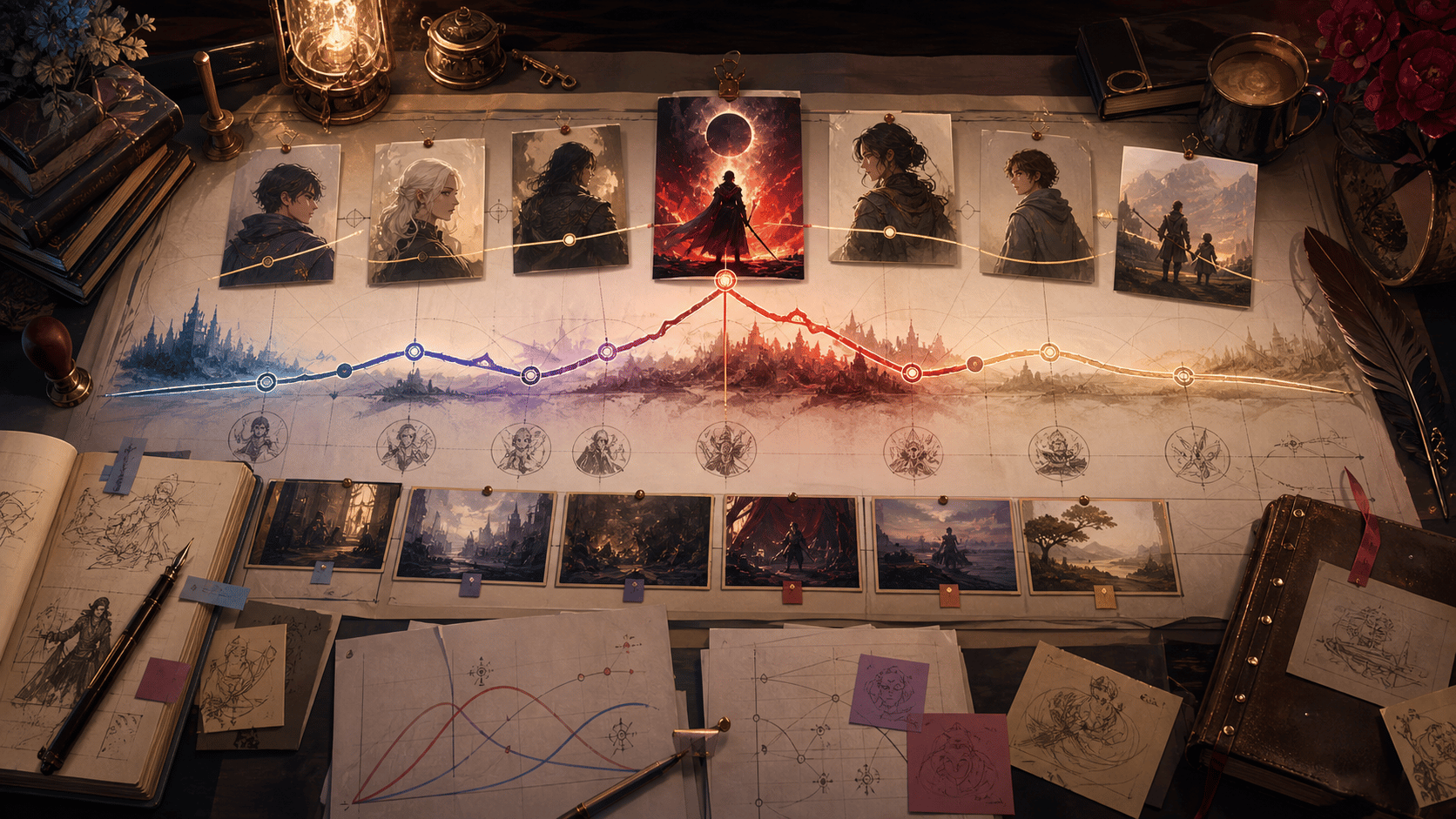
Plan an OC story arc as a chain of pressure, choice, consequence, and change, with relationship beats and world rules tied to the same central belief.

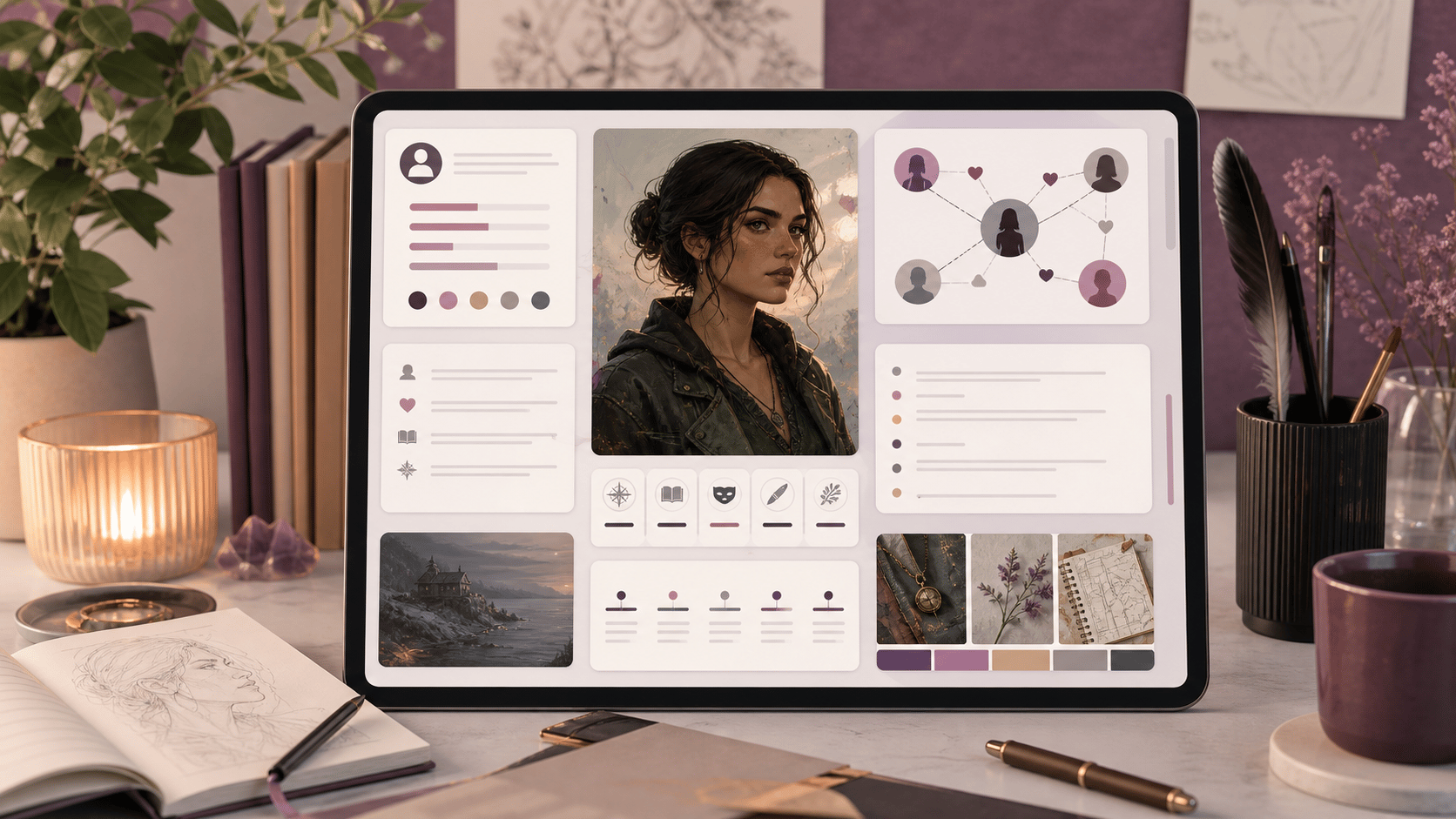
A strong character needs more than one clever headcanon. Learn how to use an AI character generator to build a complete Character Kit with a profile, backstory, headcanons, relationship hooks, scenario seeds, and a visual direction for your OC or fandom character.

Scenario headcanons are the most dynamic format in fan creativity — instead of describing who a character is, they show who a character is by putting them in a specific situation. First meeting, crisis, unexpected kindness, confrontation. This guide covers what makes a great scenario headcanon, the most popular scenario formats, and how to generate scenario ideas that reveal rather than just describe.

Found family — the idea that the people who choose each other matter as much as the people who share blood — is the single most universal trope in fan creativity. This guide breaks down what makes found family headcanons so emotionally resonant, how the trope works across different fandoms, and how to write found family content that earns its emotional weight.

Relationship headcanons — fan-created ideas about how two characters love, fight, communicate, and grow together — are the most emotionally resonant content in fandom. This guide breaks down how to write ship headcanons that feel true to the characters, using specific techniques from the most beloved fan writers.

Alternate Universe (AU) headcanons are one of the most popular and creatively ambitious formats in fandom. From the classic coffeeshop AU to dark mirror timelines, AU headcanons let fans explore who characters fundamentally are by stripping away the context they were built in. This guide covers the most popular AU formats, how to write them well, and what makes each type work.

Creating a compelling original character (OC) for a fandom is one of the most rewarding creative projects in fan culture — and one of the most easily done badly. This complete guide covers every stage of OC creation: concept, backstory, personality, appearance, integration into the fandom world, and how to avoid the pitfalls that make OCs feel unconvincing.

Turn generated backstory events into a causal chain that explains present behavior, creates unresolved pressure, and gives writers material for future scenes.

Generate and evaluate character names using language patterns, setting, family history, sound, contrast, and real scene tests instead of selecting from an unexplained list.

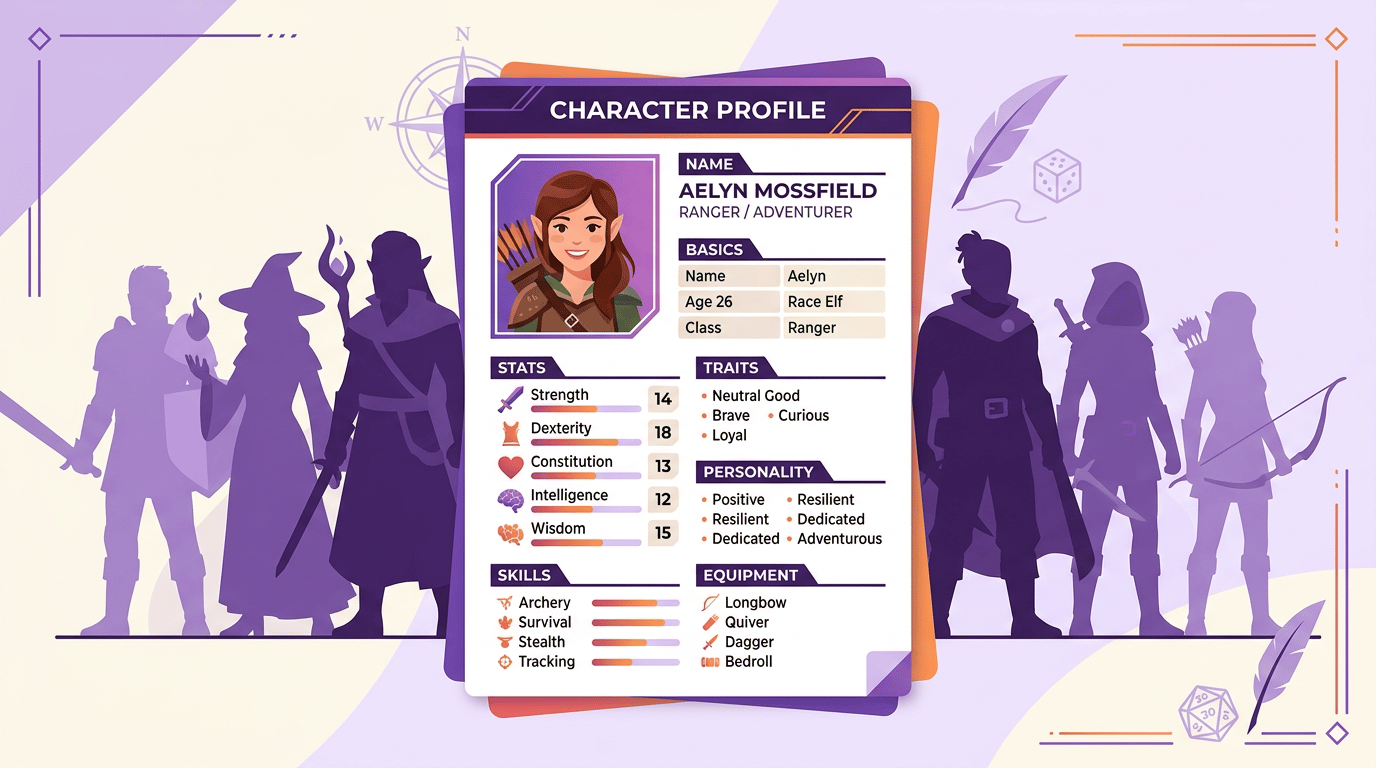
Create a character profile that predicts choices and preserves continuity, with a worked example covering motivation, contradiction, voice, relationships, and change.

A practical character-description workflow for converting generated traits into observable behavior, selective visual details, voice, and scene-ready prose.

A practical guide to choosing, prompting, and reviewing a headcanon generator so its output becomes useful material for fanfiction, roleplay, art, or character development.

Build gamer character headcanons around motivation, play style, community, access, habits, and emotional context rather than treating gender as a personality template.

Use random headcanon prompts as raw material: filter generic ideas, test them against character evidence, and rewrite one result into a scene-ready interpretation.

Explore Percy and Annabeth headcanons through earned trust, different problem-solving styles, shared danger, and the quieter work of building an ordinary future.

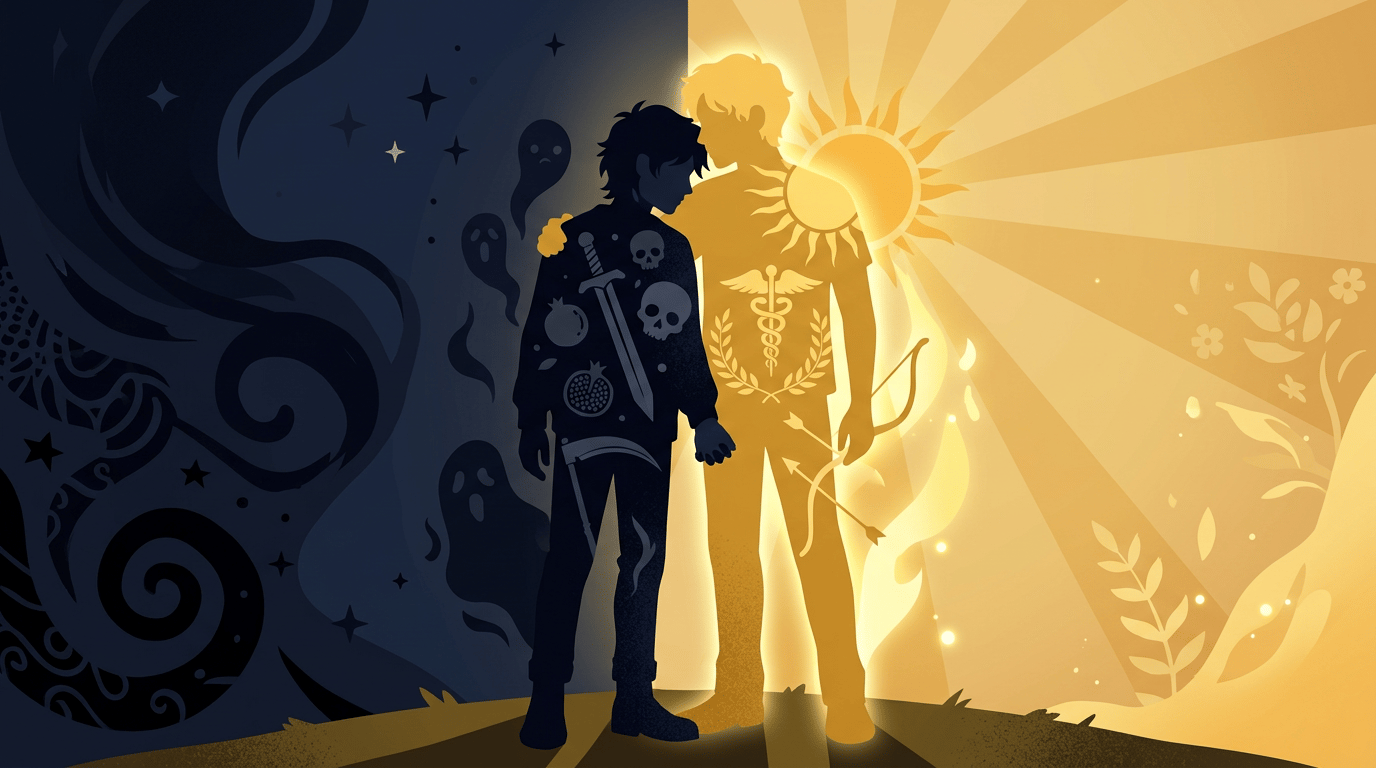
Explore Nico and Will relationship headcanons through care, boundaries, humor, different relationships to vulnerability, and recovery that preserves both characters’ agency.

Learn how to use incorrect quotes as dialogue exercises, preserve character voice, revise generic jokes, and turn a generated exchange into a useful scene prompt.

Compare four useful headcanon types, see what question each one answers, and learn how to turn the same character observation into different creative outcomes.

Learn what headcanon means, how it differs from canon and fanon, and how to turn an interpretation into a specific, believable idea that supports creative writing.
The Headcanon.io blog covers headcanon writing, character development, fan creativity, and the craft of using AI tools as a creative partner. Articles are written by the Headcanon.io team — fans and product builders who engage with these communities directly.
We write for creators: people who use fan fiction, roleplay, and character theory as a serious creative practice. Our guides focus on technique and process, not just tool features.
New articles are published regularly. If you have a topic you'd like covered, let us know.