
Searches for an AI character generator usually start with a simple goal: you want a character idea fast.
But the character that actually becomes useful for fanfiction, roleplay, comics, games, or original stories needs more than a name and a few traits. You need a profile, a backstory, personality details, relationship angles, scene ideas, and sometimes an image direction you can keep returning to.
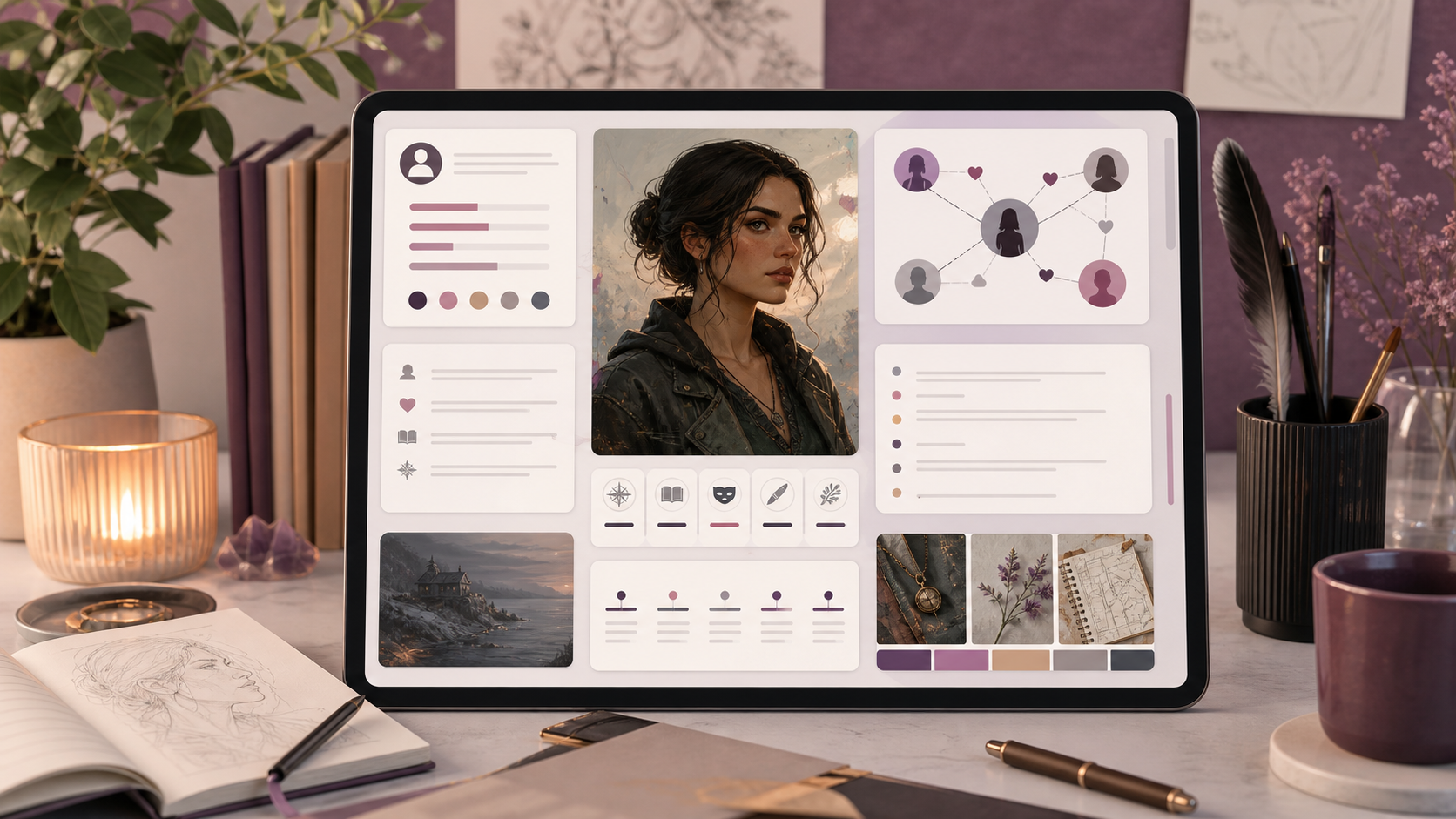
That is the job of a Character Kit: one complete creative package for one character.
You can start with the Character Kit Generator on Headcanon.io, or use this guide as a checklist for building one manually.
What Is a Character Kit?
A Character Kit is a reusable bundle of character assets. Instead of generating isolated pieces, it gives you a structured set of material you can use across scenes, chapters, campaigns, or prompts.
A useful Character Kit usually includes:
- A clear character profile with personality, role, habits, and contradictions
- A backstory that explains motivation without locking every detail too early
- Headcanons that make the character feel specific and alive
- Relationship hooks for friends, rivals, family, romance, or found-family dynamics
- Scenario seeds that turn the character into story motion
- A visual direction or generated image to help anchor the character
Why a Full Kit Beats a Single Character Prompt
Single generators are great when you know exactly what you need. A character description generator helps with appearance and personality. A backstory generator helps with history and motivation. A character headcanon generator gives you flavorful details.
The problem is that each result can drift in a different direction. One output makes the character serious, another makes them chaotic, another suggests a past that does not fit the tone.
A Character Kit solves this by generating the pieces as one connected package. The profile, backstory, headcanons, relationship hooks, scenario seeds, and image context all point toward the same character.
How to Build a Complete Character Kit
1. Start with the character's role
Before adding lore, decide what the character does in the story. Are they a rival, a healer, a runaway heir, a comic relief friend, a villain with a soft spot, or the person who keeps the group grounded?
A role gives the AI character generator something stronger than surface traits. It tells the system what kind of story pressure the character should create.
2. Generate the profile
The profile is the kit's foundation. It should include appearance, personality, strengths, flaws, speech style, daily habits, fears, desires, and a few contradictions. Contradictions are especially important because they keep the character from feeling flat.
3. Add a backstory with open doors
A good backstory explains why the character behaves the way they do, but it should not answer everything. Leave a few emotional questions open so future scenes still have room to surprise you.
4. Create headcanons that reveal behavior
Headcanons work best when they show behavior rather than describe labels. Instead of "they are loyal," try a detail like "they remember tiny preferences and pretend it is coincidence." Those details are easier to use in scenes.
5. Add relationship hooks
Relationship hooks are not full relationship arcs. They are starting points: jealousy, mentorship, old guilt, accidental trust, a secret alliance, a shared joke, or a conflict neither person wants to name.
If you already know the connected characters, include them. If not, ask for flexible hooks that can fit future friends, rivals, love interests, or found-family roles.
6. Turn the kit into scenarios
Scenario seeds are where a character becomes usable. A profile says who they are. A scenario says what happens when that identity is tested.
7. Generate a visual direction
A character image does not have to be final concept art. For writing, it can simply anchor the vibe: silhouette, color palette, expression, clothing language, and emotional presence.
Character Kit vs. OC Generator
An OC generator usually creates a new original character idea. A Character Kit goes further: it turns that idea into a working creative asset. You can still use it for OCs, but the output is designed to be saved, expanded, and reused.
That makes Character Kit useful for fanfiction writers, roleplayers, D&D players, visual novel creators, comic artists, and anyone who wants a character they can actually keep building with.
When Should You Save a Character Kit to a Project?
Use a Character Kit when you want one strong character. Use a Project when you want continuity across multiple characters, relationships, scenes, and story-world rules.
The clean workflow is simple: generate the Character Kit first, then save it into a Project once it feels worth keeping. The kit becomes the character's starting package inside a larger story world.
Try It
If you want the fastest version, open the Character Kit Generator, enter a character name, fandom or universe, tone, and optional connected characters, then generate a free preview.
If the preview has the right spark, unlock the full kit and use it as your character's profile, backstory, headcanon bank, relationship starter, scenario engine, and image direction.
FAQ
What is an AI character generator?
An AI character generator is a tool that creates character ideas, profiles, traits, backstories, or visuals from a short prompt. The best ones help you turn a rough idea into material you can use in actual scenes.
Is Character Kit good for original characters?
Yes. Character Kit works well as an OC generator because it creates more than a quick concept. It gives you a profile, backstory, headcanons, relationship hooks, scenario seeds, and a visual direction.
Can I use Character Kit for fandom characters?
Yes. Add the fandom or universe so the kit can match the tone, genre, and relationship context you want. You can also add connected characters for more specific relationship hooks.
How is this different from a character profile generator?
A character profile generator usually creates one profile. Character Kit includes the profile, but also adds backstory, headcanons, relationship hooks, scenario seeds, and an image, so it is closer to a complete character development workflow.