
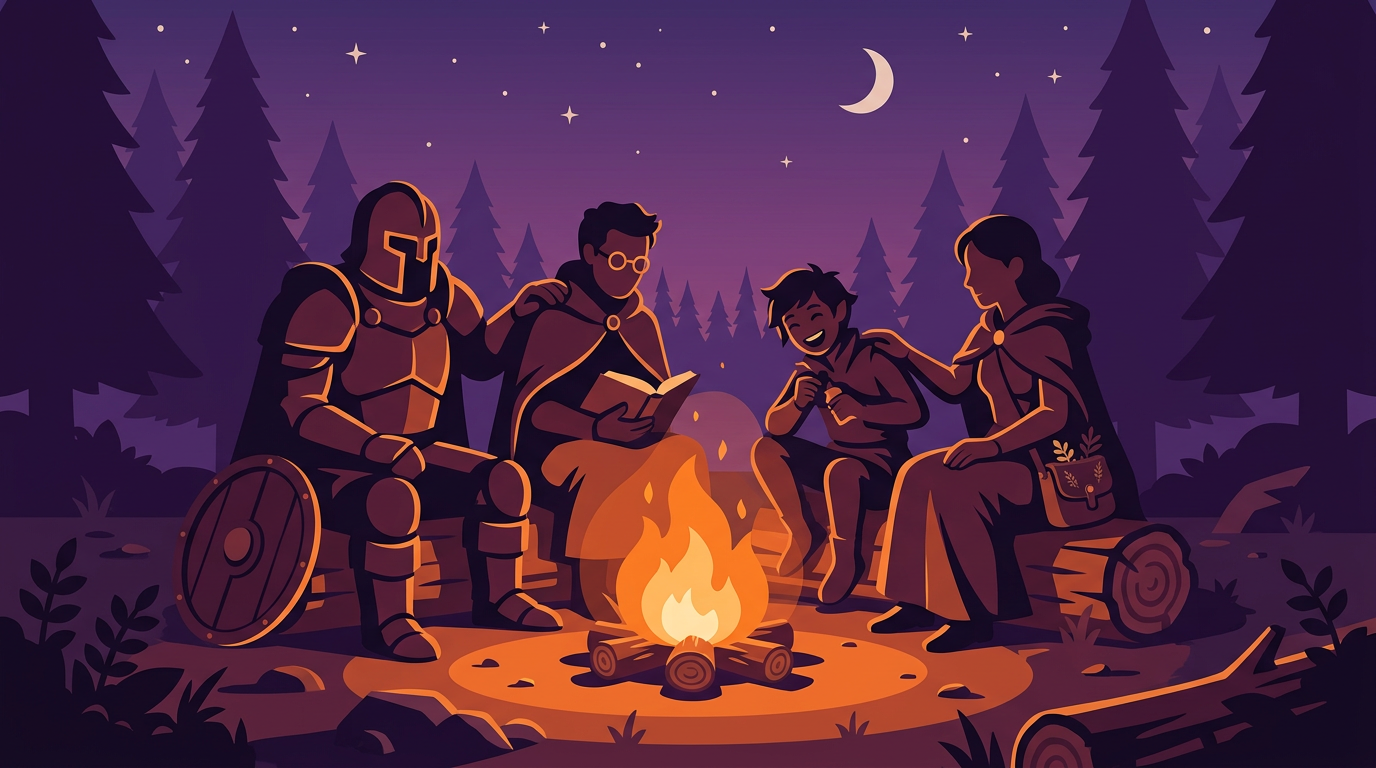
Ask any fan creator what the most emotionally resonant concept in fandom is, and found family comes up more than almost anything else. It crosses every genre, every medium, every fandom. It works in shonen anime and Victorian novels, in space operas and high school dramas. Something about the idea of people choosing to become family — not because they have to, but because they decide to — reaches something deep.
And when it works in a story, it generates more headcanon content than almost any other dynamic. This guide is about why, and about how to write found family headcanons that earn their emotional impact.
What Is Found Family?
Found family is the narrative situation in which a group of characters who are not related by blood come to function as a family for each other — providing belonging, support, protection, and identity in the way that biological family is supposed to but often doesn't.
In fiction, found family often forms under pressure: a shared mission, a common enemy, a situation that throws together people who would never have sought each other out. The process of choosing each other — slowly, imperfectly, with conflict and misunderstanding — is what makes the dynamic emotionally rich.
Why Found Family Generates So Much Headcanon
Found family dynamics create exactly the kind of gaps that headcanon culture thrives in. The relationships are built, not given — which means there are moments of building to imagine. The characters usually have difficult pasts that explain why they struggle to receive care — which means there's interior life to explore. And the family is usually not finished forming when the story ends — which means there's a future to write.
- The moment each character first realized this group was their family — before they could admit it
- The private rituals and shared languages that develop between people who live closely
- The conflicts that come from people who care deeply but have never had a healthy model for expressing it
- What the family looks like after the story ends — in ordinary life, without the pressure that formed them
Found Family Tropes Across Major Fandoms
Naruto: Team 7 and Beyond
Team 7 is one of the most analyzed found families in anime fandom. Three students who were supposed to fail as a unit — one desperate for acknowledgment, one consumed by revenge, one trying to be worthy of notice — and the teacher who held grief so well he'd forgotten what it felt like not to. Their found family dynamic is complicated precisely because the story never pretended it was simple.
My Hero Academia: Class 1-A
Class 1-A's found family is built around shared danger and shared aspiration. Twenty kids who want to be heroes, living together, eating together, being terrified together. The headcanon tradition here focuses on the slow accumulation of small choices that build the family: who notices who's struggling, who learns to ask for help, what it looks like when Bakugo starts showing up for people he won't admit he cares about.
Harry Potter: The Trio and the Weasleys
Harry's found family in the Potter universe operates on multiple levels: the tight trio, the broader Weasley adoption of both Harry and later Hermione, and the Order of the Phoenix. Headcanons in this space often focus on Harry receiving care — learning what it feels like when a family feeds you, protects you, mourns you — and the complicated experience of having that after not having it.
Attack on Titan: The Survey Corps
The Survey Corps found family is perhaps the most tragic version of the trope in anime fandom. These are people who've chosen each other knowing the survival odds, who've built attachments they know they may not get to keep. AOT headcanons in this space are often about the things they do to preserve the normalcy of family in the middle of war.
How to Write Found Family Headcanons That Work
The biggest risk in found family headcanons is sentimentality — writing the warmth without earning it, describing belonging without showing what it cost. The most resonant found family content earns every moment of softness.
- Show the before: The found family is more meaningful when we understand what each character was before it. What were they without this? What did they think family meant — or that they'd never have one?
- Let them be bad at it: Found families are built by people who often have no model for healthy belonging. They should be imperfect — people who want to be close and don't know how, who express care in ways that require translation.
- Use specific details: Not 'they took care of each other,' but 'she starts buying an extra coffee on mornings after she knows he slept badly.' The specificity is what makes it feel real.
- Let the family have internal friction: Real families — found or biological — contain conflict. Characters who are family can hurt each other, misunderstand each other, disappoint each other. The found family headcanons that resonate are the ones that don't pretend belonging means no conflict.
Found Family vs. Chosen Family vs. Platonic Soulmates
These terms are related but distinct in fan creativity. Found family refers to a group dynamic — multiple people building a family structure together. Chosen family is often used for a two-person or smaller chosen bond. Platonic soulmates is specifically about an intense, irreplaceable platonic connection between two characters that functions like a romantic soulmate bond without the romance.
All three generate significant headcanon content, but found family headcanons are typically the most group-focused and domestic in character.
Generating Found Family Headcanons with AI
The scenario headcanon generator is particularly useful for found family content — you can drop a group into a specific shared situation (a holiday, a loss, a new member, a conflict) and generate how the family dynamic plays out. The more detail you give about the group's existing dynamic, the more specific and resonant the generated content.
For individual character work within a found family, the character headcanon generator can help you explore each character's specific relationship to the group — what belonging means to them, how they show care, what it took for them to let themselves be cared for.
Frequently Asked Questions About Found Family Headcanons
What is found family in fandom?
Found family in fandom refers to a group of characters who are not biologically related but who come to function as a family for each other — providing belonging, care, and identity. It's one of the most universal tropes in fan creativity.
Why is found family such a popular headcanon topic?
Found family dynamics create exactly the gaps that headcanon culture thrives in: unshown moments of connection, interior lives that the canon story didn't have time to explore, futures that the story ended before showing. The trope also tends to feature characters with complicated pasts, which gives headcanon writers rich emotional territory.
What fandoms have the most found family headcanon content?
Naruto (Team 7 and the Konoha 11), My Hero Academia (Class 1-A), Harry Potter (the Golden Trio and the Weasley family), Attack on Titan (the Survey Corps), and Avatar: The Last Airbender (Team Avatar) are among the richest found family headcanon territories in fandom.