
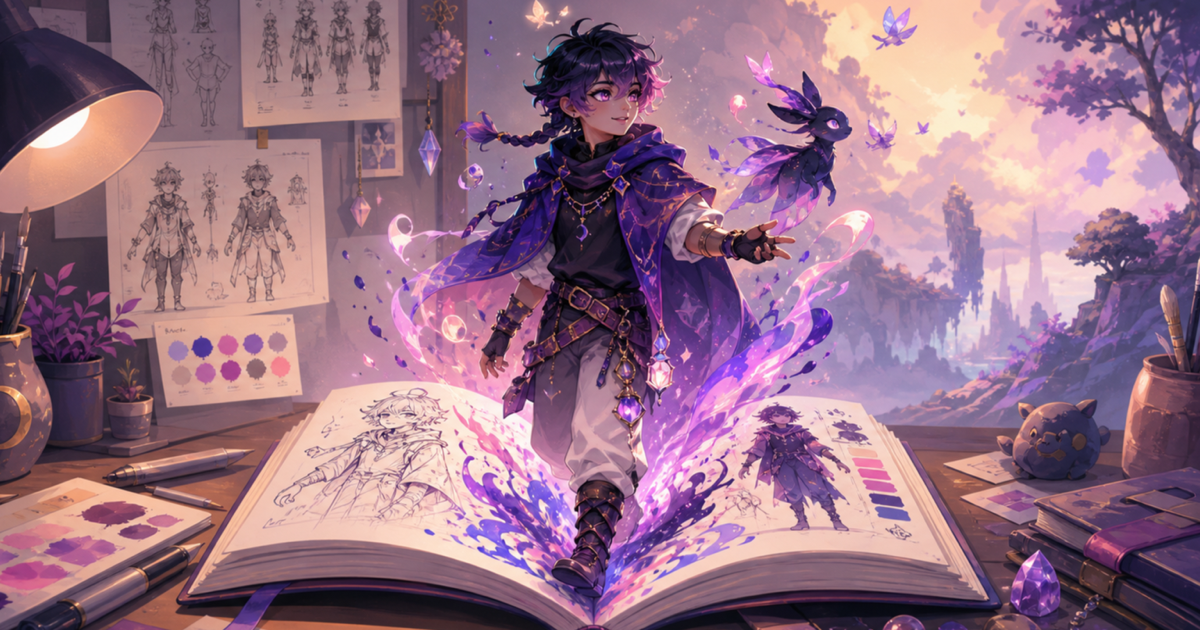
OC most often means “original character” in fandom, art, roleplay, gaming, and creative-writing communities. It describes a fictional character created by a fan, artist, writer, or player rather than an official character from an existing story. On Reddit and other social platforms, OC can instead mean “original content”—a post made by the person sharing it rather than a repost.
The surrounding words usually make the intended meaning clear. If someone is discussing a character design, backstory, ship, roleplay, or fanfiction, OC almost certainly means original character. If the label appears on a photo, meme, video, chart, or post, it more likely means original content.
OC Meaning at a Glance
- Original character: a fictional character created by an individual writer, artist, roleplayer, or fan.
- Original content: a photo, drawing, meme, video, story, or other post created by the person who shared it.
- Of course: an occasional informal abbreviation in texts or direct messages, though “ofc” is usually clearer.
- Orange County and other proper names: a geographic or organization-specific abbreviation when the conversation is about a place, school, business, or title.
This context-dependent use is reflected in Wiktionary’s OC entry, which records both “original content” and the fandom term “original character.”
What Does OC Mean in Fandom?
In fandom, OC stands for original character. An OC is a character you create yourself. The character can live inside a world you invented, or they can be designed to fit an existing fictional universe. For example, a fan might create a new student for a magic-school setting, a new hero for a superhero universe, or an entirely original cast for their own novel.
The important point is authorship: the creator made the character’s identity, appearance, personality, history, goals, and relationships. The surrounding world does not have to be original for the character to count as an OC.
Examples of OC in fandom conversations
“I finally finished my OC’s character sheet and backstory.”
“My OC is a healer who joins the canon cast halfway through the story.”
“I drew my two OCs meeting for the first time.”
Can an OC Exist Outside a Fandom?
Yes. An OC does not need to belong to an existing fandom. Characters created for an original novel, comic, game, animation, tabletop campaign, or personal art project are also commonly called OCs in online creative communities.
Some people use “OC” mainly for fan-created characters, while others use it for any independently created fictional character. Both uses are common. If the distinction matters, phrases such as “fandom OC” and “original-universe OC” remove the ambiguity.
What Does OC Mean on Reddit and Social Media?
On Reddit, forums, and social media, OC often means original content. A creator may add “[OC]” to a title or caption to say, “I made this.” It distinguishes a creator’s own photo, illustration, data visualization, meme, video, or written post from something reposted from another source.
That leads to an easy test: if OC labels the post itself, it probably means original content. If OC names or describes a fictional person, it probably means original character.
Examples of OC as original content
“[OC] A map I made of our three-month road trip.”
“New animation—OC, not a repost.”
“This illustration is my OC.”
The last example can still be ambiguous: it might mean “this is my original content” or “this is my original character.” A caption about the artwork’s creation points to original content; a caption about the figure’s name or story points to original character.
OC vs. Canon Character
A canon character is officially part of a published story, series, game, or franchise. An OC is created outside that official cast. A fandom OC may interact with canon characters in fanfiction or roleplay, but that does not make the OC canon.
- Canon character: officially appears in the source material.
- Fandom OC: created by a fan to exist within or alongside that source material.
- Original-universe OC: created for the creator’s own setting or story.
“Canon” describes official story status, not quality. An OC can be carefully written and fully developed while remaining non-canon.
OC vs. Sona, Self-Insert, and Persona
These terms overlap, but they are not identical.
- OC: any original fictional character created by a person.
- Sona or persona: a character used to represent the creator in a community or creative identity, such as an artist persona or fursona.
- Self-insert: a character intentionally based on the creator and placed into a story.
A sona or self-insert can be an OC, but most OCs are not direct versions of their creators. An OC can have a completely different background, personality, appearance, values, and life.
OC vs. OOC: What Is the Difference?
OC means original character or original content. OOC usually means “out of character.” In fanfiction criticism, it describes behavior that does not fit a character’s established personality. In roleplay, an OOC message is written by the player rather than spoken by the character.
- “Here is my new OC” means the speaker created a character.
- “That reaction felt OOC” means the behavior seemed inconsistent with the character.
- “OOC: I have to leave the roleplay early” means the player is speaking as themselves.
What Makes a Character an OC?
An OC begins when you make meaningful creative choices about a fictional person. You do not need a finished illustration, a hundred-page backstory, or a completely original universe. A name, role, personality direction, visual idea, or story problem can be enough to start.
A more developed OC usually includes:
- A clear desire and a reason it matters.
- Strengths, limitations, habits, and contradictions.
- A visual identity or a few recognizable design details.
- A backstory that affects present choices.
- Relationships that reveal different sides of the character.
- A conflict or story arc that creates change.
How to Create Your First OC
- Choose the character’s role. Decide what they do in the story, group, game, or world.
- Give them a desire and an obstacle. A character becomes useful when they want something that is not easy to obtain.
- Add one contradiction. A confident leader who fears disappointing people is more specific than a list of positive traits.
- Design two or three memorable details. Clothing, posture, color, voice, tools, or habits can communicate personality.
- Connect them to someone else. A friend, rival, mentor, family member, or enemy immediately creates story possibilities.
If you want a structured place to develop those pieces, use OC Studio to organize characters, worlds, relationships, and story arcs. For a faster starting point, the OC Maker can help you shape an initial character concept before you expand it.
Frequently Asked Questions About OC
What does OC mean in anime?
In anime and manga fandoms, OC usually means original character: a fan-created character who may exist in an established series or in an anime-inspired original world.
What does OC mean in art?
In character art, OC usually means original character. When “[OC]” labels an entire post, however, it may mean original content and indicate that the poster made the artwork.
What does OC mean in roleplay?
In roleplay, an OC is a player-created character rather than a canon character from an existing work. The player decides the OC’s personality, history, abilities, limits, and relationships.
Does OC mean original creator?
Usually, no. “Original creator” may occasionally be intended in a specific community, but original character and original content are the established online meanings.
Is every fictional character an OC?
Every fictional character began as someone’s original creation, but online communities usually reserve “OC” for characters made by individual fans, artists, writers, roleplayers, or independent creators—not for a franchise’s established canon cast.
The Short Answer
If you see OC near fan art, character sheets, fanfiction, roleplay, or worldbuilding, read it as “original character.” If you see “[OC]” attached to a social post, photo, meme, or video, read it as “original content.” When neither interpretation fits, check whether the conversation is using OC for “of course,” Orange County, or another context-specific name.