
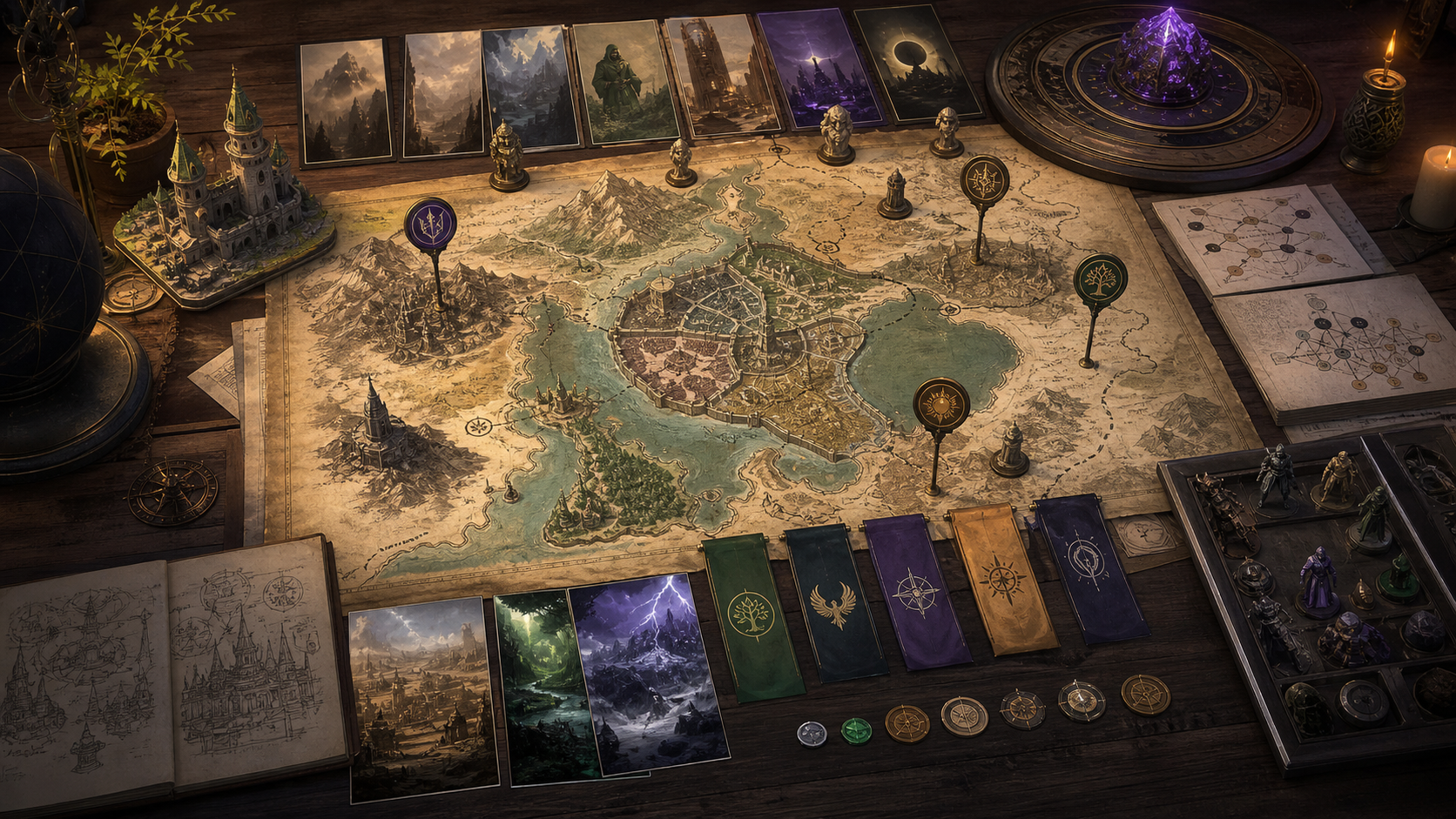
Worldbuilding becomes useful when the setting changes what a character can safely want, say, or do. Start with pressure rather than history. A thousand-year timeline cannot rescue a scene if the current rules never force a choice.
Start with one rule and one cost
Example rule: every legal portal journey creates a public record. Cost: characters who need privacy must travel through dangerous physical routes or ask someone inside the system to falsify a record.
This single rule affects work, class, relationships, crime, travel, and trust. It gives you more story material than a list of city names because characters cannot ignore it.
Build the main world at three scales
- System: Who makes the rule, who benefits, and how is it enforced?
- Community: What customs, jobs, status markers, or conflicts grew around the rule?
- Daily life: What does an ordinary person carry, avoid, repair, pay for, or lie about?
Create sub-worlds when the story changes context
A sub-world can be a district, station, school, guild, hidden route, or cultural region. Create one when location changes the available choices. Record the local rule, sensory identity, power holder, resource, danger, and the character relationship most affected there.
Tie lore to character decisions
“Weak lore: The northern settlement was founded 430 years ago. Story-facing lore: The settlement treats unopened letters as legal witnesses, so destroying Mara’s message would be both a crime and a religious violation.”
The second detail changes what antagonists can do and what evidence means. It belongs in the story because it affects action.
Use a pressure test
- Name the character’s current goal.
- Name the world rule that makes the goal harder.
- Identify who can grant an exception and what they demand.
- Choose what the character risks by obeying and by resisting.
Worked sub-world: the northern relay
The northern relay is not useful merely because it has ice bridges and brass towers. It becomes story-facing when three local facts interact: unopened letters can serve as legal witnesses, winter routes are maintained by rival families, and portal records are controlled by an outside authority.
Mara cannot simply steal the message. Opening it destroys its legal function; taking the physical route requires help from a family she previously accused; using a portal tells the authority exactly where she is going. The sub-world turns setting detail into three imperfect choices.
Research, invention, and cultural care
When a setting draws from a real culture, history, religion, language, disability, or marginalized community, separate research from invention. Use reliable sources, avoid treating a living culture as an aesthetic pack, and record which elements are fictional. Sensitivity is not achieved by removing conflict; it comes from representing people as varied participants in their own world rather than as scenery for the protagonist.
Common problems
- History without present consequences.
- Institutions that never affect the cast.
- Cultures represented by one visual motif instead of values, disagreements, and daily practices.
- Magic or technology that solves a problem without introducing a cost, limit, or new responsibility.
Record only what the project can use
In OC Studio, keep broad rules in the main world and location-specific pressure in sub-worlds. Then connect the same rule to a relationship or story-arc choice. The OC Studio workflow guide shows how those records stay aligned.