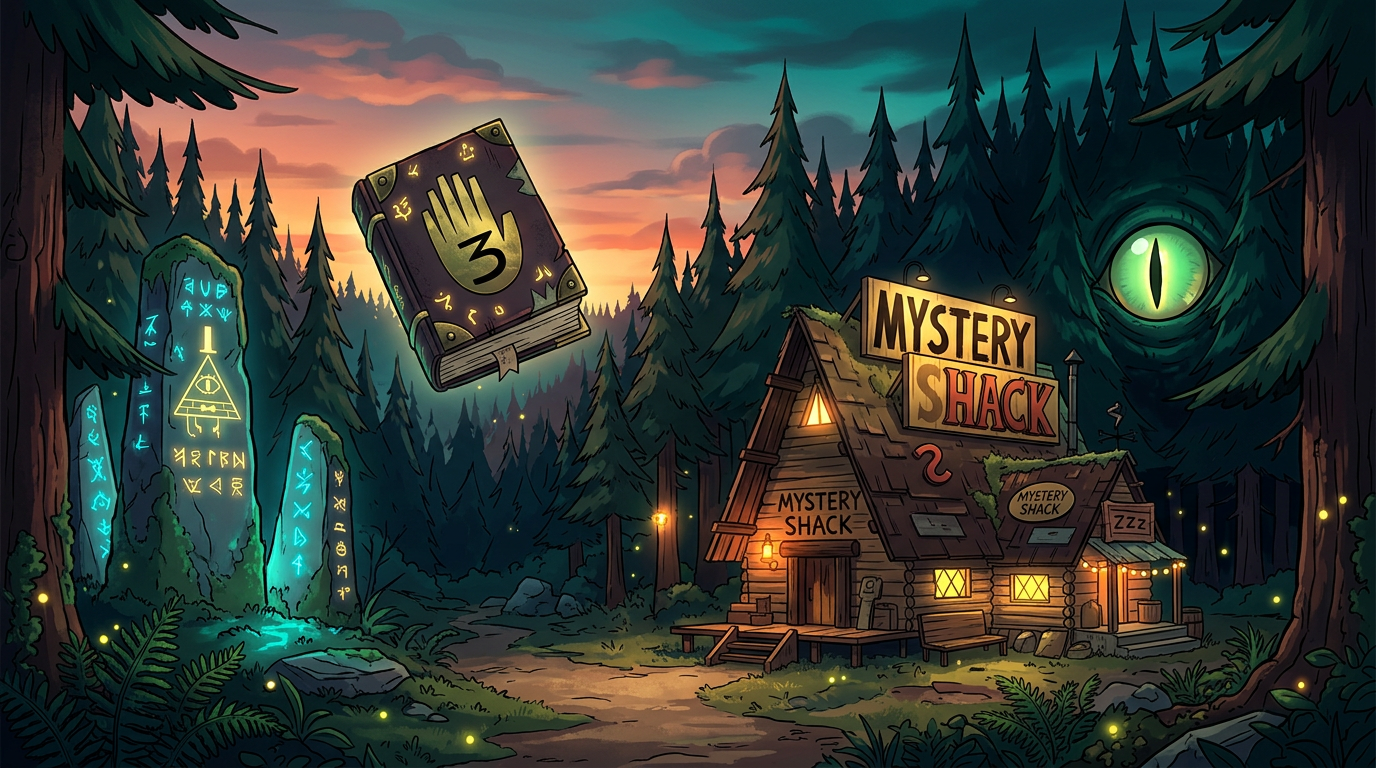
Gravity Falls generates headcanon material of unusual emotional density for a children's show because Alex Hirsch built the series around a summer that functioned simultaneously as adventure, coming-of-age story, and family reunion conducted under traumatic circumstances. The Pines family — Stan and Ford specifically — carry a backstory whose weight is entirely disproportionate to the show's tone, and the headcanon community has spent a decade working through all the implications that the series' runtime couldn't fully explore.
Dipper and Mabel are the fandom's most psychologically engaged characters because their relationship is the series' moral center, and the show is honest about the ways that center is tested. Dipper's ambition, his need to be taken seriously, his specific envy of Ford's intellectual life: these are real tensions that the series raises and partially but not completely resolves. Mabel's optimism, and the question of whether it is genuine resilience or a form of avoidance, drives some of the fan community's most interesting post-canon interpretations.
Ford Pines generates an outsized amount of headcanon material for a character who appears only in the second half of the series. His specific psychology — the genius who was isolated by his gift, radicalized by the betrayal of that gift, and then spent thirty years in another dimension carrying the consequences — is one of animated television's most complete portrayals of paranoia and isolation. The reconciliation arc with Stan generates headcanons that engage with what genuine repair between estranged siblings actually looks like.
✍️This page is curated by the Headcanon.io editorial team — fans who engage with these communities directly. Character analysis and headcanon examples are selected to reflect the creative depth of each fandom, and are updated as community trends evolve. Learn more about us.