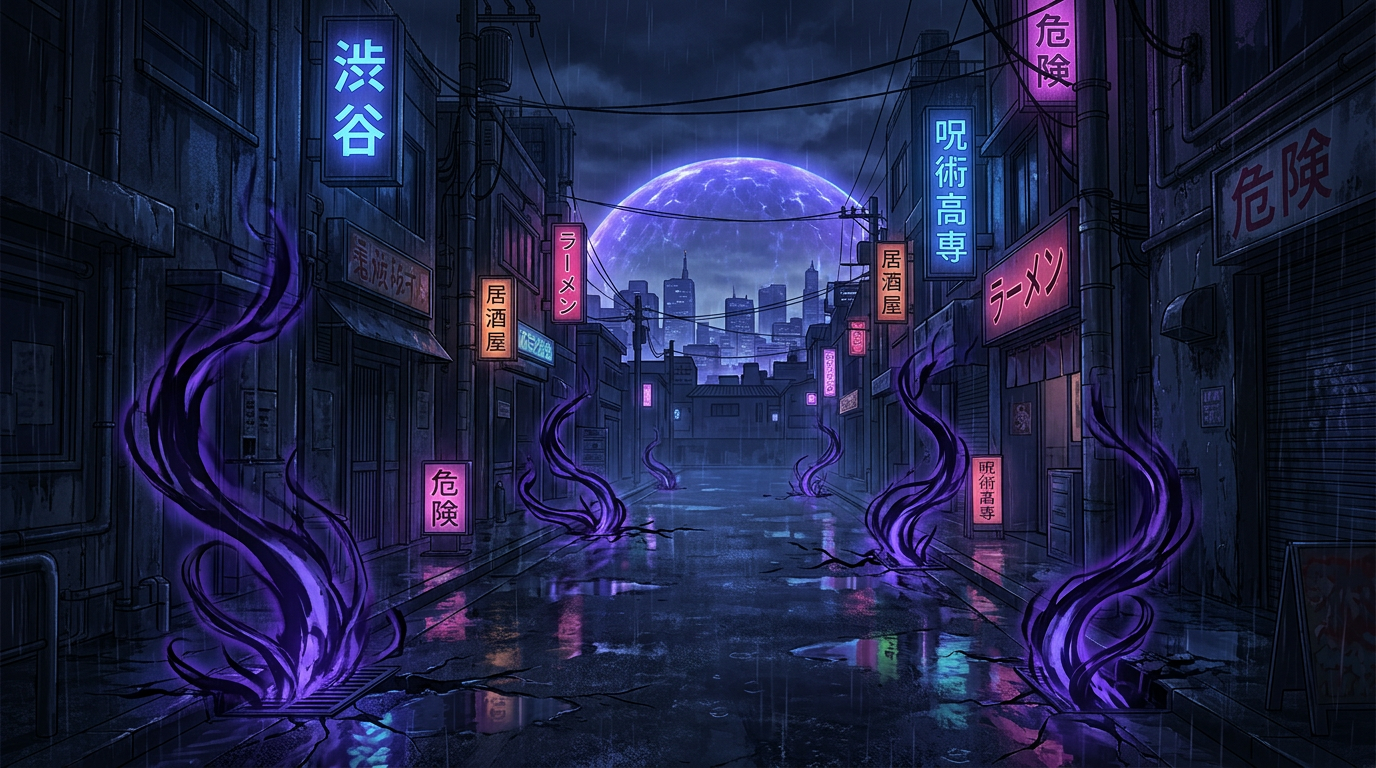
Jujutsu Kaisen generates headcanon material distinguished by its relationship to institutional failure. The jujutsu world is run by a gerontocracy that is actively cruel and routinely sacrifices the people it claims to protect, and the series is unusually honest about what this does to the people who operate within it. Nanami's disillusionment, Geto's radicalization, Gojo's complicated position as both the system's most powerful asset and its most dangerous critic: these are not peripheral concerns but the series' central dramatic tensions.
The Gojo-Geto relationship is the emotional spine of the franchise's headcanon community. Two people with complementary gifts and diverging responses to the same unbearable situation — Gojo adapting through detachment, Geto breaking through genuine moral outrage — have generated more fan interpretation than almost any other character pairing in recent anime. The tragedy isn't that they ended on opposing sides; it's that the same experience produced two different but equally coherent responses.
The younger generation — Yuji, Megumi, and Nobara — carries the series' most direct engagement with mortality. These are characters who understand from the beginning that they will probably die young, and the question of what you build, what you protect, and who you love in that context drives the fan community's most emotionally rich interpretations.
✍️This page is curated by the Headcanon.io editorial team — fans who engage with these communities directly. Character analysis and headcanon examples are selected to reflect the creative depth of each fandom, and are updated as community trends evolve. Learn more about us.