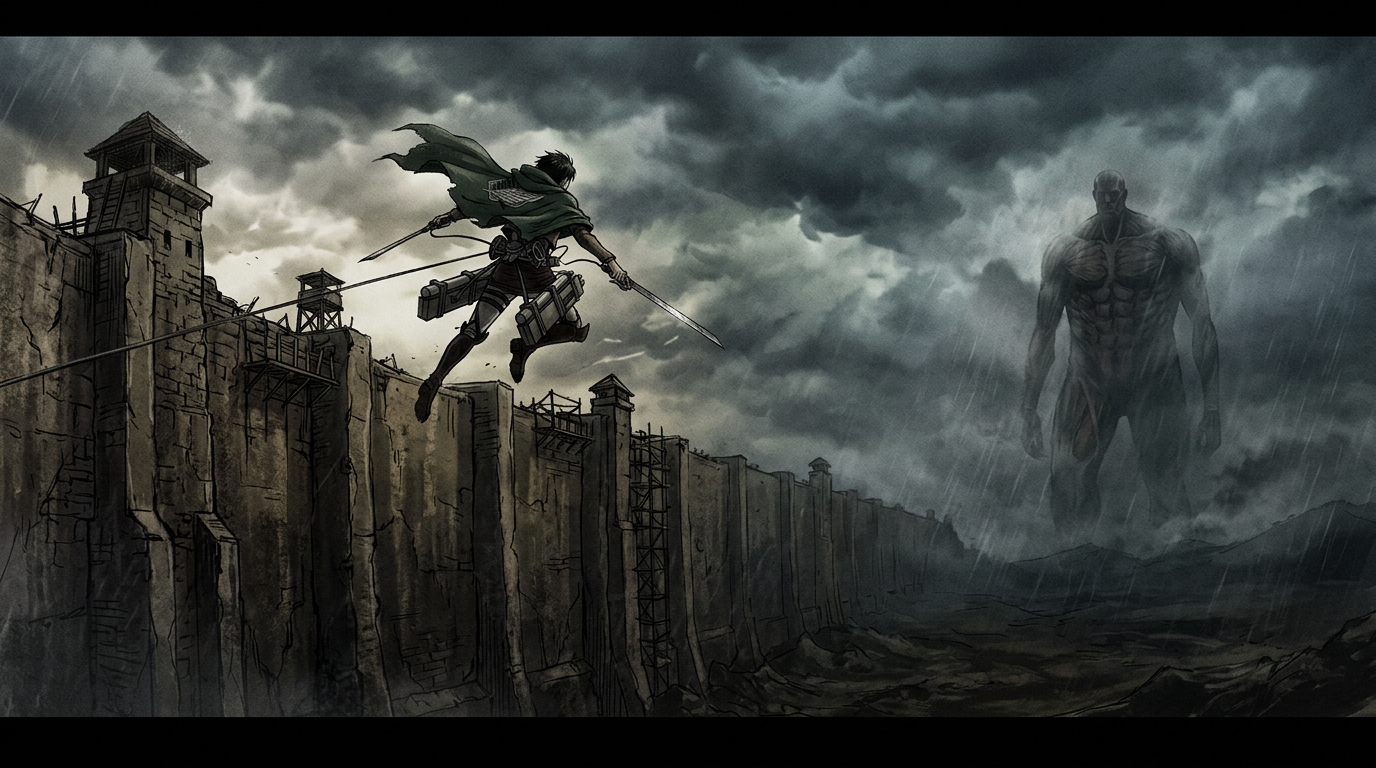
Attack on Titan produces headcanons shaped by its central preoccupation: the question of what people do with impossible choices. Nearly every significant character in the series is defined by a moment where the alternatives were all bad and they had to choose anyway. Levi, Erwin, Armin, and Hange all carry specific moral weights that the narrative names but rarely fully explores from inside — the private cost of commanding people to their deaths, the specific texture of survivor guilt, the way violence leaves residue that competence can't clean away.
What makes AoT particularly generative for fan interpretation is its refusal to let any character be simply right. Erwin sent hundreds of people to die for his dream. Levi has killed more people than he can fully count. Armin survived Erwin, absorbed his legacy, and has spent years reckoning with whether he was the right choice. These aren't characters with clean heroic arcs — they're people navigating genuinely hard moral terrain, and the headcanon community tends to meet them there rather than simplifying them.
The post-canon period is especially active in AoT fan communities, particularly around characters who survived the series' brutal conclusion. How do Mikasa, Armin, and the other survivors rebuild? How do they grieve Eren in a context where grieving him is politically complicated? How do they carry the weight of a war that ended, but didn't resolve? These questions have no easy answers, which is exactly why the headcanon community keeps returning to them.
✍️This page is curated by the Headcanon.io editorial team — fans who engage with these communities directly. Character analysis and headcanon examples are selected to reflect the creative depth of each fandom, and are updated as community trends evolve. Learn more about us.