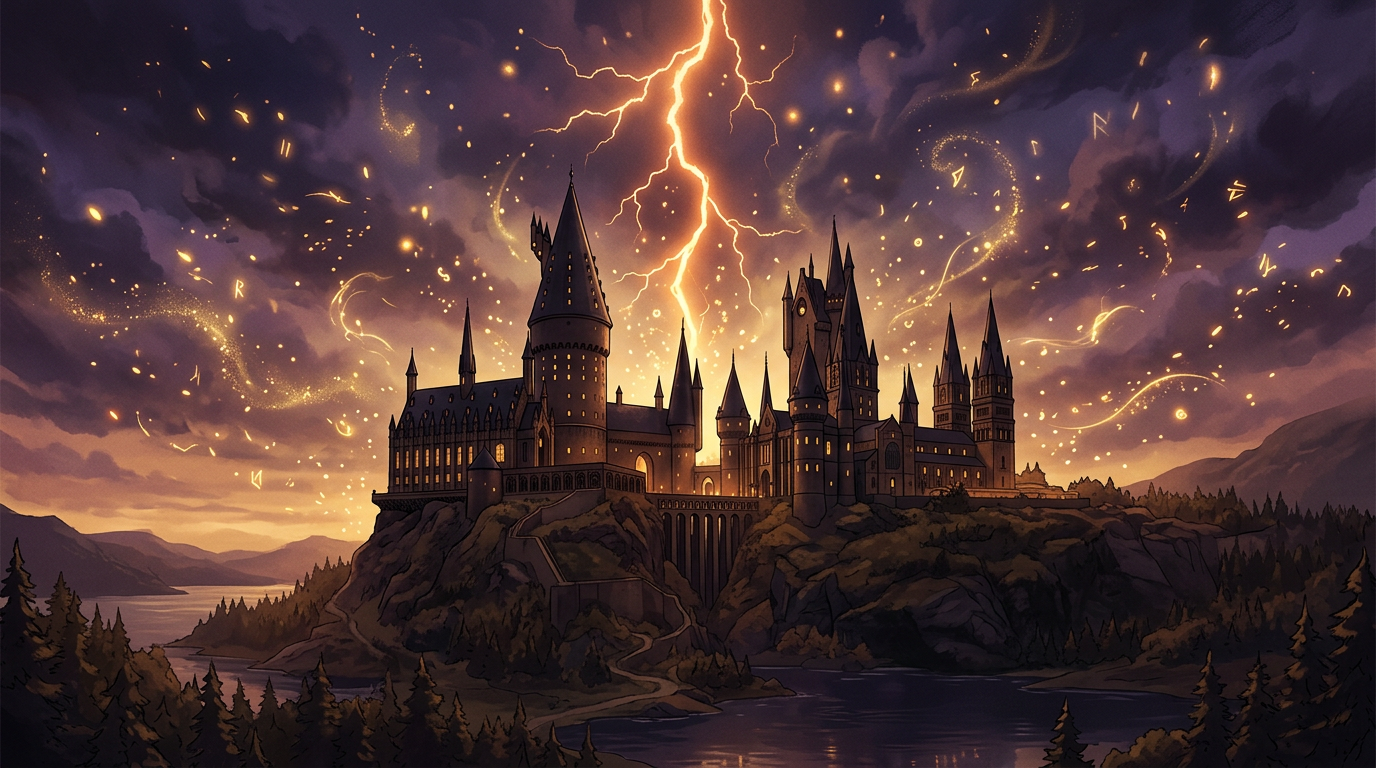
Harry Potter produces some of the richest headcanon culture in fandom because Rowling's world operates on a logic of deliberate gaps. The books are told from Harry's limited perspective — a child who doesn't understand most of what's happening around him — which means nearly every adult character in the series is partially obscured. Remus Lupin's internal life, Draco Malfoy's private reckoning, Snape's capacity for tenderness alongside his cruelty: the text gestures toward these things and then steps back. Headcanons are what fans write into that space.
What makes Harry Potter particularly generative for fan interpretation is the series' central tension between its surface register — a school story, warm and funny — and its actual subject matter: war, grief, institutional failure, and the costs of ideology. Characters like Sirius Black and Regulus Black carry the weight of that tension in ways the main narrative never fully examines. The Marauder-era community is especially active precisely because those characters exist almost entirely in negative space: we know what happened to them, but almost never from their own perspective.
The most enduring Harry Potter headcanons tend to engage with questions of unlearning and reconstruction — Draco's slow work of separating his inherited beliefs from his actual values, Neville's arc from anxious underachiever to quiet hero, Hermione's perfectionism as anxiety management rather than genuine love of learning. These are the pressure points where the text is most honest about how complicated people actually are, and where fan interpretation finds the most room to operate.
✍️This page is curated by the Headcanon.io editorial team — fans who engage with these communities directly. Character analysis and headcanon examples are selected to reflect the creative depth of each fandom, and are updated as community trends evolve. Learn more about us.