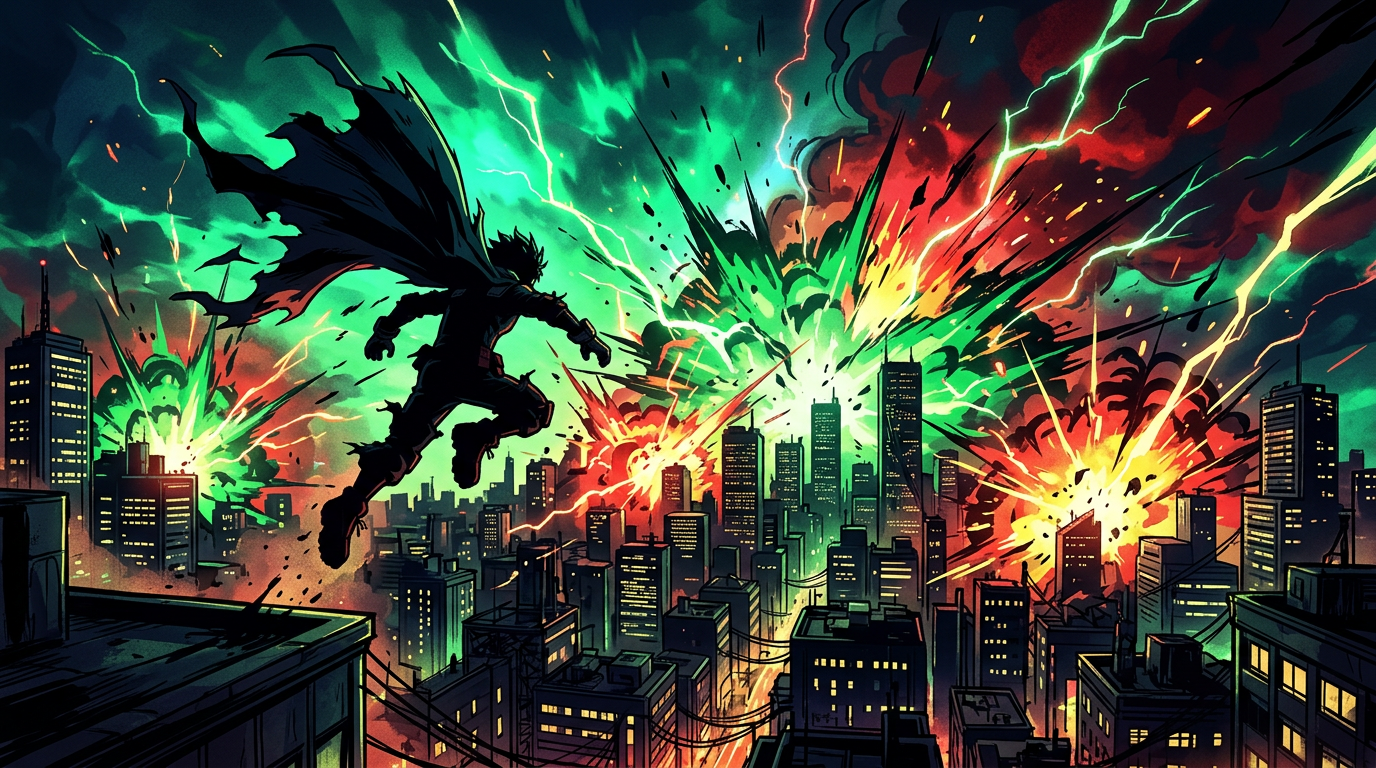
My Hero Academia builds its characters around a single structural tension: the gap between what heroics culture demands of people and what it actually costs them. The series is nominally optimistic — a story about becoming a hero — but nearly every character it examines closely is damaged by the system they're operating inside. Bakugo's aggression, Todoroki's emotional flatness, Hawks' performed cheerfulness: these are all adaptive responses to a world that rewards performance and punishes vulnerability, and they give headcanon writers an almost unlimited supply of material to work with.
What makes MHA particularly generative for fan interpretation is its ensemble structure. Class 1-A functions as a found family with highly specific internal dynamics — Kirishima and Bakugo's friendship, the Todoroki family's ongoing reconstruction, the complexity of Midoriya's relationship with a society that denied him the thing he wanted most before giving it to him anyway. The series sketches these relationships with real emotional intelligence but rarely has the space to fully develop them, which is where headcanons fill the gaps.
The villain cast is equally rich. Shigaraki, Toga, Twice, and Dabi are all products of specific systemic failures — people the hero system abandoned or actively harmed — and fan interpretations of these characters often function as more honest critiques of the series' central ideology than the main narrative manages. Headcanons that treat the villains not as obstacles but as people whose paths make sense are some of the most interesting work in the fandom.
✍️This page is curated by the Headcanon.io editorial team — fans who engage with these communities directly. Character analysis and headcanon examples are selected to reflect the creative depth of each fandom, and are updated as community trends evolve. Learn more about us.