
Quick answer
What does this comic OC maker do?
Headcanon Comic OC Maker combines an editable character direction with the Comic Book art-style preset. The AI produces a visual draft; you review anatomy, costume function, motif, silhouette, power readability, background clarity, and separation from existing comic properties.
Exclusive character examples
6 original comic OC ideas
Each example was created specifically for this page to show a distinct role, silhouette, palette, and setting. Open the prompt to study the direction, or apply it as an editable starting point.
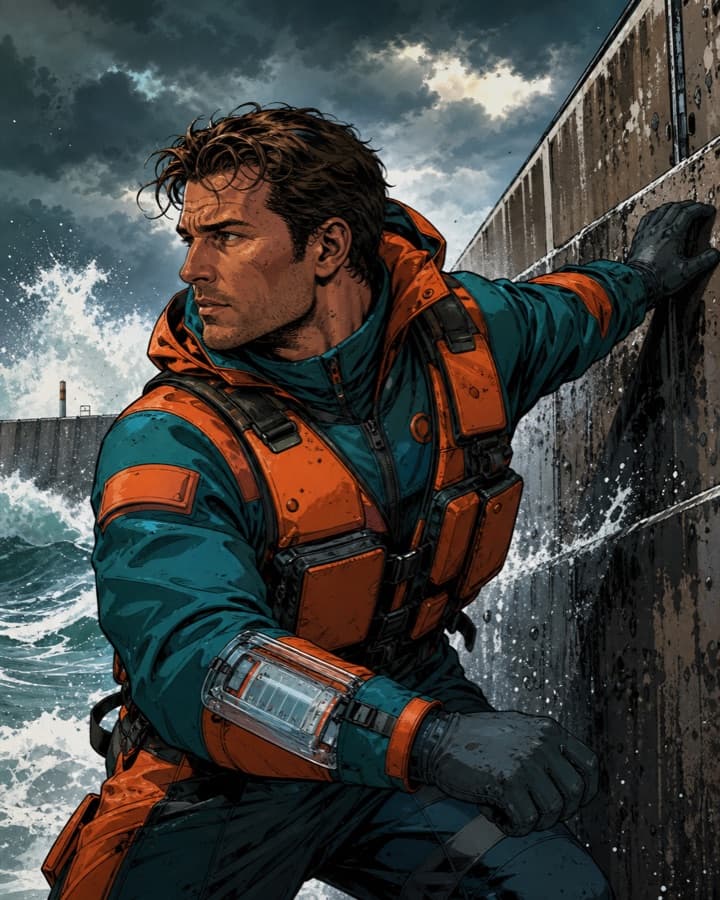
Coastal rescue engineer
Role, safety equipment, palette, stance, and weather all reinforce a rescue scenario.
View Prompt
An original comic-book coastal rescue engineer in a teal and burnt-orange protective suit with compact flotation panels and a transparent tide gauge, bracing on a storm barrier, bold inks and graphic color.
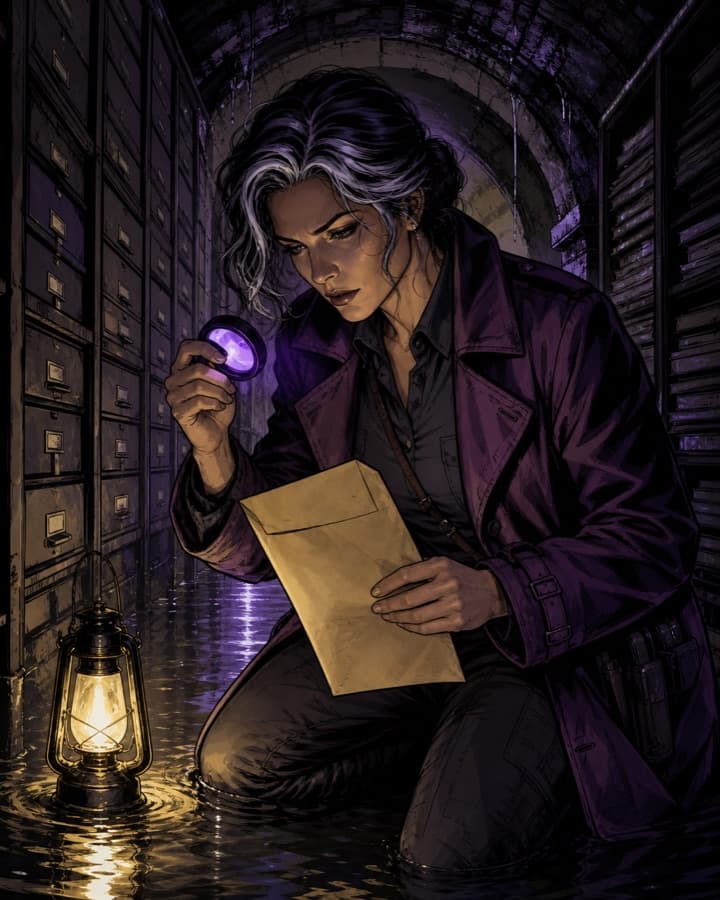
Underground archive detective
The tools and location create investigative tension without copying a familiar masked vigilante.
View Prompt
An original comic-book archive detective with silver-streaked hair, a plum utility trench, UV lens, evidence envelope, and low lantern light inside a flooded records tunnel, graphic noir inks.
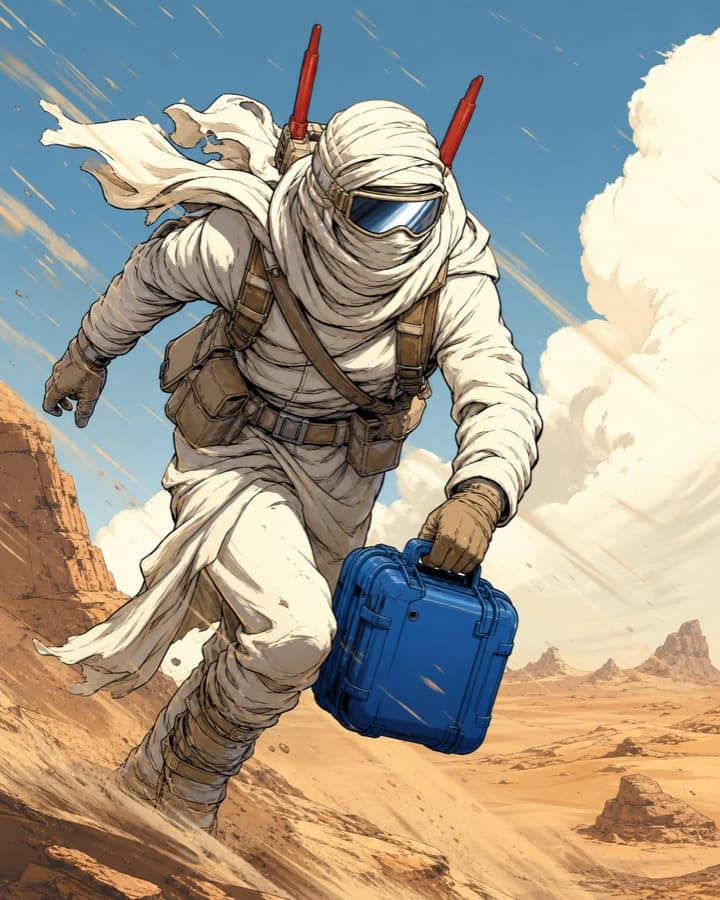
Desert signal rider
Climate, communications role, silhouette, and movement support one coherent action design.
View Prompt
An original comic-book desert signal rider in sand-white protective layers, red antenna fins, mirrored goggles, and one portable relay case, leaning into a hard crosswind, dynamic clean anatomy.
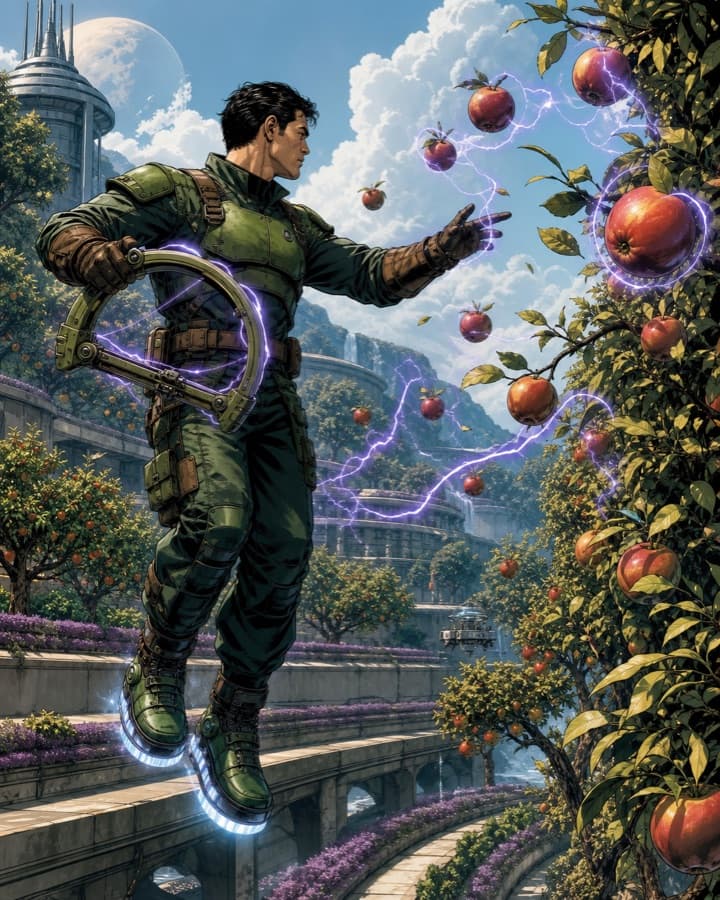
Gravity orchard keeper
The unusual power performs a practical task, giving the character more identity than a generic combat pose.
View Prompt
An original comic-book gravity orchard keeper in green work armor, magnetic boots, and a crescent pruning frame, guiding floating fruit back toward terrace trees, restrained violet power arcs.
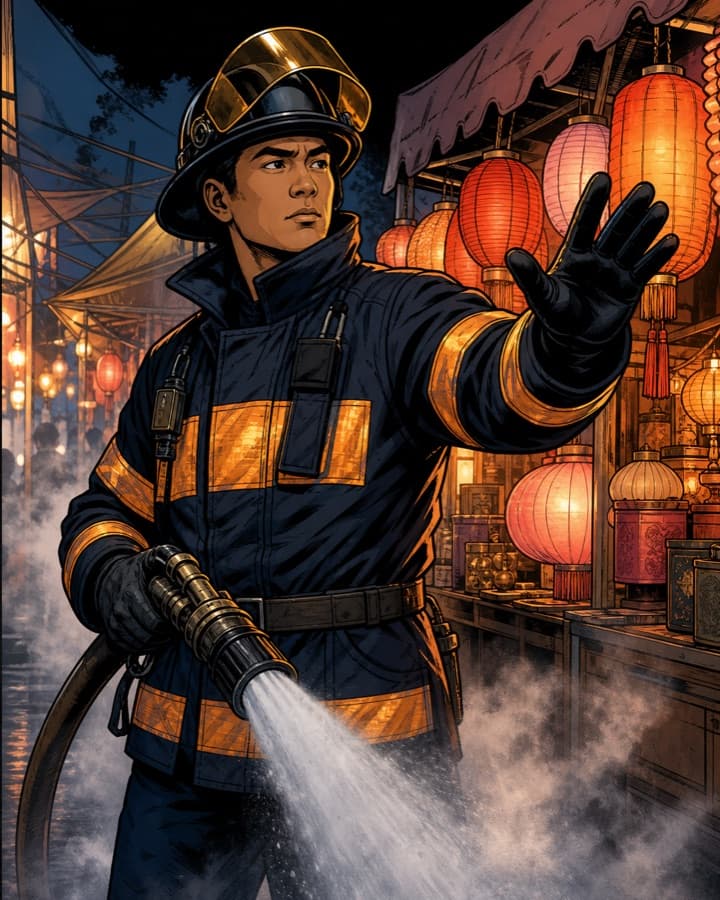
Night-market fire marshal
The suit, effect, and gesture express public safety while maintaining graphic color separation.
View Prompt
An original comic-book night-market fire marshal in a navy heat coat with amber reflective panels, thermal visor raised, directing a ribbon of cooling mist between crowded lantern stalls.
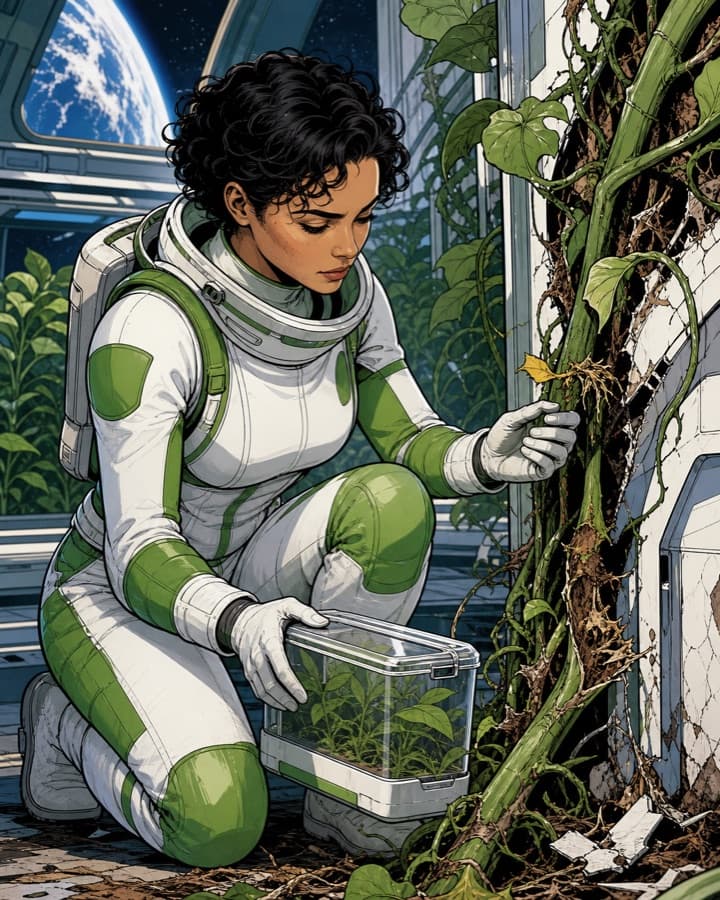
Orbital greenhouse medic
The medical role, environment, palette, and low action pose create a distinct non-combat comic character.
View Prompt
An original comic-book orbital greenhouse medic in a white and leaf-green pressure suit, plant-sample case, short dark curls, and a focused kneeling pose beside a damaged habitat vine.
Who it helps
Useful starting points for real character work
Comic writers testing a new cast member before scripting pages.
RPG players who want graphic, action-ready character portraits.
Artists exploring bold contour, controlled palettes, foreshortening, and costume shape language.
Worldbuilders designing civic heroes, investigators, adventurers, and non-powered specialists.
Design guidance
Make the silhouette and action readable before adding spectacle
Comic-book rendering works best when contour, color blocks, and pose communicate the character immediately. Begin with a role and a physical action, then give each costume panel, tool, or power effect a reason to exist.
A graphic motif should repeat selectively rather than cover every surface. Use it across two or three connected details, keep anatomy legible, and reserve the strongest contrast for the face, hands, and current action.
Build one costume system
Connect closures, protection, movement, tools, and materials to the character’s role.
Repeat one motif
Use a shape or color rhythm in two or three places instead of inventing a familiar hero emblem.
Direct the action verb
Bracing, shielding, examining, landing, or reaching produces clearer anatomy than “epic pose.”
Control the effects
Keep energy, smoke, weather, and debris behind the face and hands so the character stays readable.
Prompt framework
Give every visual detail a job
Use this order as a checklist, not a rigid command:
original role + functional costume + limited motif + specific action verb + controlled palette + graphic environment
Coastal rescue engineer
“An original comic-book coastal rescue engineer in a teal and burnt-orange protective suit with compact flotation panels and a transparent tide gauge, bracing on a storm barrier, bold inks and graphic color.”
Why it works: Role, safety equipment, palette, stance, and weather all reinforce a rescue scenario.
Underground archive detective
“An original comic-book archive detective with silver-streaked hair, a plum utility trench, UV lens, evidence envelope, and low lantern light inside a flooded records tunnel, graphic noir inks.”
Why it works: The tools and location create investigative tension without copying a familiar masked vigilante.
Desert signal rider
“An original comic-book desert signal rider in sand-white protective layers, red antenna fins, mirrored goggles, and one portable relay case, leaning into a hard crosswind, dynamic clean anatomy.”
Why it works: Climate, communications role, silhouette, and movement support one coherent action design.
Gravity orchard keeper
“An original comic-book gravity orchard keeper in green work armor, magnetic boots, and a crescent pruning frame, guiding floating fruit back toward terrace trees, restrained violet power arcs.”
Why it works: The unusual power performs a practical task, giving the character more identity than a generic combat pose.
Night-market fire marshal
“An original comic-book night-market fire marshal in a navy heat coat with amber reflective panels, thermal visor raised, directing a ribbon of cooling mist between crowded lantern stalls.”
Why it works: The suit, effect, and gesture express public safety while maintaining graphic color separation.
Orbital greenhouse medic
“An original comic-book orbital greenhouse medic in a white and leaf-green pressure suit, plant-sample case, short dark curls, and a focused kneeling pose beside a damaged habitat vine.”
Why it works: The medical role, environment, palette, and low action pose create a distinct non-combat comic character.
Review before you save
- Does the silhouette read before costume detail?
- Do costume materials and tools support the role and movement?
- Are anatomy, hands, foreshortening, and action effects structurally clear?
- Is contrast focused on the face and current action?
- Is the design clearly separate from named heroes, emblems, and franchise costumes?
Know the limits
- Dynamic poses can distort hands, feet, foreshortening, tools, and costume seams.
- Heavy inks and effects may hide facial or material detail.
- Separate generations may change motif, palette, face, costume construction, and power appearance.
- The output is a character image draft, not a paneled comic, publication license, or print-ready sequential page.
Comic Book Original Character Creator questions
What makes this different from the Superhero OC Maker?
Comic describes the rendering style. Superhero describes a character and story direction. You can use Comic Book art for heroes, civilians, detectives, fantasy characters, or science-fiction workers.
Can I create an original comic character?
Yes. Start from a distinct role, setting, costume function, motif, and action, and avoid named characters, copied emblems, signature color layouts, or franchise costumes.
Can I change the Comic Book preset?
Yes. The page applies Comic Book initially, but the prompt and every supported control remain editable before generation.
Does this generate comic panels?
No. It generates a character-art draft. Panel composition, lettering, continuity, and final sequential art remain your responsibility.
Do I need an account?
Reading and editing do not require an account. Generating images requires sign-in and credits, with cost shown before submission.
Explore related directions
More OC Maker guides
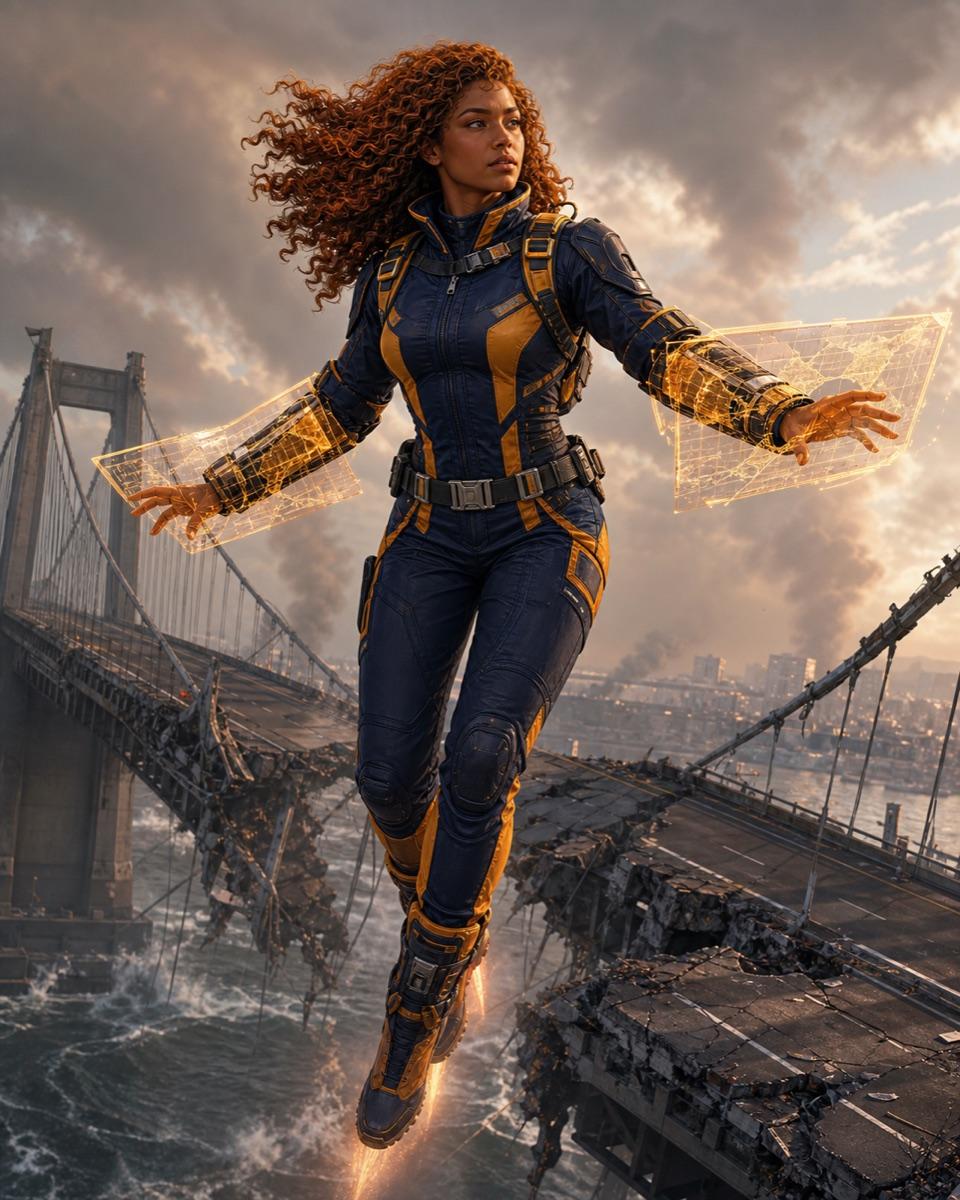
Superhero OC Maker — Create Your Own Hero | Headcanon
Create an original superhero with a specific ability, responsibility, costume, emblem logic, pose, and city context. Generate, review, and save privately.
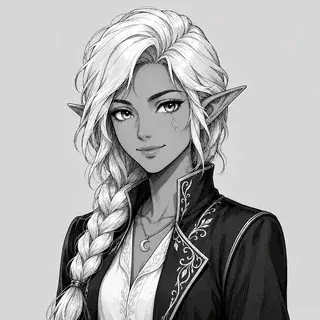
Manga OC Maker — Create a Manga Ink Character | Headcanon
Create an original manga character with deliberate inks, screentone-ready values, readable expressions, clothing, poses, and panel-friendly silhouettes.
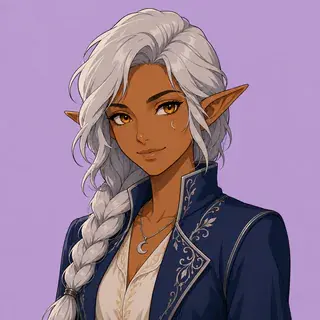
Cartoon OC Maker — Create a Cartoon Character | Headcanon
Create an original cartoon character with readable shapes, expressive poses, focused colors, and role-led details. Generate, review, and save your OC privately.
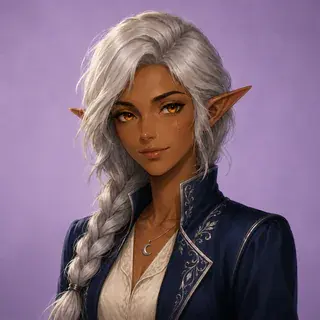
Semi-Realistic OC Maker — Create a Natural Character Portrait | Headcanon
Create a semi-realistic OC with natural anatomy, nuanced features, believable materials, restrained lighting, clothing, expression, and story context.