
Quick answer
What does this demon OC maker do?
Headcanon Demon OC Maker helps you draft an original demon through lineage, environment, anatomy, occupation, clothing, supernatural traits, expression, and setting. The AI generates visual options from your direction; you review horn placement, markings, hands, attachments, originality, and whether the design communicates a life beyond a generic villain role.
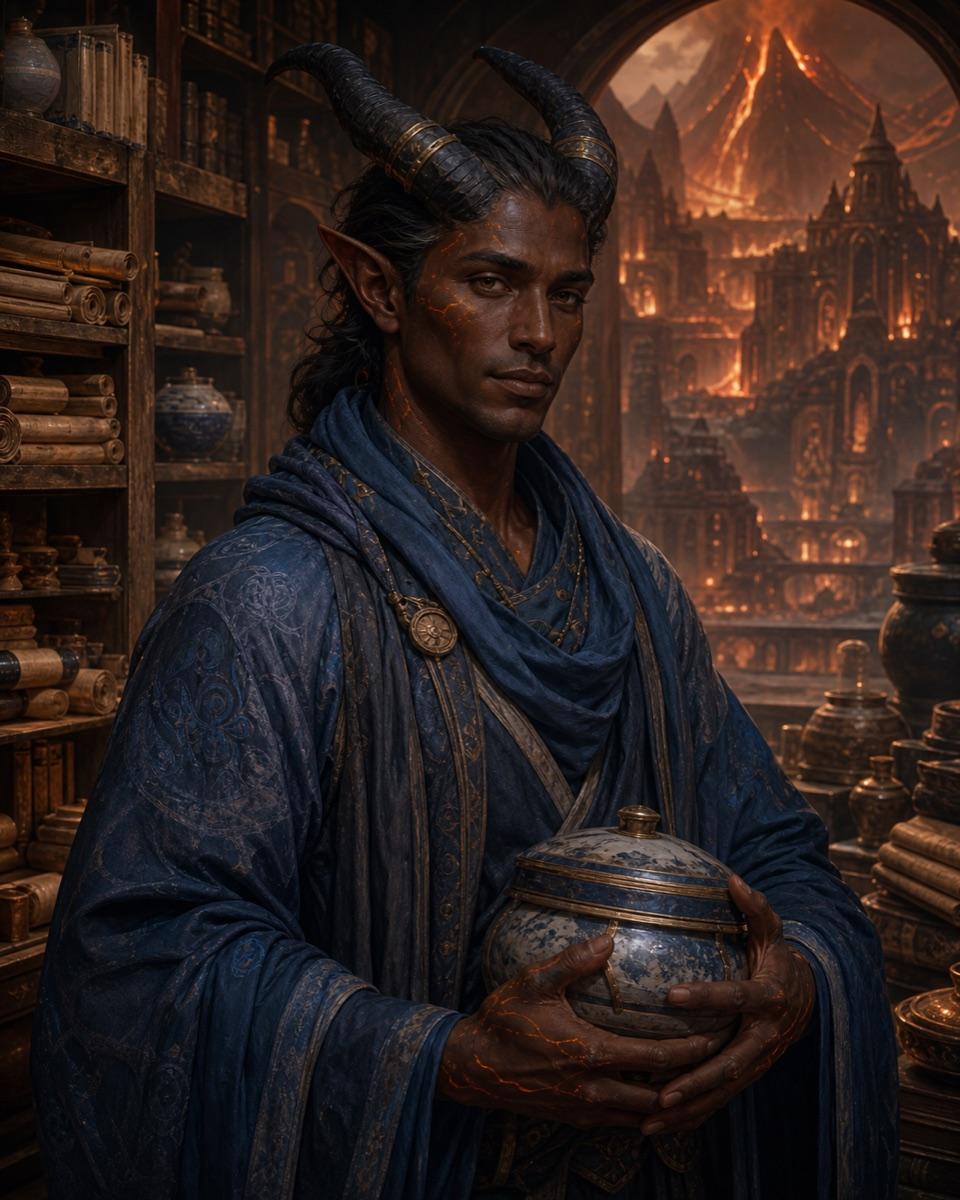
Exclusive character examples
6 original demon OC ideas
Each example was created specifically for this page to show a distinct role, silhouette, palette, and setting. Open the prompt to study the direction, or apply it as an editable starting point.
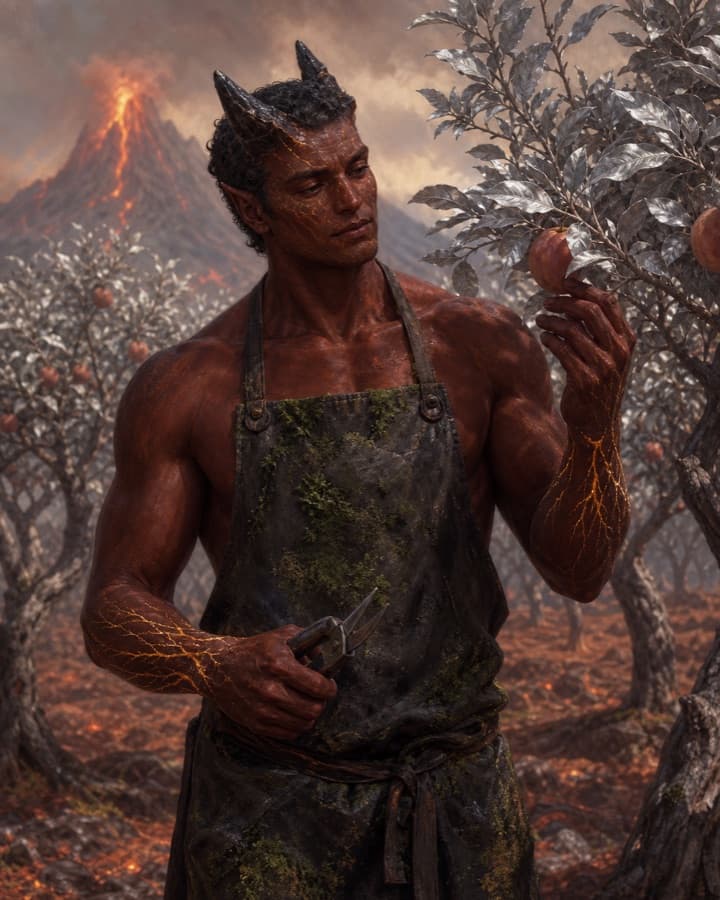
Volcanic orchard keeper
Environment, heat-adapted anatomy, clothing, and one agricultural task create a demon identity centered on care.
View Prompt
An original volcanic demon orchard keeper with dark red-brown skin, short basalt horns, faint gold heat lines at the wrists, a moss and charcoal work apron, and a long pruning tool, tending silver-leaf fruit trees in warm ash soil.
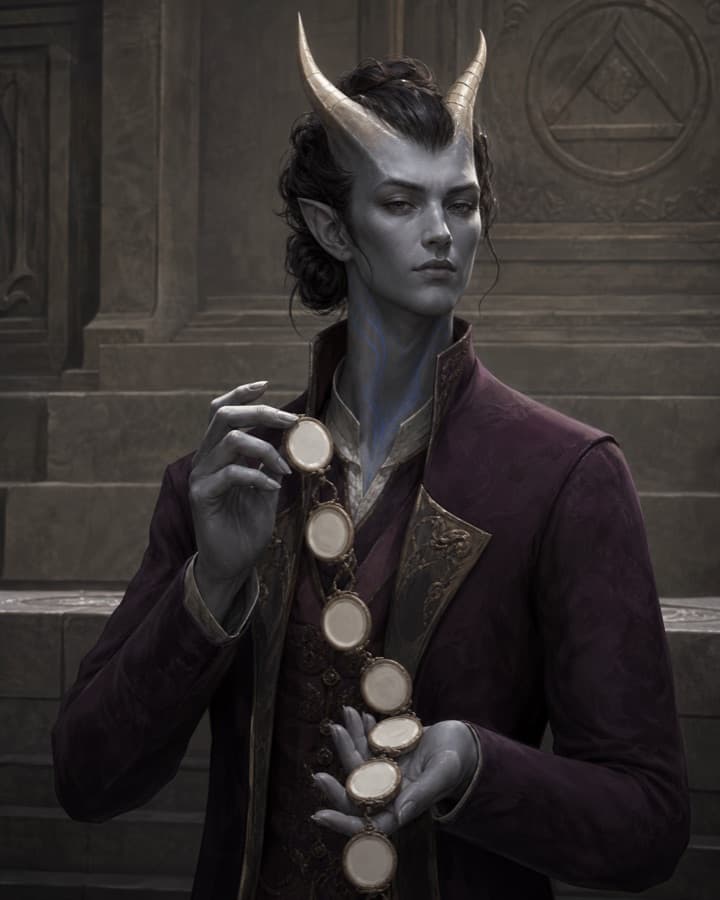
Oath-court interpreter
The markings, official objects, restrained expression, and formal setting imply a legal culture without using a generic royal design.
View Prompt
An original demon oath-court interpreter with cool gray skin, two polished ivory horns, blue vow markings along the throat, a formal plum coat, and a chain of blank ceramic seals, listening carefully inside a stone tribunal.
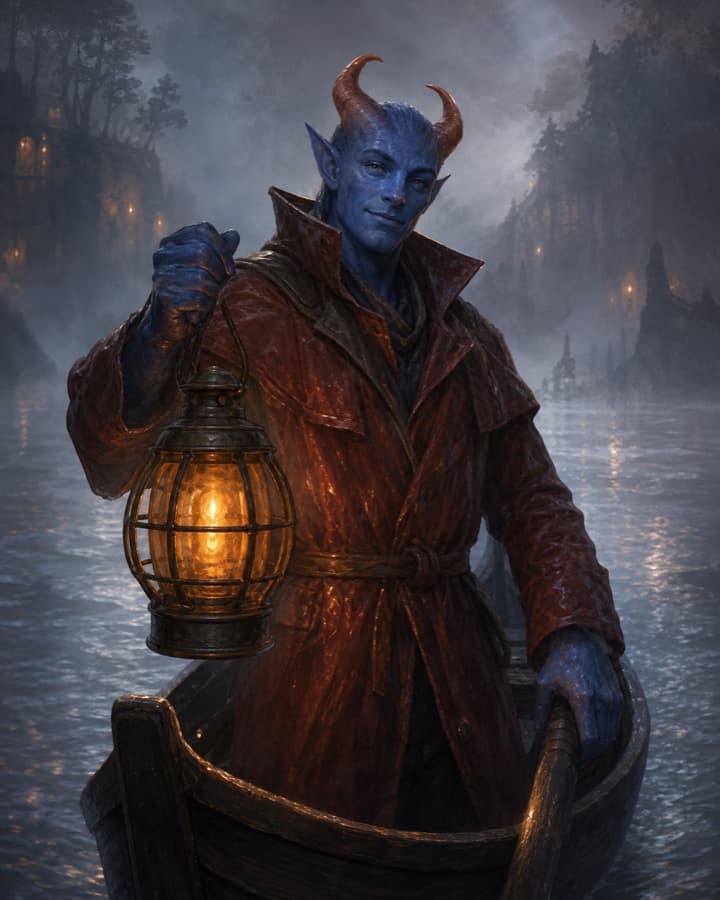
Lantern ferry pilot
Aquatic anatomy, weather protection, navigation light, and occupation form one coherent river lineage.
View Prompt
An original river demon ferry pilot with deep blue skin, swept copper horns, webbed hands, a rust waterproof coat, and one caged amber lantern, steering a narrow boat through silver mist at night.
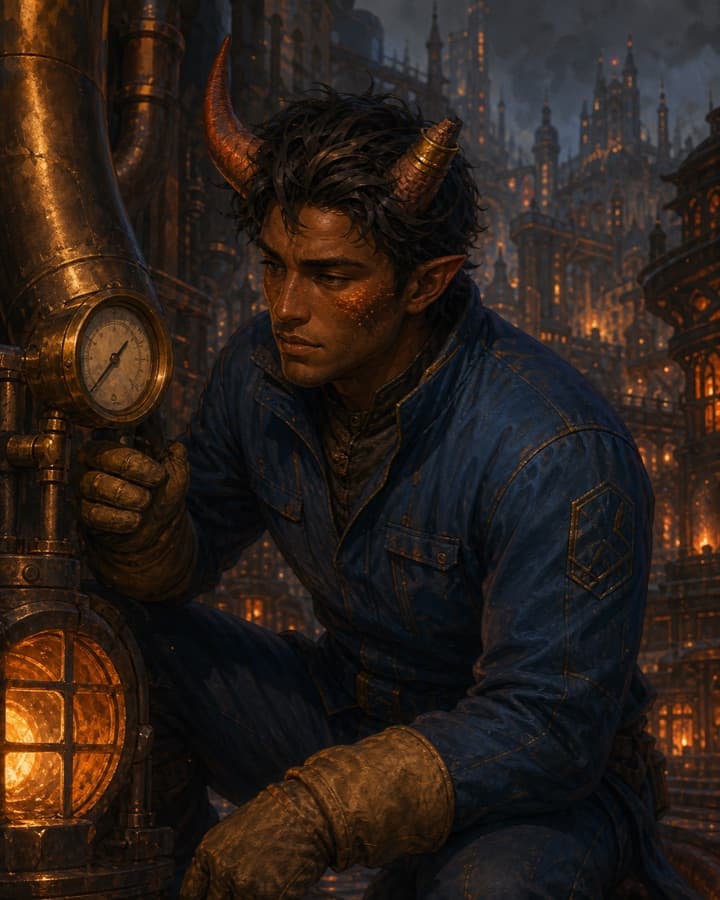
City heat-grid engineer
A repaired horn, practical heat trait, safety clothing, and municipal job make the supernatural details feel lived in.
View Prompt
An original urban demon heat-grid engineer with warm brown skin, one broken horn capped in brass, ember freckles, a cobalt utility jacket, insulated gloves, and a pressure gauge, inspecting a glowing district furnace line.
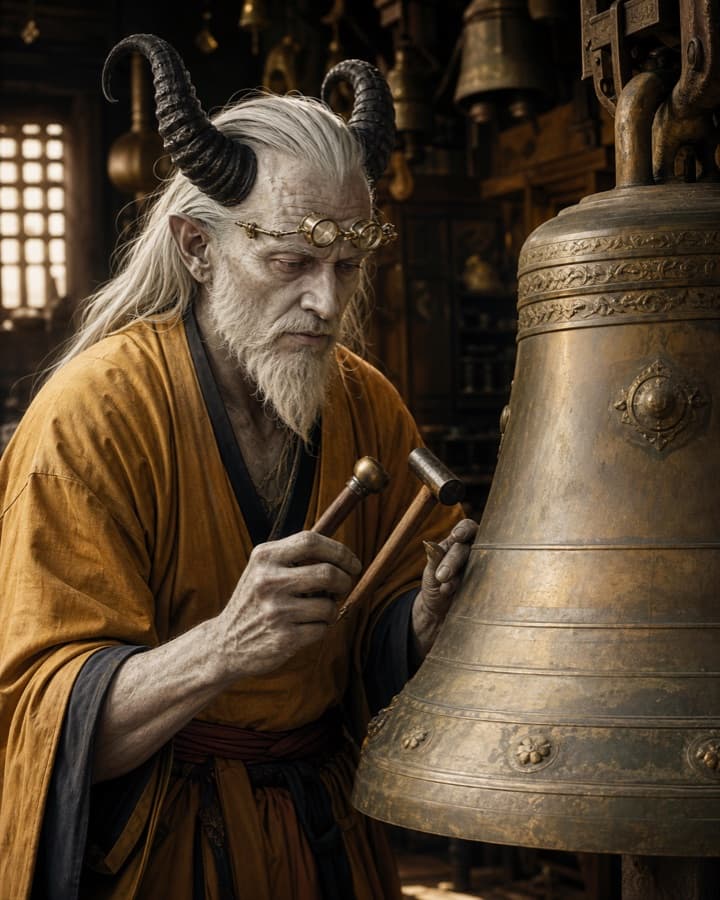
Monastery bell restorer
Age, craft tools, careful posture, and material contrast create a quiet scholarly demon concept.
View Prompt
An original older demon bell restorer with pale stone skin, curled black horns, long white hair, a saffron work robe, magnifying lenses, and a set of fine tuning hammers beside an ancient bronze bell.
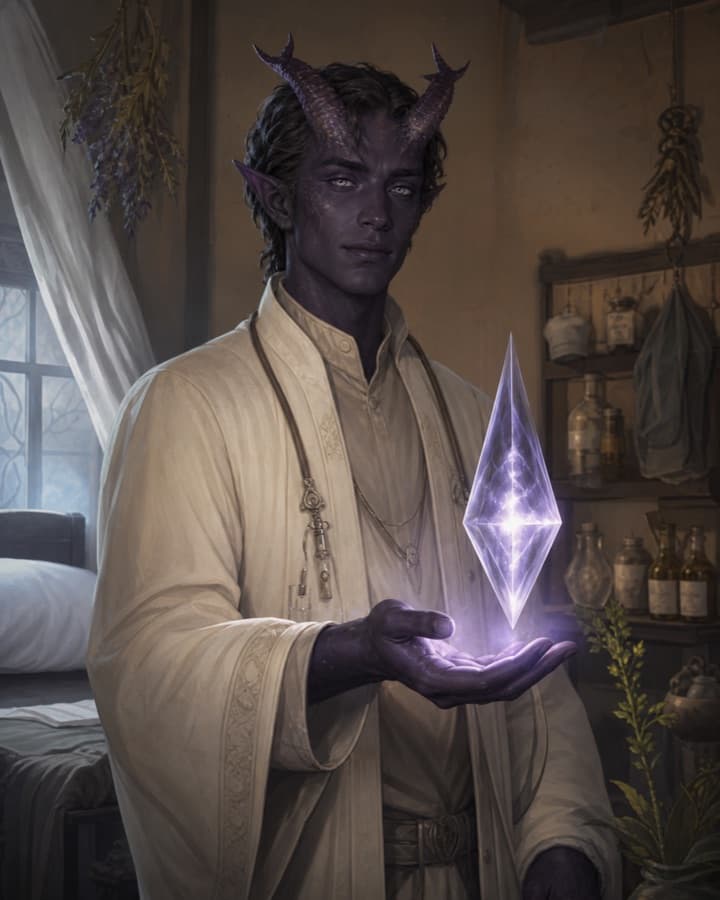
Border dream physician
A restrained magical tool, medical role, and gentle environment create supernatural tension without horror or gore.
View Prompt
An original demon dream physician with violet-black skin, small branching horns, soft silver eyes, a cream medical robe, and one glassless dream prism hovering above the palm in a calm border-town clinic.
Who it helps
Useful starting points for real character work
Fantasy writers visualizing demons as citizens, specialists, caretakers, diplomats, or rivals.
RPG players creating a distinct infernal, volcanic, dream, shadow, or custom lineage.
Worldbuilders connecting supernatural anatomy to climate, materials, rituals, and occupations.
Artists exploring horns, markings, tails, wings, and nonhuman silhouettes with a practical design system.
Design guidance
Make a demon OC specific without making evil the whole design
Horns, unusual skin, markings, tails, wings, and glowing eyes can identify a demon, but they should follow a consistent anatomy and culture. Horn shape may indicate climate, age, craft, or lineage; repair bands can show an old injury; markings can relate to heat regulation, vows, memory, or work. Choose a few connected traits instead of stacking every supernatural feature.
Occupation prevents the design from collapsing into a generic villain. A demon may maintain orchards near volcanic soil, interpret contracts, pilot a lantern ferry, repair heat grids, restore bells, or practice dream medicine. Let tools and clothing show how supernatural traits function in daily life.
Choose one lineage system
Connect horns, skin, markings, tail, wings, or eyes to one environment and inherited logic.
Plan attachment points
Describe where horns, wings, tails, jewelry, and clothing meet the body so the anatomy remains readable.
Use occupation against stereotype
A caretaker, engineer, physician, interpreter, pilot, or restorer creates more identity than “powerful evil demon.”
Control supernatural light
Limit glow to one trait or practical effect so the face, clothing, and silhouette stay visible.
Prompt framework
Give every visual detail a job
Use this order as a checklist, not a rigid command:
demon lineage + environment + coherent anatomy + occupation + climate-aware clothing + practical supernatural trait + current task
Volcanic orchard keeper
“An original volcanic demon orchard keeper with dark red-brown skin, short basalt horns, faint gold heat lines at the wrists, a moss and charcoal work apron, and a long pruning tool, tending silver-leaf fruit trees in warm ash soil.”
Why it works: Environment, heat-adapted anatomy, clothing, and one agricultural task create a demon identity centered on care.
Oath-court interpreter
“An original demon oath-court interpreter with cool gray skin, two polished ivory horns, blue vow markings along the throat, a formal plum coat, and a chain of blank ceramic seals, listening carefully inside a stone tribunal.”
Why it works: The markings, official objects, restrained expression, and formal setting imply a legal culture without using a generic royal design.
Lantern ferry pilot
“An original river demon ferry pilot with deep blue skin, swept copper horns, webbed hands, a rust waterproof coat, and one caged amber lantern, steering a narrow boat through silver mist at night.”
Why it works: Aquatic anatomy, weather protection, navigation light, and occupation form one coherent river lineage.
City heat-grid engineer
“An original urban demon heat-grid engineer with warm brown skin, one broken horn capped in brass, ember freckles, a cobalt utility jacket, insulated gloves, and a pressure gauge, inspecting a glowing district furnace line.”
Why it works: A repaired horn, practical heat trait, safety clothing, and municipal job make the supernatural details feel lived in.
Monastery bell restorer
“An original older demon bell restorer with pale stone skin, curled black horns, long white hair, a saffron work robe, magnifying lenses, and a set of fine tuning hammers beside an ancient bronze bell.”
Why it works: Age, craft tools, careful posture, and material contrast create a quiet scholarly demon concept.
Border dream physician
“An original demon dream physician with violet-black skin, small branching horns, soft silver eyes, a cream medical robe, and one glassless dream prism hovering above the palm in a calm border-town clinic.”
Why it works: A restrained magical tool, medical role, and gentle environment create supernatural tension without horror or gore.
Review before you save
- Do horns, wings, tail, markings, jewelry, and clothing attach to the body in a readable way?
- Do lineage traits, environment, materials, occupation, and supernatural effects follow the same logic?
- Would the character remain identifiable without relying on an evil expression or weapon?
- Are hands, feet, horn symmetry, tails, wings, tools, and glowing marks structurally plausible?
- Is the design original rather than too close to a named demon from a game, anime, film, or comic?
Know the limits
- Horns, wings, tails, hands, feet, jewelry, markings, and layered clothing may merge or attach incorrectly.
- Glow and dark skin tones can lose detail in low-light scenes, so review contrast and facial readability.
- Separate generations may change horn shape, markings, skin tone, supernatural effects, and facial identity.
- The image does not establish complete demon lore, ethics, culture, or power rules; continue those decisions in your own project.
Demon Original Character Creator questions
What features can I add to a demon OC?
You can direct horns, unusual skin, markings, eyes, tail, wings, jewelry, teeth, hands, feet, and supernatural effects. Choose a small connected set and explain how it relates to lineage, climate, occupation, or ritual.
Does a demon OC have to be evil?
No. Demon describes a character type, not a required morality. The examples include caretakers, interpreters, pilots, engineers, restorers, and physicians with different personalities and responsibilities.
How do I keep horns and wings from looking random?
Describe their shape, material, size, attachment point, and function. Connect them to a lineage or environment, then review symmetry, clothing clearance, joints, and silhouette after generation.
Can I create different demon lineages?
Yes. Start with an environment such as volcanic, river, urban, stone, dream, shadow, or a custom realm, then derive anatomy, materials, clothing, and practical magic from it.
Can I make a non-horror demon character?
Yes. Avoid gore, victims, horror lighting, and threatening poses. Direct a specific occupation, calm expression, practical tool, and everyday environment.
Do I need an account?
You can read the guide and inspect the controls without an account. Generating images requires sign-in and credits, with the current cost shown before submission.
Explore related directions
More OC Maker guides
Fantasy OC Maker — Create an Original Fantasy Character
Design an original fantasy character with role-led prompts, outfit and species controls, expressive poses, and atmospheric settings. Review and save privately.
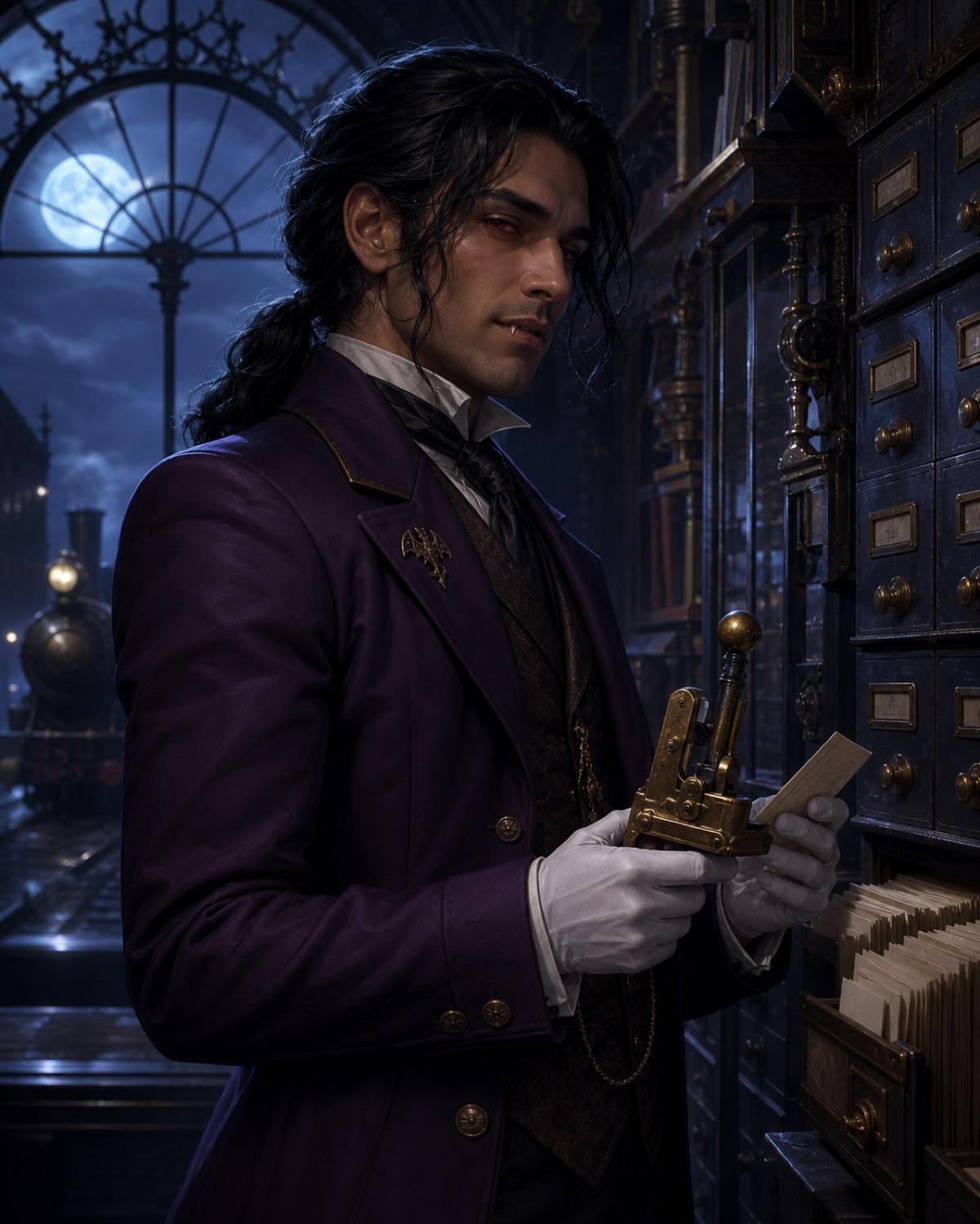
Vampire OC Maker — Create a Vampire Character | Headcanon
Create an original vampire character with a distinct era, occupation, clothing, expression, pose, and nocturnal setting. Generate, review, and save privately.
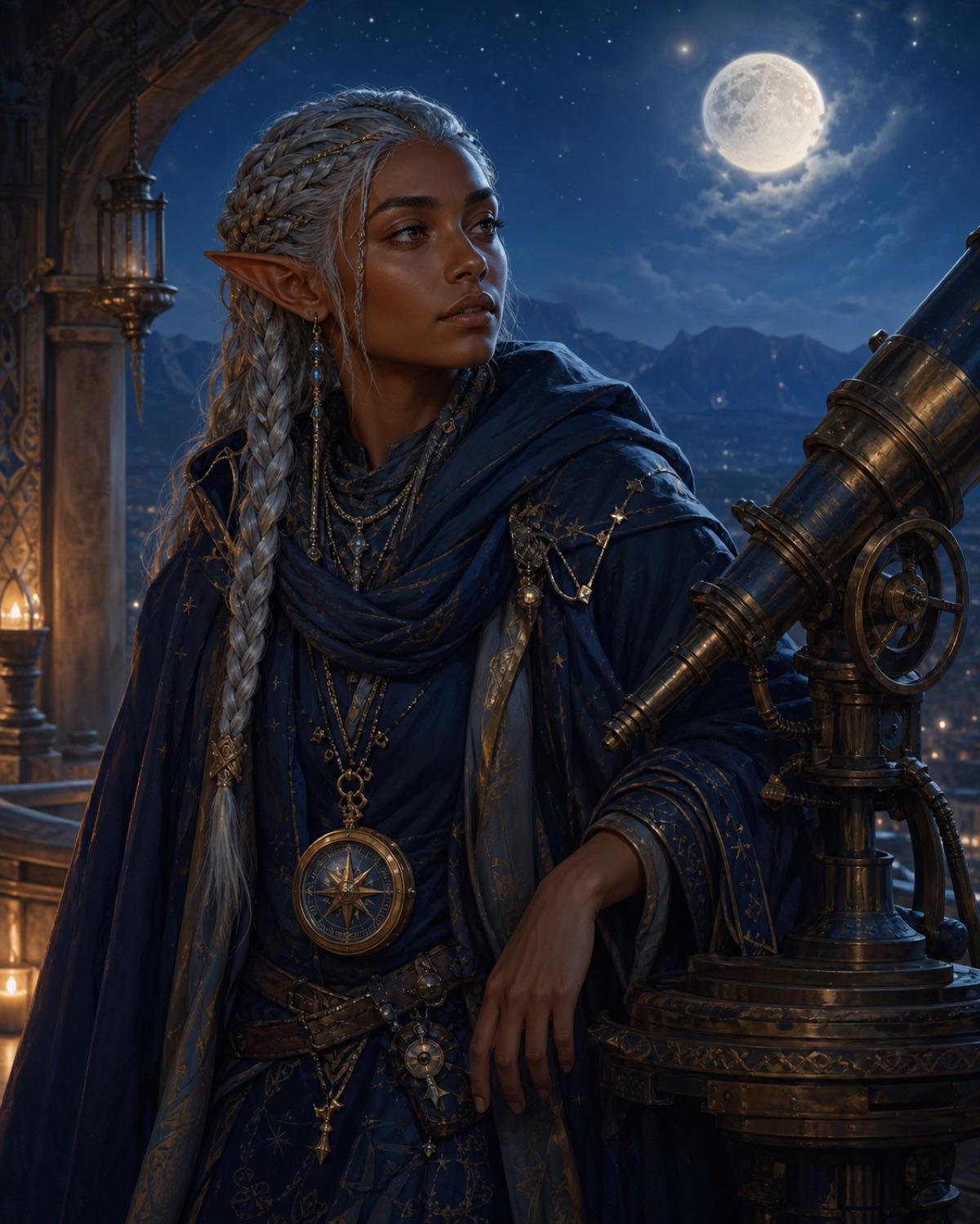
Elf OC Maker — Create Your Own Elf Character | Headcanon
Create an original elf character with custom features, clothing, accessories, expressions, poses, and fantasy environments. Generate, review, and save privately.
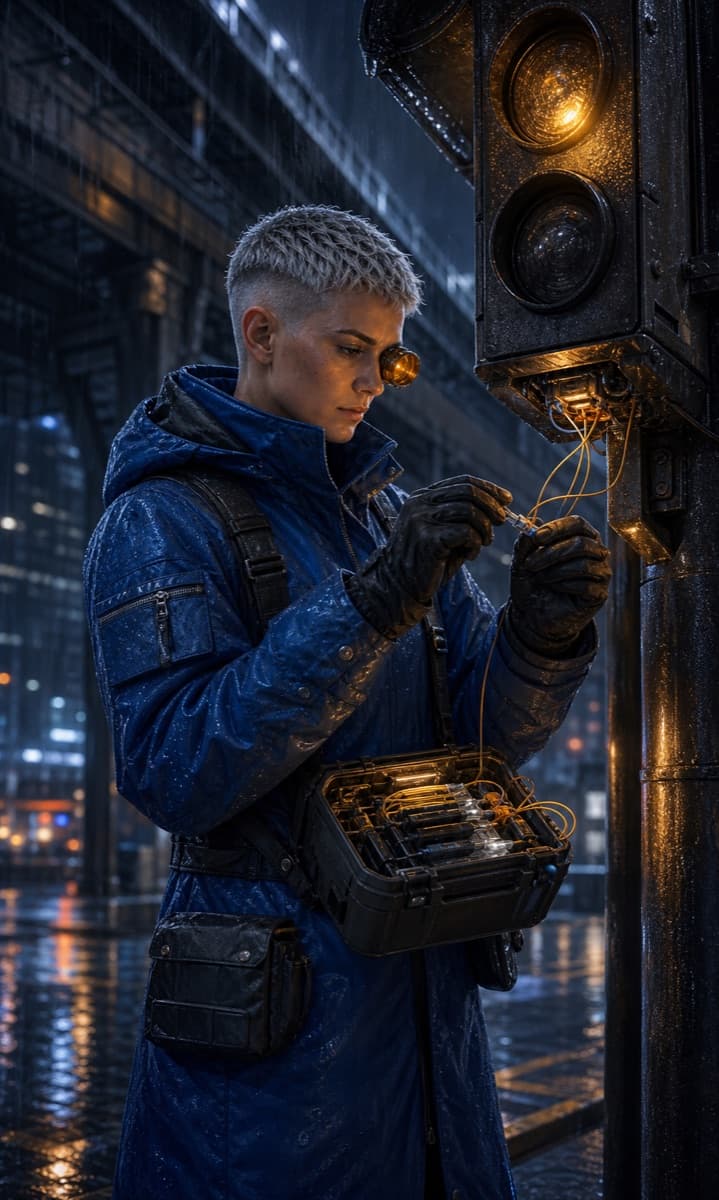
Cyberpunk OC Maker — Create a Cyberpunk Character | Headcanon
Create an original cyberpunk character with a city role, practical technology, clothing, expression, pose, and environment. Generate, review, and save privately.