
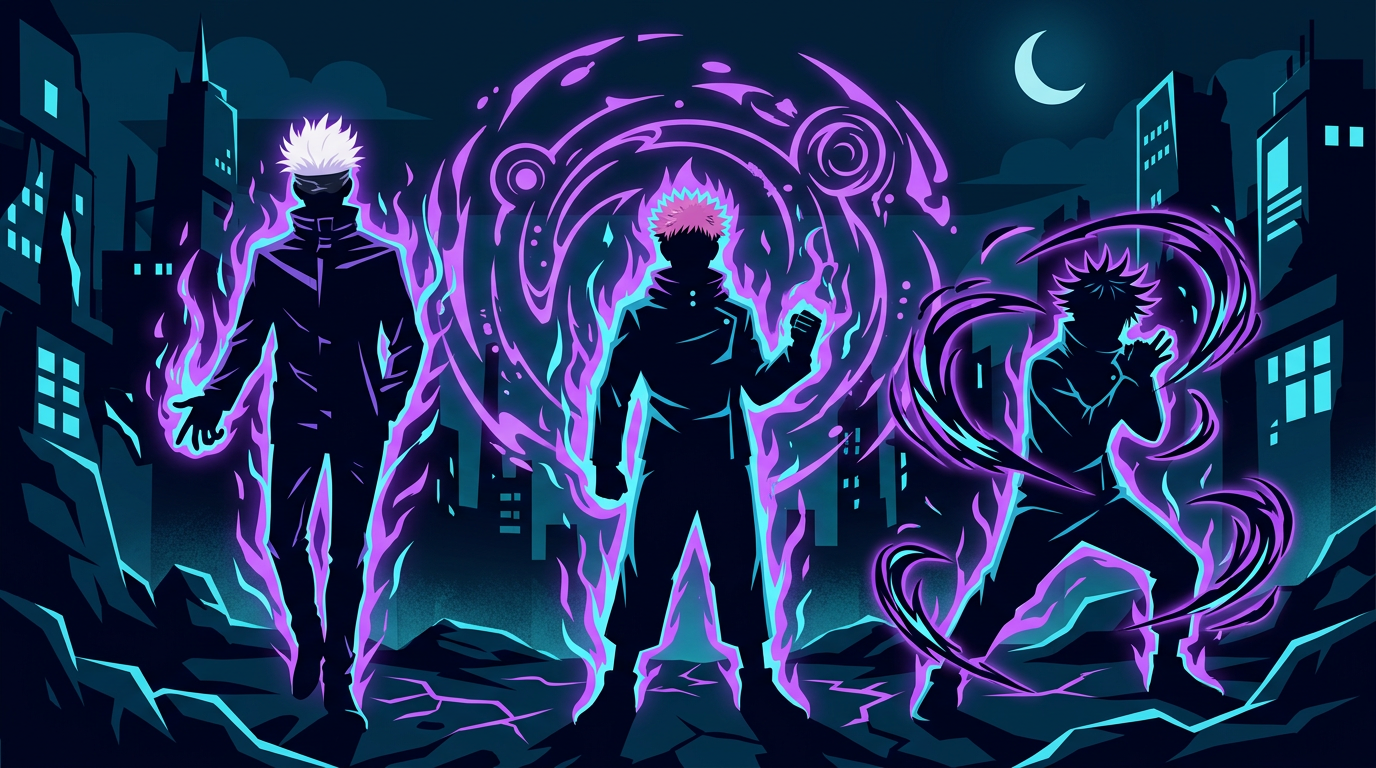
Jujutsu Kaisen tells its story with a particular brutality. Characters the reader has spent chapters loving are taken without warning. Emotional moments are granted and then immediately undercut. The narrative withholds interiority at precisely the moments fans most want it.
This is why the JJK headcanon community is so active. The manga creates emotional investment and then refuses to fully satisfy it — and fans respond by creating the interior lives the text won't provide. The result is one of the most prolific young headcanon communities in anime.
Why JJK Creates Such Strong Headcanon Culture
Several features of JJK's narrative create ideal conditions for headcanon culture:
- Characters are introduced with rich implied histories that the manga rarely has time to show — almost every major character has a backstory worth a full arc that they barely get a flashback for
- The power of 'what was Gojo doing between panels' — the manga's jumps in time leave enormous imaginative space
- Character deaths hit hard partly because the manga gave fans just enough attachment before taking them — the incomplete portrait demands completion
- The Tokyo Jujutsu High found family dynamic is powerful but deliberately underwritten — almost everything warm happens off-panel
Most Popular JJK Headcanons by Character
Satoru Gojo
Gojo headcanons are among the most prolific in the JJK fandom, which is remarkable given that he's the character the manga most deliberately keeps opaque. Precisely because we see his surface perfectly — the performance, the sunglasses, the theatrical confidence — fans are intensely interested in what's underneath.
- His limitless isolation isn't just physical — there's something in how Six Eyes processes the world that makes being understood feel structurally impossible, and he dealt with this by performing connection rather than seeking it
- He's one of the most perceptive people in the JJK world, and he uses this by pretending not to notice things — a tool for giving people privacy and for protecting himself
- His relationship with Geto is the emotional anchor of most Gojo headcanons — the thing he had that looked most like being fully known, and what it did to him to lose it
- His investment in students isn't altruistic in the conventional sense — it's the closest thing he has to a project that might outlast him
Yuji Itadori
Yuji headcanons occupy a space between his surface presentation — warm, physically exuberant, seemingly uncomplicated — and what the manga gradually reveals beneath it: someone carrying Sukuna's violence and several deaths he couldn't prevent, who performs cheerfulness as a form of not burdening the people around him.
- He keeps a mental list of everyone who's died around him — not for guilt, but because he decided early that forgetting would be worse
- He's physically incapable of sitting still when he's upset — the body processes what the mind won't, and people who know him well have learned to recognize this
- He gives the same warmth to people who've been unkind to him that he gives to anyone else, not from forgiveness but from a genuine belief that everyone is fighting something he can't see
Megumi Fushiguro
Megumi is one of the most headcanoned characters in JJK precisely because his emotional interior is so deliberately hidden. The manga gives us glimpses of extraordinary loyalty and controlled fury, but almost never shows us the interior experience directly. Fans fill in what the manga won't.
- He made a decision early that caring about outcomes was safer than caring about people — and Yuji is the first person who made that calculus stop working
- He's the one who notices when Yuji is performing fine rather than being fine, and he responds by doing something practical rather than asking
- He's read everything Gojo has assigned him, including the recommended-but-not-required texts, because information is the one form of preparation that doesn't feel futile
Nobara Kugisaki
Nobara headcanons have taken on particular emotional weight given her status in the manga. The community's investment in who she is — confident, specific, unwilling to apologize for herself — has generated a protective headcanon culture that focuses on showing the full person.
- She's the most tactically aggressive person in her cohort not from aggression but from efficiency — she decided very early that hesitation costs more than boldness
- Her confidence in herself was never given — it was built, deliberately, over years of being told she was too much and deciding that was the other person's problem
- She and Yuji have the most instinctively comfortable friendship in the group — no translation required, no performance — and she values this more than she'd ever say out loud
SatoSugu (Gojo x Geto): The Dominant Ship Headcanon
SatoSugu — the Satoru Gojo and Suguru Geto pairing — generates more headcanon content than any other JJK pairing by a significant margin. The appeal is the fundamental tragedy of two people who understood each other better than anyone else, and what happened when that understanding wasn't enough to hold them.
Pre-divergence headcanons explore what their dynamic was when it was still intact. Post-divergence headcanons explore grief, fury, and the complicated mourning of someone who is still alive but lost. Hidden Love AU headcanons are among the most emotionally intense in the fandom.
Tokyo Jujutsu High Found Family
One of the most active headcanon spaces in JJK fandom is the Tokyo First Year cohort as found family — Yuji, Megumi, Nobara, and the ways they become each other's people in a context that doesn't encourage that kind of attachment.
- The unspoken agreement about what questions not to ask each other — and the specific moment when that shifts for each relationship
- How the three of them separately decided to survive specifically so the others wouldn't have to process losing them
- The rituals that developed without discussion — where they eat, who sits where, what they don't talk about before missions
Creating JJK Headcanons
JJK's narrative style — which withholds interiority precisely when you most want it — makes it particularly well-suited to AI-assisted headcanon generation. Use the character headcanon generator to fill in the interior experiences the manga leaves blank: what is Megumi actually thinking in that scene? What does Gojo feel behind the performance?
For relationship content between characters like Gojo and Geto, or the first-year trio, the relationship headcanon generator can generate specific, character-grounded relationship moments — particularly effective for the pre-divergence SatoSugu dynamic.
Frequently Asked Questions About JJK Headcanons
What are the most popular Jujutsu Kaisen headcanons?
Gojo's isolation beneath the performance, Megumi's hidden loyalty, Yuji's quiet grief, the first-year trio found family, and the SatoSugu pre-divergence relationship are the dominant headcanon traditions in JJK fandom.
Where can I find JJK headcanon content?
Tumblr has the most extensive long-form JJK headcanon writing community. AO3 hosts the largest collection of JJK fan fiction. Twitter/X has highly active daily headcanon discussion, particularly around Gojo and the first-year trio. TikTok's anime community has been a major driver of JJK headcanon content for newer fans.
How does JJK headcanon culture handle manga spoilers?
JJK headcanon culture has developed strong spoiler norms because the manga's twists have hit the community hard. Most long-form headcanon spaces use chapter-specific tagging and give several weeks of warning before discussing major plot events openly.