
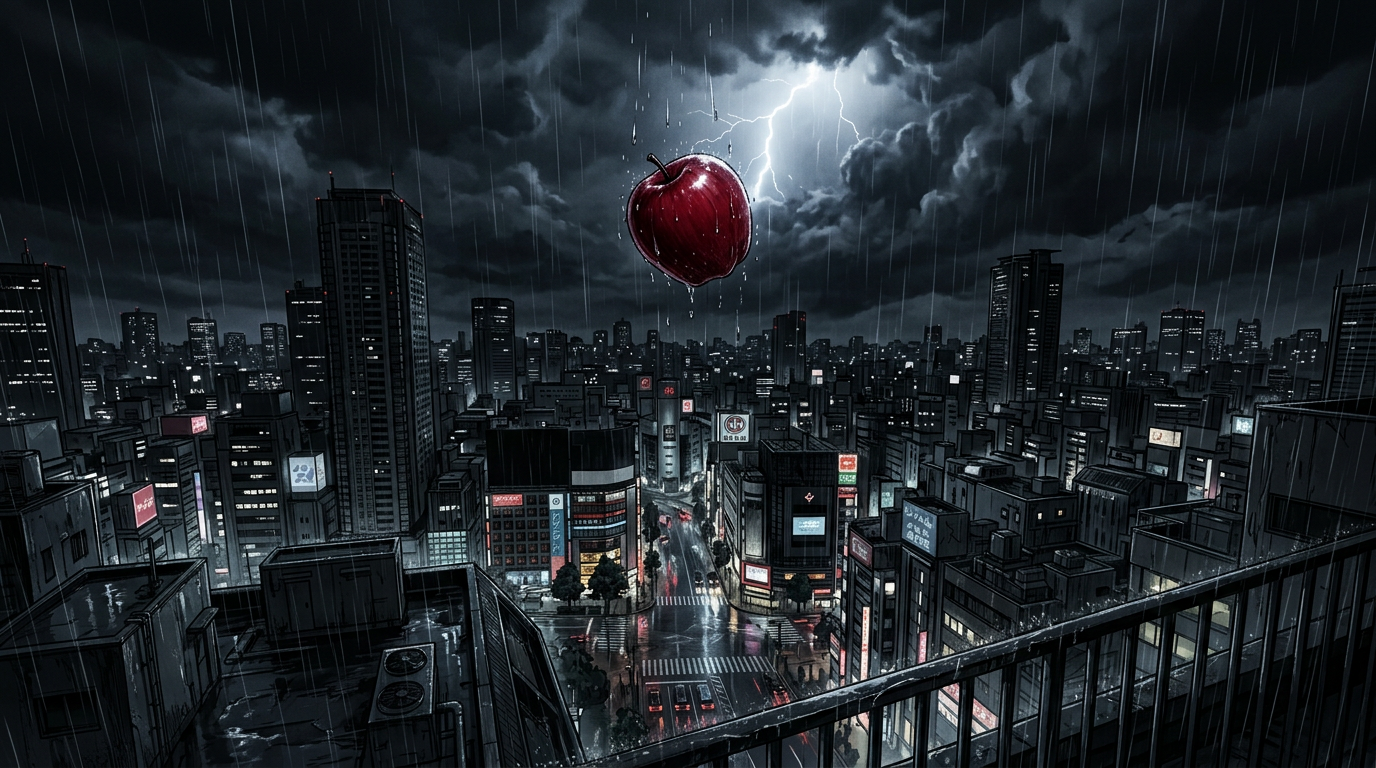
Death Note fandom cover
Anime
📓

Death Note Headcanons

Justice as ideology and the seduction of absolute power

What Makes Death Note a Rich Fandom for Headcanons?

Death Note generates headcanon material of unusual philosophical intensity because its central character is the moral argument. Light Yagami is not a villain who does bad things — he is someone who constructed a coherent ideological framework that justified those things, and watched it corrode his humanity so gradually that he never noticed the exact moment it became irreversible. The fan community has spent two decades examining the mechanics of that corruption.

The Light-L dynamic is the engine of the franchise's headcanon activity. Two minds of comparable power, opposing each other with radically different methods and ethics, neither entirely in the right — the specific quality of the intellectual intimacy between them, the genuine respect and genuine contempt coexisting, generates relationship interpretations that range from adversarial to deeply complicated. What they actually were to each other is one of the most debated questions in the fandom.

Death Note's structural irony — a story about justice that is itself an argument against a specific conception of justice — gives the headcanon community unusual material to work with. Characters like Near and Mello, who 'win' by methods that undercut their moral authority, raise questions about whether the series' ending is genuinely a victory or merely a different kind of failure.

This page is curated by the Headcanon.io editorial team — fans who engage with these communities directly. Character analysis and headcanon examples are selected to reflect the creative depth of each fandom, and are updated as community trends evolve. Learn more about us.

Popular Death Note Characters for Headcanons

L

Light Yagami

Top student, Kira

The specific point at which Light stopped being a person who was doing something wrong and became something else entirely — the mechanics of self-corruption when you've convinced yourself the ends are sufficient — is the series' central psychological question.

L

L Lawliet

World's greatest detective

L's profound social isolation, the specific loneliness of a mind that operates outside every normal register, and the question of whether his engagement with Light was the closest he ever came to genuine connection.

M

Misa Amane

Second Kira, entertainer

Misa is consistently underread. Her absolute devotion to Light is not naivety — it's a response to specific trauma (her parents' murder, the helplessness of being the witness) that found in Kira the only object that could absorb the magnitude of her grief.

N

Near

L's successor, SPK leader

Near's cold precision, his specific incapacity for the intuitive leaps that characterized L, and the question of whether winning by Near's methods constitutes a genuine victory or merely a more methodical version of the same game.

R

Ryuk

Shinigami, observer

Ryuk as the most honest narrator in the series — genuinely indifferent, genuinely amused, and therefore the only character whose observations about what's happening aren't distorted by ego or investment.

R

Rem

Shinigami, Misa's protector

Rem choosing to die for a human is the series' quietest moral statement — and the question of what she saw in Misa that was worth that, in a series otherwise populated by humans who are mainly vehicles for ideology.

Death Note Headcanon Examples

These are editorial examples — written to demonstrate the range and depth of what headcanon writing looks like for this fandom. Use them as a starting point for your own interpretations.

Light Yagami

Character HeadcanonTone: Cold, forensic

There wasn't a single moment when Light became Kira. That's what makes the story possible. There were only decisions, each of which had a justification, each justification leading to the next decision. The person he was on the day he found the notebook would not have recognized what he was a year later. The person he was a year later had convinced himself the notebook had always been the only reasonable response to a world this broken. Both of these things could be simultaneously true of the same mind.

Why This Works

The insight that corruption doesn't have a single identifiable moment — that it is a chain of locally justified decisions — is the most honest reading of Light's arc. The final observation about both things being simultaneously true of the same mind captures the specific tragedy of sophisticated self-deception.

L Lawliet

Character HeadcanonTone: Lonely precision

L has never been able to determine whether he enjoys the investigation or the opponent. He suspects the distinction is artificial: without a mind of comparable difficulty, the investigation doesn't exist. Light is the first opponent who has made the investigation feel like a conversation. This is useful information. He is not sure what else to do with it.

Why This Works

This headcanon works through L's characteristic mode — analytical, self-observing, arriving at emotional information through intellectual means and then not knowing what to do with it. The phrase 'he is not sure what else to do with it' is the most honest possible ending for an L headcanon about connection.

Misa Amane

Backstory HeadcanonTone: Raw, overlooked

Misa watched her parents get murdered and the murderer walk free, and then Kira killed him, and nothing in her life since has made the same structural sense as that moment did. This is not a failure of reasoning. This is grief finding the only shape available. She is not naive about Light. She knows exactly what he is. She also knows that she would not be alive if not for what he is, and that gratitude is not something she has been able to argue herself out of.

Why This Works

This headcanon refuses the easy dismissal of Misa as 'naive' and gives her devotion a foundation in specific, coherent experience. 'Grief finding the only shape available' is exactly right. The acknowledgment that she knows what Light is — and loves him anyway, for specific reasons — is a more honest reading than the series often provides.

Generate Your Own Death Note Headcanons

Death Note headcanons are most interesting when they refuse the easy moral frames. Light is not just a villain; L is not just a hero; Misa is not just devoted. The richest territory is in the specific psychological mechanics — why each character believes what they believe, and what those beliefs cost them.

Frequently Asked Questions about Death Note Headcanons

Is the Light-L relationship romantic in headcanon culture?

It's one of the most actively interpreted relationships in anime headcanon broadly. The adversarial intimacy, the specific quality of their mutual recognition, generates both romantic and non-romantic interpretations. What's consistent across most headcanon work is the insistence that the relationship was meaningful — whatever form that meaning takes.