
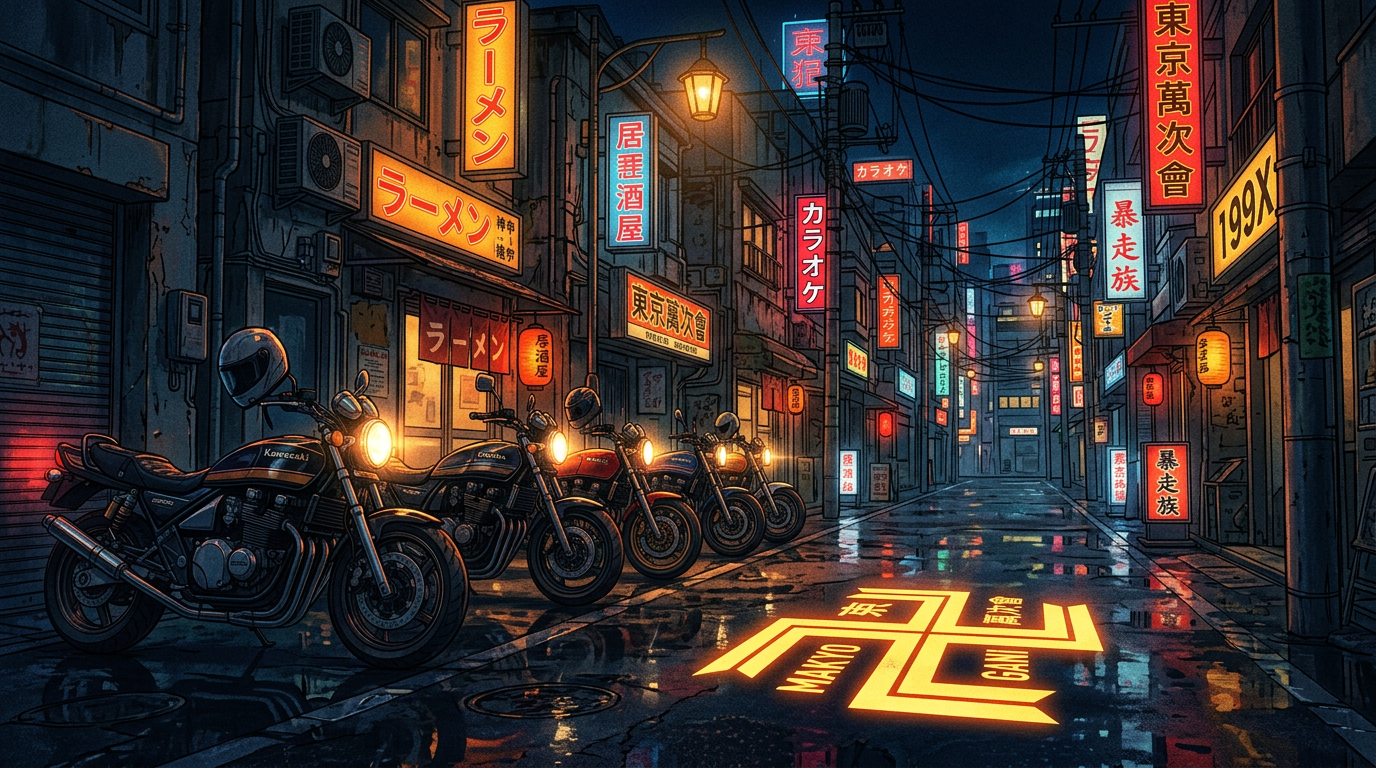
Tokyo Revengers fandom cover
Anime
🏍️

Tokyo Revengers Headcanons

Time loops, loyalty, and the people worth saving

What Makes Tokyo Revengers a Rich Fandom for Headcanons?

Tokyo Revengers generates headcanon material organized around a specific emotional premise: one person's love for someone he can't save, expressed as the futile and necessary act of going back and trying again. Takemichi's time travel isn't exciting — it's exhausting, and the series is honest about what repeated failure costs someone who keeps trying anyway. The fan community explores what that commitment looks like, and what it says about both Takemichi and Mikey.

Mikey's darkness is the series' central mystery and most active headcanon territory. What is the 'darkness' that the series gestures toward — the thing Draken and Emma and eventually Takemichi are fighting to prevent — is never fully shown, only approached. The fan community has spent years theorizing about what it is, what produces it, and whether Takemichi's approach (unconditional love) is actually the right response.

The found family of Toman — the specific community that Mikey built, and what it meant to the people in it, and what its dissolution cost them — is the emotional bedrock of the series' headcanon culture. Characters like Draken, Chifuyu, and Baji all carry their relationship to that community in ways the series only partially explores.

This page is curated by the Headcanon.io editorial team — fans who engage with these communities directly. Character analysis and headcanon examples are selected to reflect the creative depth of each fandom, and are updated as community trends evolve. Learn more about us.

Popular Tokyo Revengers Characters for Headcanons

M

Manjiro Sano (Mikey)

Toman founder, strongest fighter

Mikey's 'darkness' — what it actually is, where it comes from, and whether the love that Draken and Takemichi and Emma offer can address the root of it or only the symptoms.

T

Takemichi Hanagaki

Time leaper, crybaby hero

Takemichi's specific quality of heroism — not power but persistence, the refusal to give up even when giving up is rational — and what it costs someone to keep trying after repeated failure.

K

Ken Ryuguji (Draken)

Toman vice-captain

Draken's role as Mikey's anchor — the specific relationship that held Mikey's darkness at bay for years — and what the loss of Draken costs in terms that can't be recovered.

C

Chifuyu Matsuno

First Division captain, Baji's partner

Chifuyu's relationship with Baji's memory and the specific quality of loyalty to someone who isn't there to receive it anymore — the ongoing, private continuation of a friendship that ended.

K

Keisuke Baji

First Division captain

Baji's choice — the specific sacrifice he made and why he made it — and what it meant to the people who had to continue without him while knowing what he chose.

H

Hinata Tachibana

Takemichi's love, original motivation

Hinata as the origin point of Takemichi's entire journey, and the question of what that origin cost her — whether being someone's reason to fight back in time is a comfortable position.

Tokyo Revengers Headcanon Examples

These are editorial examples — written to demonstrate the range and depth of what headcanon writing looks like for this fandom. Use them as a starting point for your own interpretations.

Takemichi Hanagaki

Character HeadcanonTone: Exhausted persistence

Takemichi has failed enough times that he knows failure personally, the way you know a house you've lived in — the specific weight of it, where it sits in his chest, how long it takes to become something survivable. He doesn't think of himself as brave because of this. He thinks of himself as someone who keeps going anyway, which he has discovered is the only kind of brave that exists in practice.

Why This Works

Framing Takemichi's persistence as a specific knowledge of failure — knowing it 'personally, the way you know a house you've lived in' — is both narratively accurate and emotionally precise. The redefinition of bravery in the final sentence is the most honest available description of his character.

Mikey (Manjiro Sano)

Character HeadcanonTone: Dark pull, specific

Mikey's darkness is not cruelty. This is important to understand and consistently misunderstood. What it is is a gravitational pull toward the version of himself that has nothing to lose — toward the Mikey that the loss of everyone he loved has been steadily building since he was a child. The people who love him are fighting that pull. Takemichi fights it by showing up, which turns out to be the specific thing it requires.

Why This Works

Distinguishing Mikey's darkness from cruelty — identifying it as a gravitational pull toward a particular version of himself — is more interesting and more accurate than reading it as simply violent impulse. The Takemichi reading ('showing up is the specific thing it requires') gives their dynamic its proper emotional logic.

Generate Your Own Tokyo Revengers Headcanons

Tokyo Revengers headcanons are richest when they take the time loop as emotional experience rather than just narrative device — what does it feel like to know how things end, to love someone whose trajectory you've watched and kept trying to change?

Frequently Asked Questions about Tokyo Revengers Headcanons

How does the Tokyo Revengers manga ending affect headcanon culture?

The ending is controversial enough that many headcanon writers treat it as one possible outcome rather than definitive canon. Alternative endings and divergence headcanons from key decision points are extremely active in the community.