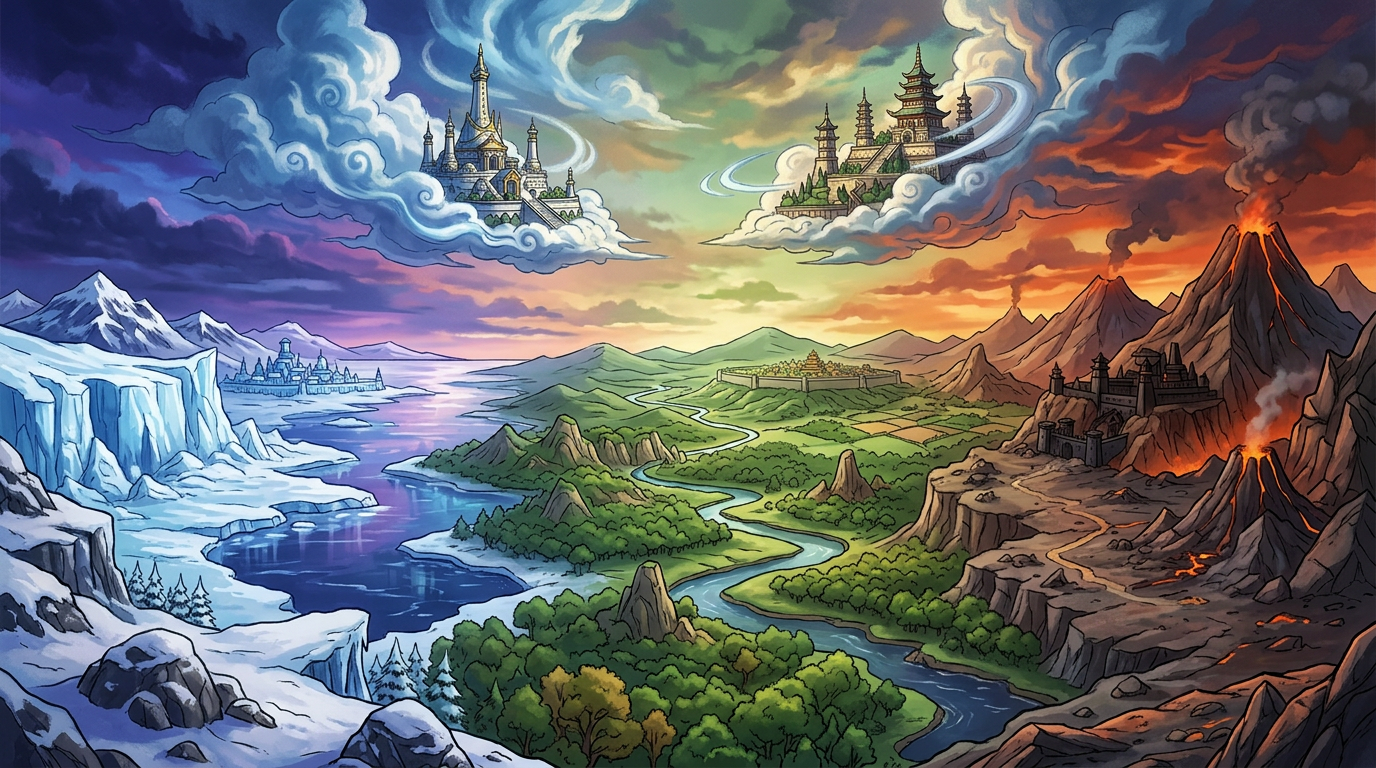
Avatar: The Last Airbender produces some of the most emotionally literate headcanon culture in fandom because the show itself is emotionally literate in ways that were unusual for children's television. The series doesn't flinch from the psychological costs of war, the failure of authority figures, and the complexity of reconciling love with harm. Zuko's redemption arc remains one of the most carefully constructed character transformations in animation, and the headcanon community has spent nearly twenty years finding new angles on it.
The Fire Nation's psychology — the way imperialism shapes the people who carry it forward, the specific damage done to people like Zuko and Azula by a system that demanded they be weapons — is the most generative territory in ATLA fan interpretation. Azula in particular represents an underexplored arc: a child destroyed by a parent who treated her as a tool, whose breakdown in the finale is one of animation's most honest portrayals of psychological collapse, and whose post-canon possibilities are almost entirely uncharted.
Uncle Iroh occupies a unique position in the ATLA headcanon community: he is simultaneously a source of wisdom and a character whose past deserves more honest examination than the show gives it. A conqueror turned spiritual teacher, a man who lost his son and redirected that grief into something useful: the question of what Iroh was before Ba Sing Se, and what the relationship between that person and the one Zuko knew actually looked like, generates some of the most complex backstory work in the fandom.
✍️This page is curated by the Headcanon.io editorial team — fans who engage with these communities directly. Character analysis and headcanon examples are selected to reflect the creative depth of each fandom, and are updated as community trends evolve. Learn more about us.