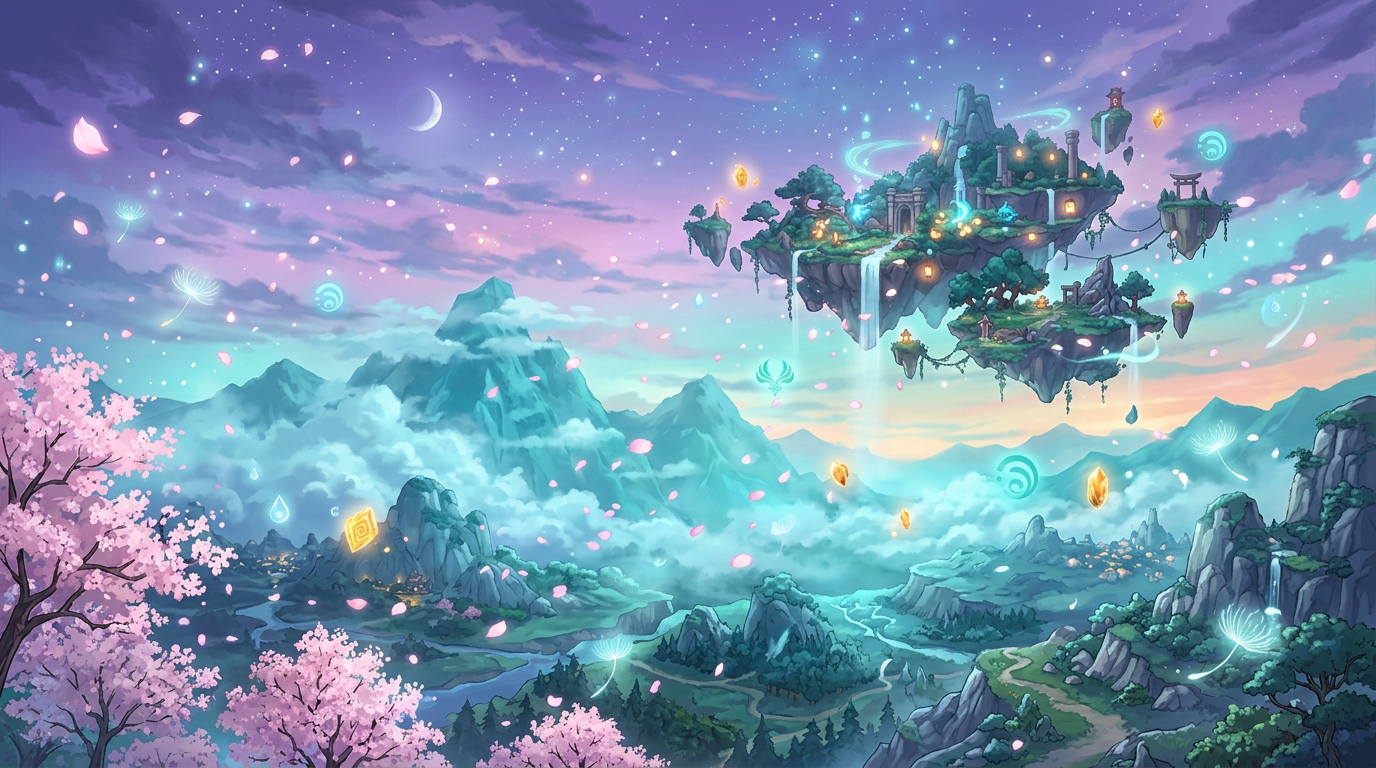
Genshin Impact produces unusually rich headcanon material because HoYoverse builds its characters around defined emotional wounds and leaves their resolution deliberately incomplete. Xiao has been carrying guilt for over two thousand years but the game never fully unpacks what that costs him day to day. Zhongli has watched every person he ever knew die, but his grief is held at arm's length behind formality and philosophical acceptance. These are emotional architectures that are precisely designed to be explored further, and the fandom obliges.
What makes Genshin particularly interesting for fan interpretation is the scale of its characters' histories. Immortal archons like Zhongli and Venti have lived long enough that their 'backstory' isn't a single traumatic event but an accumulated weight — centuries of watching civilizations rise and fall, relationships that lasted decades before ending, a grief that has had millennia to calcify into something that barely looks like grief anymore. Headcanons for these characters often explore what it actually feels like to live that long, and how it shapes the way they relate to the mortal characters around them.
The regional diversity of Teyvat also gives Genshin headcanon writers unusual creative range. Characters from Liyue operate under entirely different cultural frameworks than characters from Inazuma or Sumeru, which means relationship dynamics, communication styles, and emotional registers vary substantially between characters. This cross-cultural friction — and the ways characters from different regions misunderstand or recognize each other — is a particularly fertile territory for both relationship headcanons and character-specific backstory work.
✍️This page is curated by the Headcanon.io editorial team — fans who engage with these communities directly. Character analysis and headcanon examples are selected to reflect the creative depth of each fandom, and are updated as community trends evolve. Learn more about us.